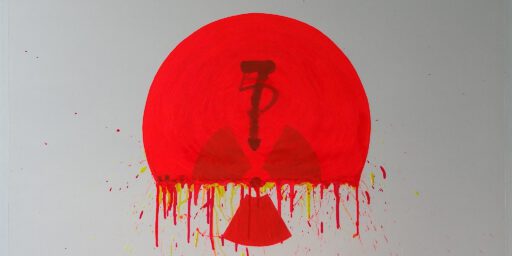
被爆者 Hibakusha
The word hibakusha is Japanese, originally written in kanji. While the term hibakusha 被爆者 (hi 被 ‘particle indicating passive mood of the subsequent verb’ + baku 爆 ‘to bomb’ + sha 者 ‘person’) has been used before in Japanese to designate any victim of bombs, its worldwide democratization led to a definition concerning the survivors of the atomic bombs dropped in Japan by the United States Army Air Forces on 6 and 9 August 1945.
Anti-nuclear movements and associations, among others of hibakusha, spread the term to designate any direct victim of nuclear disaster, including the ones of the nuclear plant in Fukushima.[1] They, therefore, prefer the writing 被曝者 (replacing baku 爆 ‘to bomb’ with the homophonous 曝 ‘ to expose to s.t.’) or ‘person exposed to radiation, a person affected by nuclear exposure’. This definition tends to be adopted since 2011.
The legal status of hibakusha is allocated to certain people, mainly by the Japanese government.
…..
被爆者(ひばくしゃ)(英語: Hibakusha)とは、空襲や爆撃による被害を受けた人のことを指す。ここでは主に核爆弾によるものを解説する。
2024年7月1日、厚生労働省が明らかにしたところによれば、2024年3月末で被爆者健康手帳を持つ人、被爆者は10万6825人(対前年比6824人減)、平均年齢は85.58歳で、前年から0.57歳上がった。都道府県別では、広島県 5万1275人、長崎県 2万5966人、福岡県 4311人、東京都 3557人など。
「被爆」とは何か
よく似た言葉に「被曝」があるが、こちらは放射能(放射線)にさらされた場合を指す。厳密にいえば、核爆発による直接の被害を受けた者は「被爆者」、直接の被害は受けず、核爆発被災地に救援などのために立ち入り、そこにある核爆発に伴う残留放射能(放射線)を浴びた者は「被曝者」であるが、今日では便宜上最初の事例を「一次被爆者」、後の事例を「二次被爆者」と呼ぶことが多い。また胎児の時に被爆した者を「胎内被爆者」、被爆者の子孫は「被爆○世」と呼ばれる。また、被爆した物は「被爆建物」、「被爆電車」、「被爆樹木」、「被爆ピアノ」などと呼ばれる。