2025年の現状:アメリカ帝国主義、ロシア帝国主義、中国帝国主義。だから台湾やウクライナを攻撃するのは価値がある。そして日本の左派も右派も知らんぷりし、愚かな態度を取っている。 Imperialism by America, Russia, China in today's 2025. Invading Ukraine and Taiwan. The Japanese Left-Wing and Right-Wing are turning a blind eye and behaving foolishly.
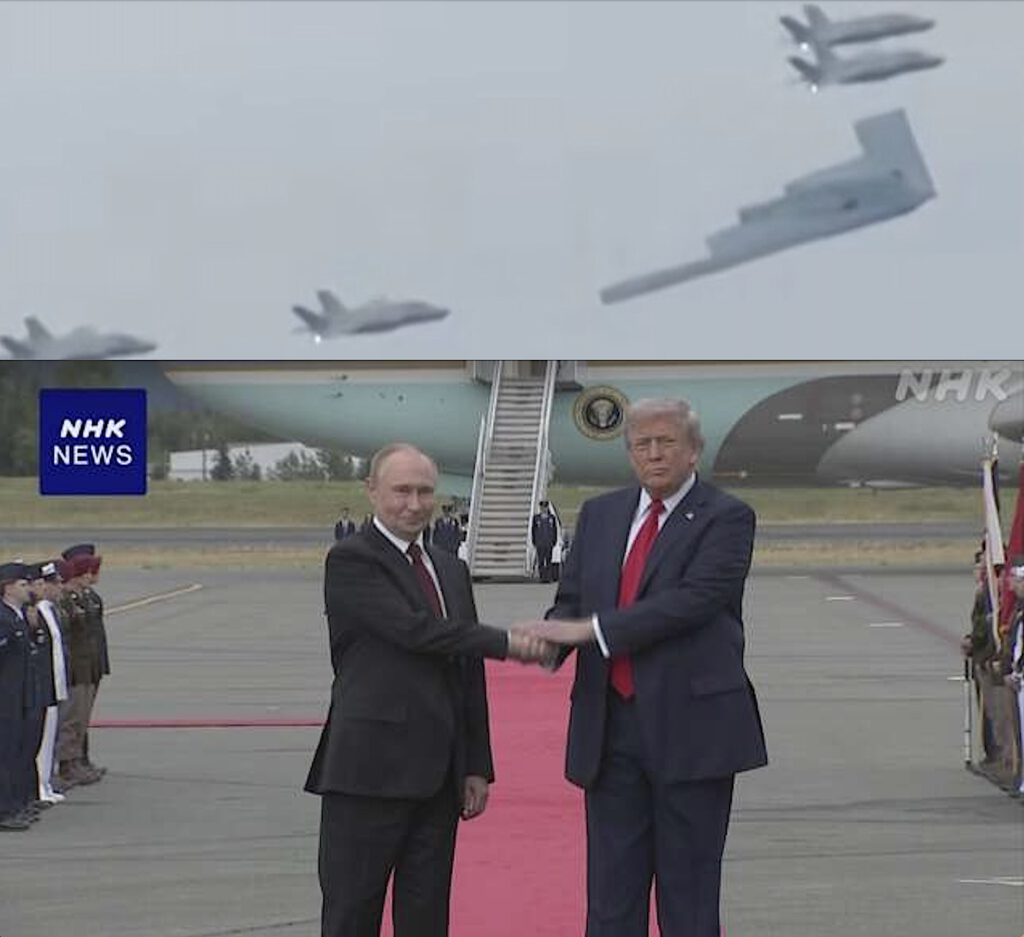
グリンゴ帰れ!アメリカ帝国主義者は日本国内の軍事基地を閉鎖すべき時が来た!
GRINGO GO HOME! It’s high time the American Imperialists close their Military Bases in Japan!
https://art-culture.world/politics/gringo-go-home/
Taiwan is lost. So will be Okinawa, too.
台湾、沖縄。これで諦めるか。
https://art-culture.world/politics/taiwan-is-lost-and-next-will-be-okinawa-too/
ドイツの空中発射巡航ミサイルを巡って、侵略者ロシアに対するドイツの兵器
German Air-launched Cruise Missiles: German Weapons against Aggressor Russia
https://art-culture.world/politics/taurus/
習近平国家主席:「中国と米国は、主要国としての責任を共に担い、両国と世界全体の利益のために、より多く、より偉大で、より具体的な成果を共に達成できるはずです。」
President of the People’s Republic of China Xi Jinping: “China and the US can jointly shoulder our responsibility as major countries and work together to accomplish more, great, and concrete things for the good of our two countries and the whole world.”
https://art-culture.world/politics/trump-xi/
の続き。
アメリカ帝国主義、ロシア帝国主義、中国帝国主義。だから台湾やウクライナを攻撃するのは価値がある。そして日本の左派も右派も知らんぷりし、愚かな態度を取っている。
2014年(クリミア侵攻)以来のロシアによるウクライナ侵攻に関して、米国が提案したいわゆる和平計画は (1)、核兵器による侵略戦争が有益であることを改めて証明している。
Russisch-Ukrainischer Krieg
https://de.wikipedia.org/wiki/Russisch-Ukrainischer_Krieg
Russischer Überfall auf die Ukraine seit 2022
https://de.wikipedia.org/wiki/Russischer_Überfall_auf_die_Ukraine_seit_2022
Waffenstillstandsverhandlungen und Vermittlungsinitiativen zum russischen Angriffskrieg gegen die Ukraine
https://de.wikipedia.org/wiki/Waffenstillstandsverhandlungen_und_Vermittlungsinitiativen_zum_russischen_Angriffskrieg_gegen_die_Ukraine
ロシアは、日本の「広島」活動や、共産党から右派政党に至るまでの各政党に対して、嘲笑しか抱いていません。
帝国時代の終焉を信じる者は皆、大いに誤っている。
端的に言えば:
日本の右派は、高市首相とともに資本主義の米国を称賛している。
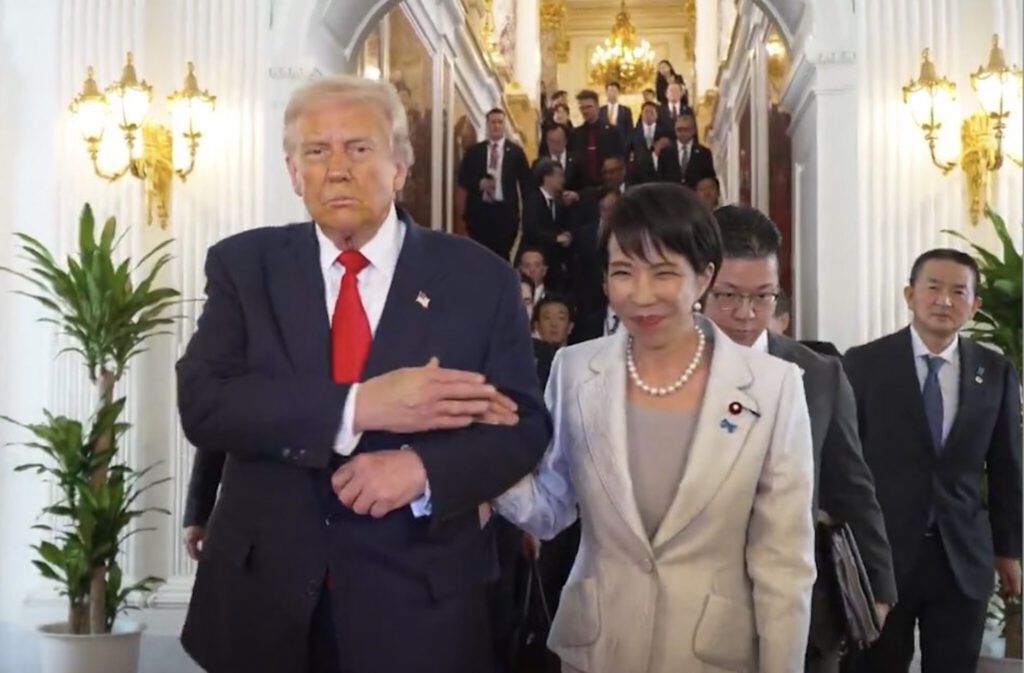
日本の左派 (aka「プーチンの理解者」)は、反資本主義 (?)であるため、ロシアと中国を称賛している。
国家の領土保全と自決権はもはや重要ではない。
私たちは、米国、ロシア、中国という3つの帝国主義大国に翻弄されている。
American imperialism, Russian imperialism, Chinese imperialism. That’s why attacking Taiwan or Ukraine is worthwhile. And both Japan’s left and right are turning a blind eye, acting foolishly.
Regarding Russia’s invasion of Ukraine since 2014 (the Crimea invasion), the so-called peace plan proposed by the United States (1) once again proves that aggressive wars involving nuclear weapons are beneficial.
Russia holds nothing but contempt for Japan’s “Hiroshima” activities and for all Japanese political parties, from the Communist Party to the right-wing parties.
All who believe in the end of the imperial era are gravely mistaken.
To put it plainly:
Japan’s right wing, alongside Prime Minister Takaichi, praises the capitalist United States.
Japan’s left wing (aka “Putin understander”), being anti-capitalist (?), praises Russia and China.
The territorial integrity and right to self-determination of states no longer count.
We are at the mercy of the three imperialist superpowers: the US, Russia, and China.
Tokyo, 2025/11/27
Mario A
(1)

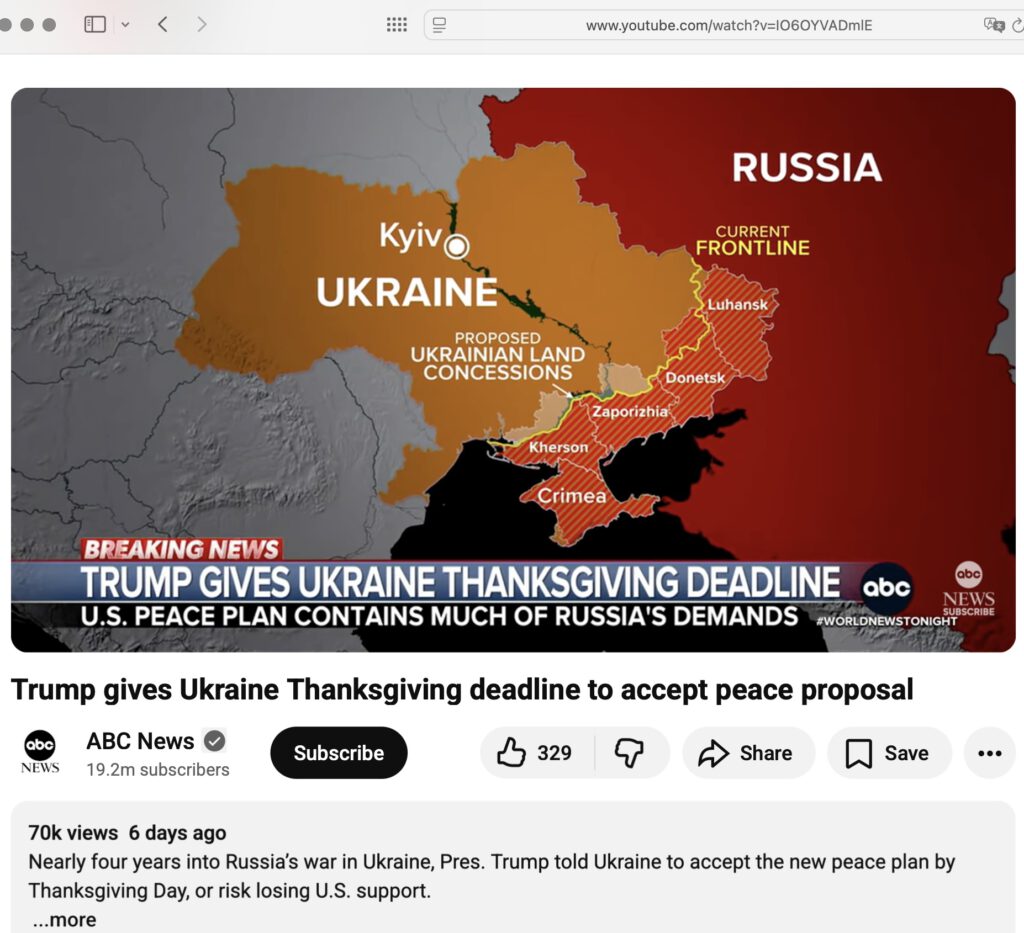
In case of censorship:
Link_https://www.youtube.com/watch?v=IO6OYVADmlE
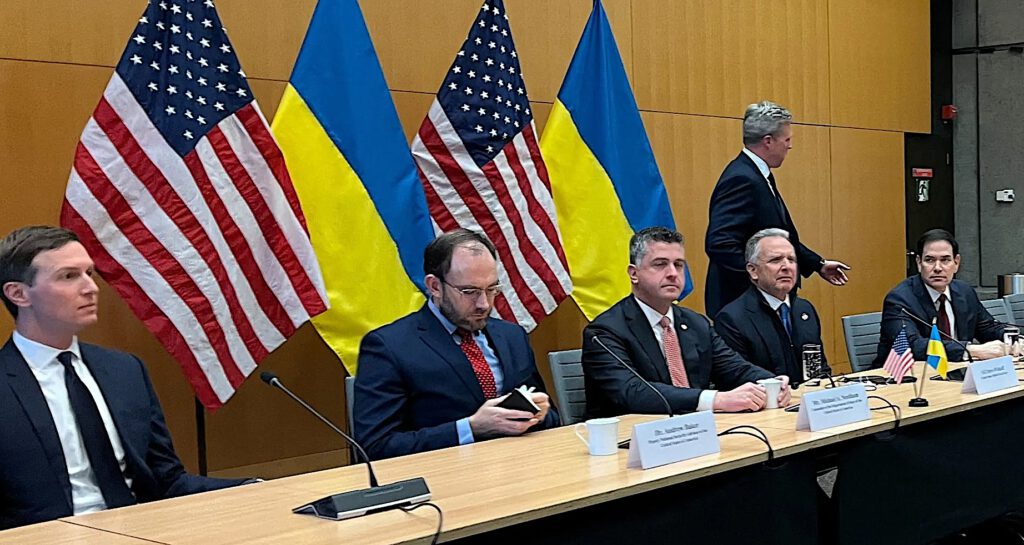
Official caption of this press photograph:
President Donald Trump’s son-in-law Jared Kushner, Special Envoy Steve Witkoff, Secretary of State Marco Rubio, Army Secretary Daniel Driscoll sit before closed-door talks with Head of the Office of the President of Ukraine Andriy Yermak (not pictured) on ending Russia’s war in Ukraine, at the U.S. Mission in Geneva, Switzerland, Nov. 23, 2025.
Nov 20, 2025 –
World
Trump’s full 28-point Ukraine-Russia peace plan
The full plan
1. Ukraine’s sovereignty will be confirmed.
2. A comprehensive non-aggression agreement will be concluded between Russia, Ukraine and Europe. All ambiguities of the last 30 years will be considered settled.
3. It is expected that Russia will not invade neighboring countries and NATO will not expand further.
4. A dialogue will be held between Russia and NATO, mediated by the United States, to resolve all security issues and create conditions for de-escalation in order to ensure global security and increase opportunities for cooperation and future economic development.
5. Ukraine will receive reliable security guarantees.
Update: A separate document details the terms of the security guarantee. The U.S. and its NATO allies would treat an attack on Ukraine as an attack on the entire “transatlantic community.”
6. The size of the Ukrainian Armed Forces will be limited to 600,000 personnel.
Note: Ukraine’s army currently has 800,000-850,000 personnel, and had around 250,000 beforethe war, according to a Ukrainian official.
7. Ukraine agrees to enshrine in its constitution that it will not join NATO, and NATO agrees to include in its statutes a provision that Ukraine will not be admitted in the future.
8. NATO agrees not to station troops in Ukraine.
Note: NATO countries including France and the U.K. have been working on separate proposals that would include small numbers of European troops on Ukrainian soil after the war. This plan appears to disregard that possibility.
9. European fighter jets will be stationed in Poland.
10. The U.S. guarantee:
The U.S. will receive compensation for the guarantee;
If Ukraine invades Russia, it will lose the guarantee;
If Russia invades Ukraine, in addition to a decisive coordinated military response, all global sanctions will be reinstated, recognition of the new territory and all other benefits of this deal will be revoked;
If Ukraine launches a missile at Moscow or St. Petersburg without cause, the security guarantee will be deemed invalid.
11. Ukraine is eligible for EU membership and will receive short-term preferential access to the European market while this issue is being considered.
12. A powerful global package of measures to rebuild Ukraine, including but not limited to:
The creation of a Ukraine Development Fund to invest in fast-growing industries, including technology, data centers, and artificial intelligence.
The United States will cooperate with Ukraine to jointly rebuild, develop, modernize, and operate Ukraine’s gas infrastructure, including pipelines and storage facilities.
Joint efforts to rehabilitate war-affected areas for the restoration, reconstruction and modernization of cities and residential areas.
Infrastructure development.
Extraction of minerals and natural resources.
The World Bank will develop a special financing package to accelerate these efforts.
13. Russia will be reintegrated into the global economy:
The lifting of sanctions will be discussed and agreed upon in stages and on a case-by-case basis.
The United States will enter into a long-term economic cooperation agreement for mutual development in the areas of energy, natural resources, infrastructure, artificial intelligence, data centers, rare earth metal extraction projects in the Arctic, and other mutually beneficial corporate opportunities.
Russia will be invited to rejoin the G8.
14. Frozen funds will be used as follows:
$100 billion in frozen Russian assets will be invested in US-led efforts to rebuild and invest in Ukraine;
The US will receive 50% of the profits from this venture. Europe will add $100 billion to increase the amount of investment available for Ukraine’s reconstruction. Frozen European funds will be unfrozen. The remainder of the frozen Russian funds will be invested in a separate US-Russian investment vehicle that will implement joint projects in specific areas. This fund will be aimed at strengthening relations and increasing common interests to create a strong incentive not to return to conflict.
15. A joint American-Russian working group on security issues will be established to promote and ensure compliance with all provisions of this agreement.
16. Russia will enshrine in law its policy of non-aggression towards Europe and Ukraine.
17. The United States and Russia will agree to extend the validity of treaties on the non-proliferation and control of nuclear weapons, including the START I Treaty.
Note: New START, the last major U.S.-Russia arms control treaty, is due to expire in February.
18. Ukraine agrees to be a non-nuclear state in accordance with the Treaty on the Non-Proliferation of Nuclear Weapons.
19. The Zaporizhzhia Nuclear Power Plant will be launched under the supervision of the IAEA, and the electricity produced will be distributed equally between Russia and Ukraine — 50:50.
20. Both countries undertake to implement educational programs in schools and society aimed at promoting understanding and tolerance of different cultures and eliminating racism and prejudice:
Ukraine will adopt EU rules on religious tolerance and the protection of linguistic minorities.
Both countries will agree to abolish all discriminatory measures and guarantee the rights of Ukrainian and Russian media and education. (Note: Similar ideas were incorporated into Trump’s 2020 Israel-Palestine peace plan).
All Nazi ideology and activities must be rejected and prohibited.
21. Territories:
Crimea, Luhansk and Donetsk will be recognized as de facto Russian, including by the United States.
Kherson and Zaporizhzhia will be frozen along the line of contact, which will mean de facto recognition along the line of contact.
Russia will relinquish other agreed territories it controls outside the five regions.
Ukrainian forces will withdraw from the part of Donetsk Oblast that they currently control, and this withdrawal zone will be considered a neutral demilitarized buffer zone, internationally recognized as territory belonging to the Russian Federation. Russian forces will not enter this demilitarized zone.
22. After agreeing on future territorial arrangements, both the Russian Federation and Ukraine undertake not to change these arrangements by force. Any security guarantees will not apply in the event of a breach of this commitment.
23. Russia will not prevent Ukraine from using the Dnieper River for commercial activities, and agreements will be reached on the free transport of grain across the Black Sea.
24. A humanitarian committee will be established to resolve outstanding issues:
All remaining prisoners and bodies will be exchanged on an ‘all for all’ basis.
All civilian detainees and hostages will be returned, including children.
A family reunification program will be implemented.
Measures will be taken to alleviate the suffering of the victims of the conflict.
25. Ukraine will hold elections in 100 days.
26. All parties involved in this conflict will receive full amnesty for their actions during the war and agree not to make any claims or consider any complaints in the future.
27. This agreement will be legally binding. Its implementation will be monitored and guaranteed by the Peace Council, headed by President Donald J. Trump. Sanctions will be imposed for violations.
Note: This is the same general structure Trump proposed to govern the Gaza peace agreement.
28. Once all parties agree to this memorandum, the ceasefire will take effect immediately after both sides retreat to agreed points to begin implementation of the agreement.
source:
https://www.axios.com/2025/11/20/trump-ukraine-peace-plan-28-points-russia
Exclusive: US peace plan for Ukraine drew from Russian document, sources say
Nov 26 (Reuters) – The U.S.-backed 28-point peace plan to end the war in Ukraine, which became public last week, drew from a Russian-authored paper submitted to the Trump administration in October, according to three sources familiar with the matter.
The Russians shared the paper, which outlined Moscow’s conditions for ending the war, with senior U.S. officials in mid-October, following a meeting between U.S. President Donald Trump and Ukrainian President Volodymyr Zelenskiy in Washington, the sources said.
The paper, a non-official communication known in diplomatic parlance as a “non-paper,” contained language that the Russian government had previously put forward at the negotiating table, including concessions that Ukraine had rejected such as ceding a significant chunk of its territory in the east.
This is the first confirmation that the document – whose existence was initially reported by Reuters in October – was a key input in the 28-point peace plan.
The U.S. State Department and the Russian and Ukrainian embassies in Washington did not respond to a request for comment.
The White House did not comment directly on the non-paper but cited Trump’s comments that he was optimistic about the 28-point plan’s progress.
“In the hopes of finalizing this Peace Plan, I have directed my Special Envoy Steve Witkoff to meet with President Putin in Moscow and, at the same time, Secretary of the Army Dan Driscoll will be meeting with the Ukrainians,” Trump wrote.
It is unclear why and how the Trump administration had come to rely on the Russian document to help shape its own peace plan. Some senior U.S. officials who reviewed it, including Secretary of State Marco Rubio, believed the demands made by Moscow would likely be rejected outright by the Ukrainians, the sources said.
SKEPTICISM OVER RUSSIAN INFLUENCE
After the paper’s submission, Rubio held a call with Russian Foreign Minister Sergei Lavrov during which the paper was discussed, the sources said.
Speaking to reporters in Geneva this week, Rubio acknowledged receiving “numerous written non-papers and things of this nature,” without elaborating.
Since the peace plan was first reported by Axios last week, skepticism has mounted among U.S. officials and lawmakers, many of whom see the plan as a list of Russian positions and not a serious proposal.
The United States has put pressure on Ukraine, nonetheless, warning it could curb its military assistance if Ukraine did not sign.
The plan was composed at least in part during a meeting between Trump’s son-in-law Jared Kushner, special envoy Steve Witkoff and Kirill Dmitriev, the head of one of Russia’s sovereign wealth funds, in Miami last month. Few inside the State Department and White House were briefed on that encounter, two sources familiar with the matter told Reuters.
On Tuesday, Bloomberg reported that Witkoff had offered advice to high-ranking Kremlin aide Yuri Ushakov regarding how Putin should speak to Trump. According to call transcripts obtained by the news agency, Ushakov and Witkoff alluded to a possible “20-point plan” as early as October 14. The scope of that plan apparently widened during subsequent conversations with Dmitriev, it added.
PLAN REVISED AFTER GLOBAL BACKLASH
The U.S. proposal, which caught officials in Washington and Europe off-guard, triggered a flurry of diplomacy across three continents. The original plan has changed dramatically since then: Nine of the original 28 points have been cut following talks between senior U.S. and Ukrainian officials, according to ABC News.
A bipartisan group of U.S. senators said on Saturday that Rubio had told them the 28-point plan was not a U.S. plan but instead a Russian wish list, although the White House and State Department vigorously denied that Rubio had characterized it as such.
In the discussions that followed, a senior U.S. delegation that included Rubio agreed to excise or modify some of the most pro-Russian parts of the plan during meetings in Geneva with European and Ukrainian officials.
Driscoll is currently meeting with a Russian delegation in Abu Dhabi. A Ukrainian delegation is also in the UAE for talks with the U.S. team, according to a U.S. official.
On Tuesday, Ukrainian officials said they supported the modified peace deal framework that had emerged from the latest talks, but stressed that the most sensitive issues – territorial concessions are especially contentious – needed to be fixed at a potential meeting between Zelensky and Trump.
https://www.reuters.com/world/europe/us-peace-plan-ukraine-drew-russian-document-sources-say-2025-11-26/


https://www.zeit.de/politik/ausland/karte-ukraine-krieg-russland-frontverlauf-truppenbewegungen
注意!ATTENTION!
All pictures and texts have to be understood in the context of “Creative Commons Attribution Noncommercial-NoDerivative Works.” ここに載せた画像やテクストは、すべて「好意によりクリエーティブ・コモン・センス」の文脈で、日本美術史の記録の為に発表致します。 Creative Commons Attribution Noncommercial-NoDerivative Works, photos: cccs courtesy creative common sense
All these texts and pictures are for future archival purposes, in the context of Japanese art history writings.