右翼っぽい千住博が我が国の現代アート史を駄目にしているファッキンセンセイ Right-wing-ish SENJU Hiroshi is ruining the history of contemporary art in our country, fuckin' "Sensei"
日本の美。
日本のアート界における保守的なアートワーカーたちが追い風を受けています。
日本の油絵画家、日本一の現代アートブロガー、日本美術史に影響を与えている「日本現代アート透明賞」(省略:JCATP) の創立者、や34人の純文学小説家とともに日本現代文学を海外で紹介してきたわたくしとして、日本のアート界の現状を評価し、判断することができます。
まず、
我が国にっぽん、「国民的現代美術家」会田誠:「日本画」というジャンルは昭和天皇崩御と同時に自ら消滅を宣言すべきだったし、それしなくても事実消滅した。
https://art-culture.world/art-world/会田誠-aida-makoto-国民的現代美術家/
誤った分析である。なぜなら、
村上隆(最近の「京都画」)、村上裕二、千住博といった日本画の画家たちが日本の美術界を掌握していることは疑いの余地がありません。これには、美術史家の山下裕二や数多くのキュレーターといった「追随者」も加わっています。
私とほぼ同じ年齢の千住博や山下裕二は、保守的な日展や院展と「結びつく」ことをまったく躊躇しないタイプのセンセイたちです。
Up-date アップデート、令和7年11月22日
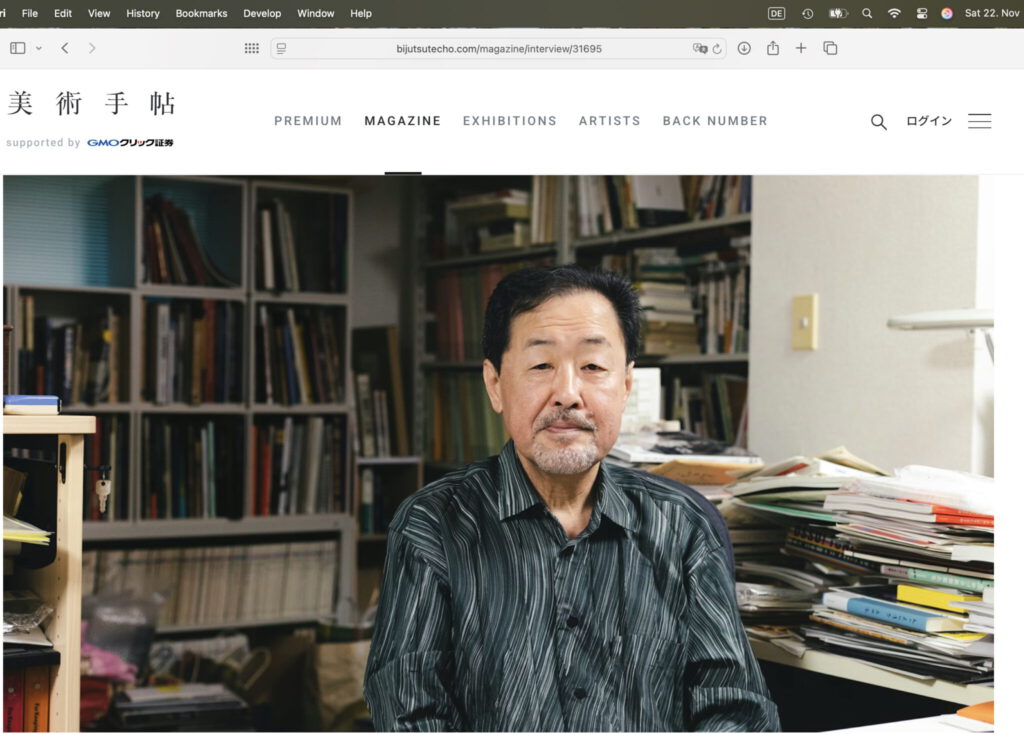
INTERVIEW
山下裕二に聞く。日本美術を「ひらく」ということ──若冲展から25年、そしてこれから
2000年、京都国立博物館で開催された「特別展覧会 没後200年 若冲展」が9万人を動員した。それは日本美術が「専門家の世界」から「誰もが楽しめる文化」へと変わる決定的な瞬間だった。あれから25年──展覧会の企画、著作、メディア出演を通して日本美術を社会に“ひらいて”きた美術史家・山下裕二に、教え子でキュレーターの小金沢智が、この四半世紀の変化とこれからを聞いた。
聞き手=小金沢智(キュレーター、東北芸術工科大学准教授)
2025.11.20
https://bijutsutecho.com/magazine/interview/31695
(end of up-date)
今月の美術手帖では第118回日展について詳しく紹介されています。
参考:我が国にっぽんの恥「日展」
https://art-culture.world/reviews/nitten-the-shame-of-our-nation-nippon/
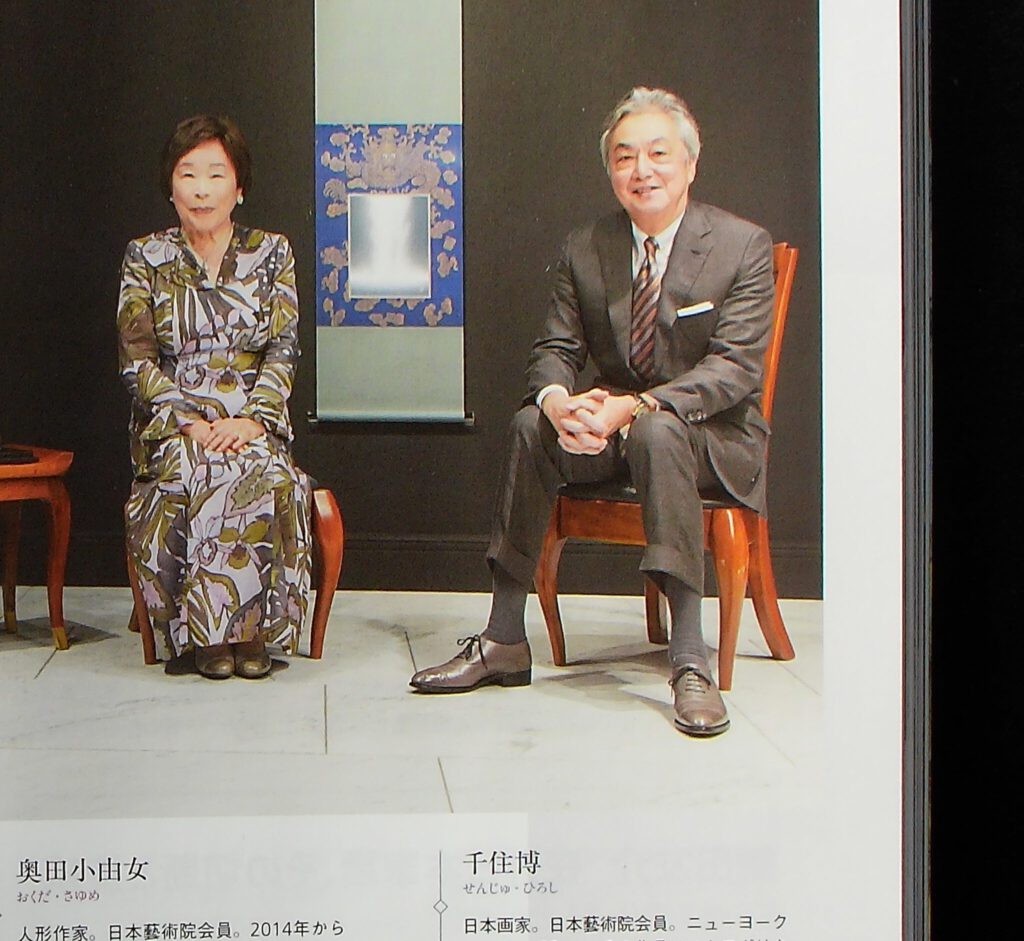
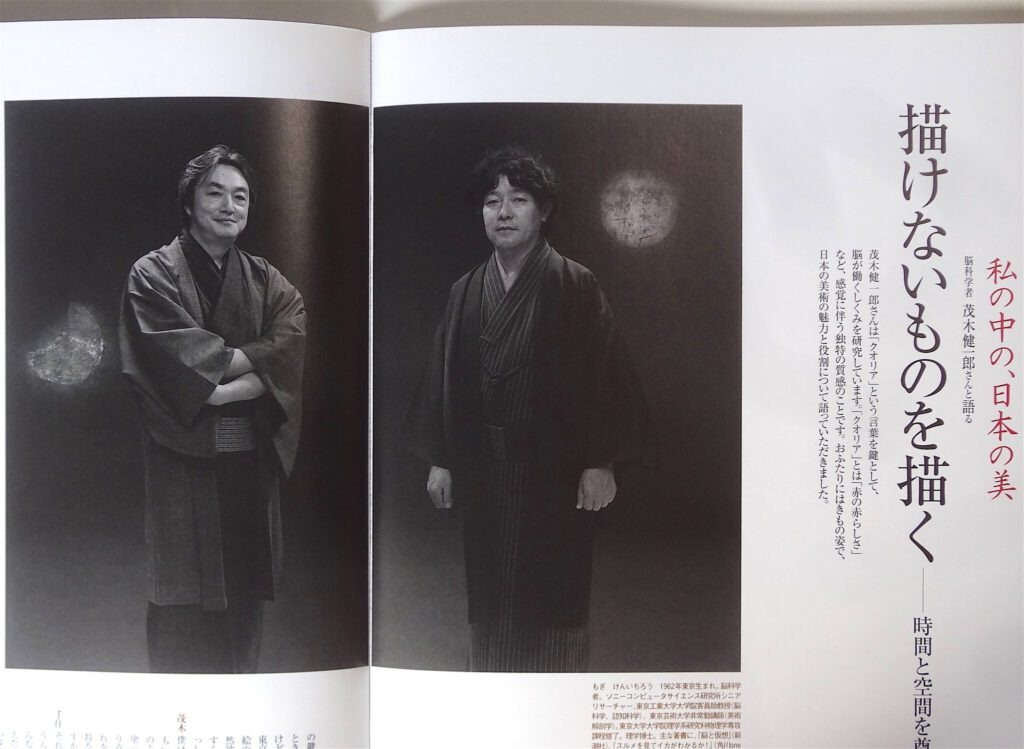
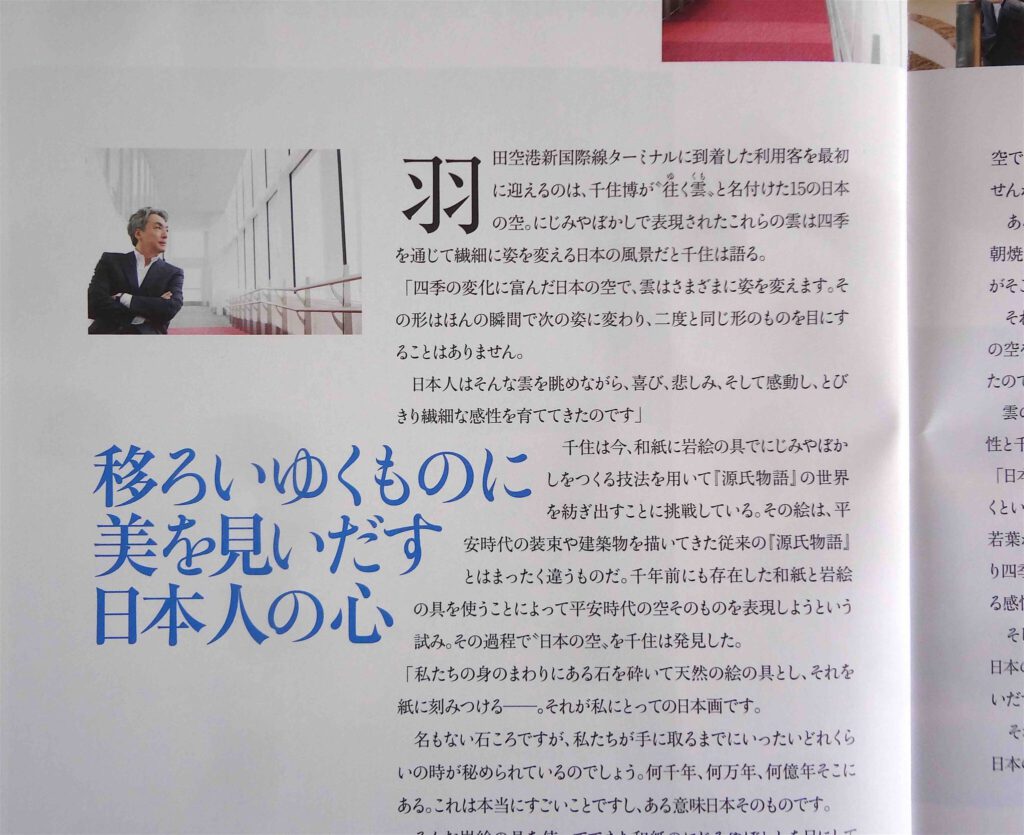
今月の芸術新潮誌の4ページにわたり、日本芸術院会員たちである千住博と元日展理事長奥田小由女が紹介され、日本の美術界を支配している、保守的な傾向を裏付けています。日本の美術界における保守主義と右翼過激主義は、日本の多くのアート・ディーラーやキュレーターたちの考え方を反映しています。
日本の美術。
嘘つきのファッキンセンセイたち。
以上。
東京、令和7年11月17日
亜 真里男
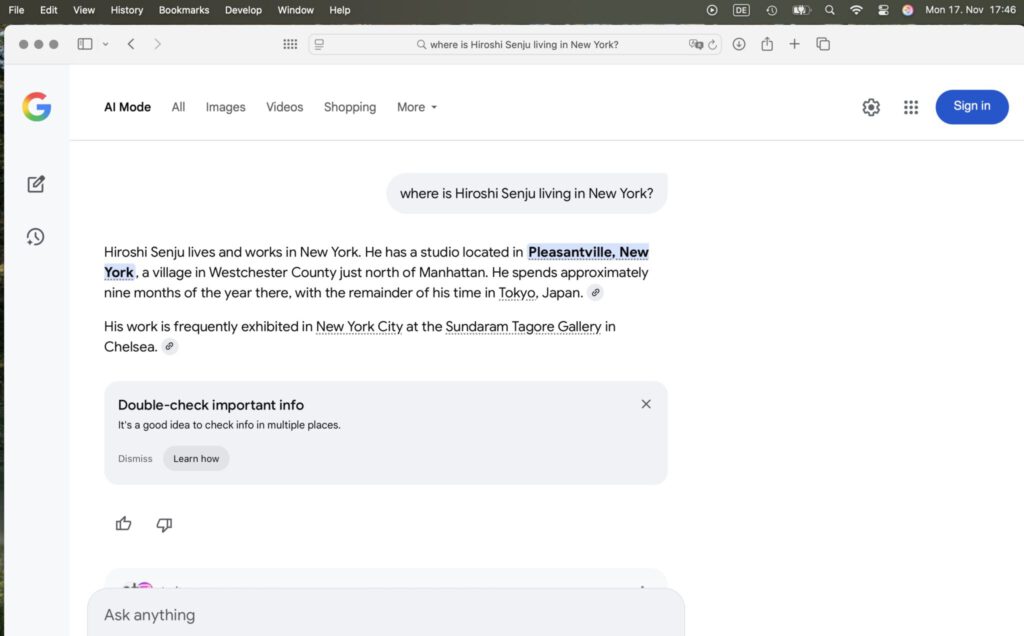
where is Hiroshi Senju living in New York?
Hiroshi Senju lives and works in New York. He has a studio located in Pleasantville, New York, a village in Westchester County just north of Manhattan. He spends approximately nine months of the year there, with the remainder of his time in Tokyo, Japan.
His work is frequently exhibited in New York City at the Sundaram Tagore Gallery in Chelsea.
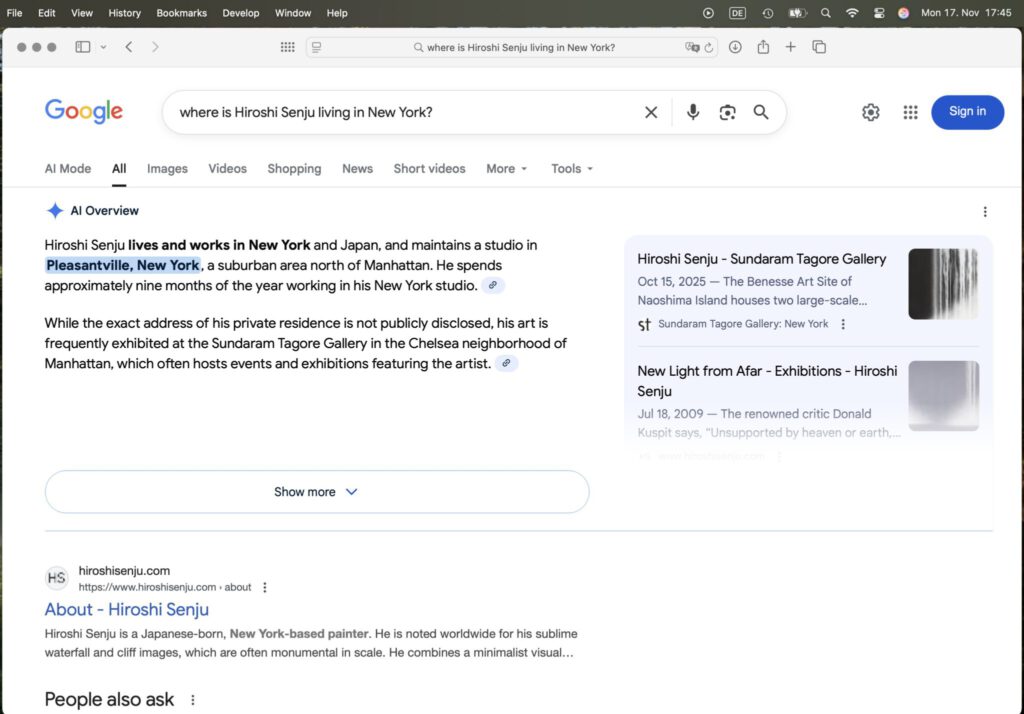
Hiroshi Senju lives and works in New York City. While the exact residential address is not publicly available, he has a studio in Pleasantville, New York, where he reportedly paints nine months out of the year. He spends the remainder of his time in Tokyo.
His work is frequently exhibited at the Sundaram Tagore Gallery in Chelsea, Manhattan, which is located at 542 West 26th Street.
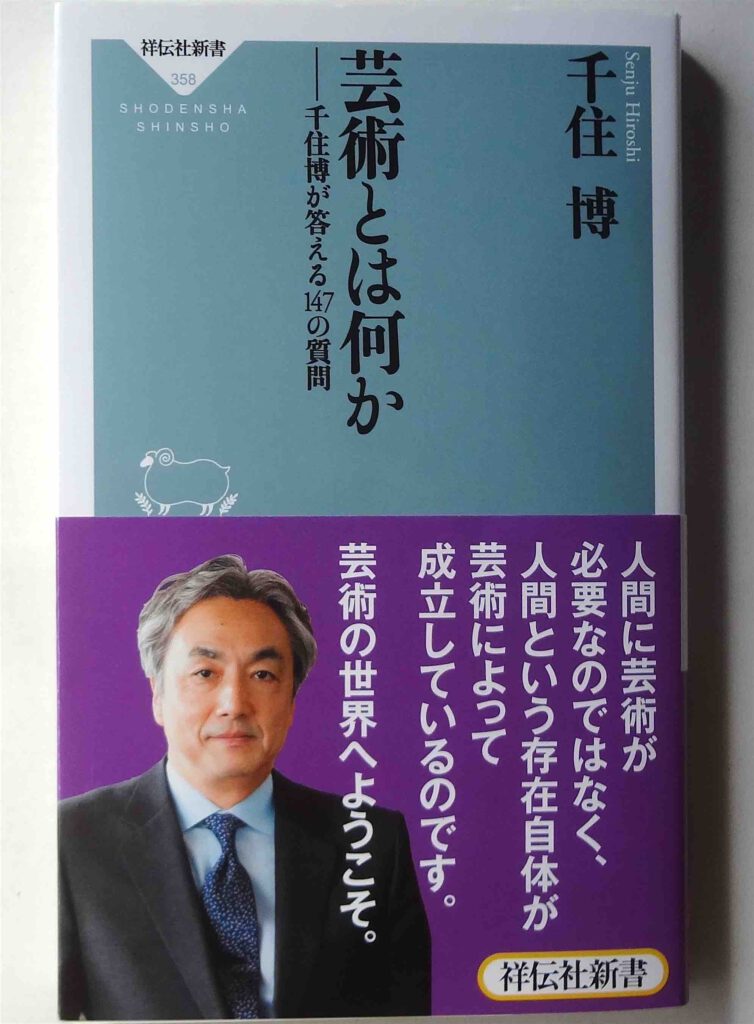
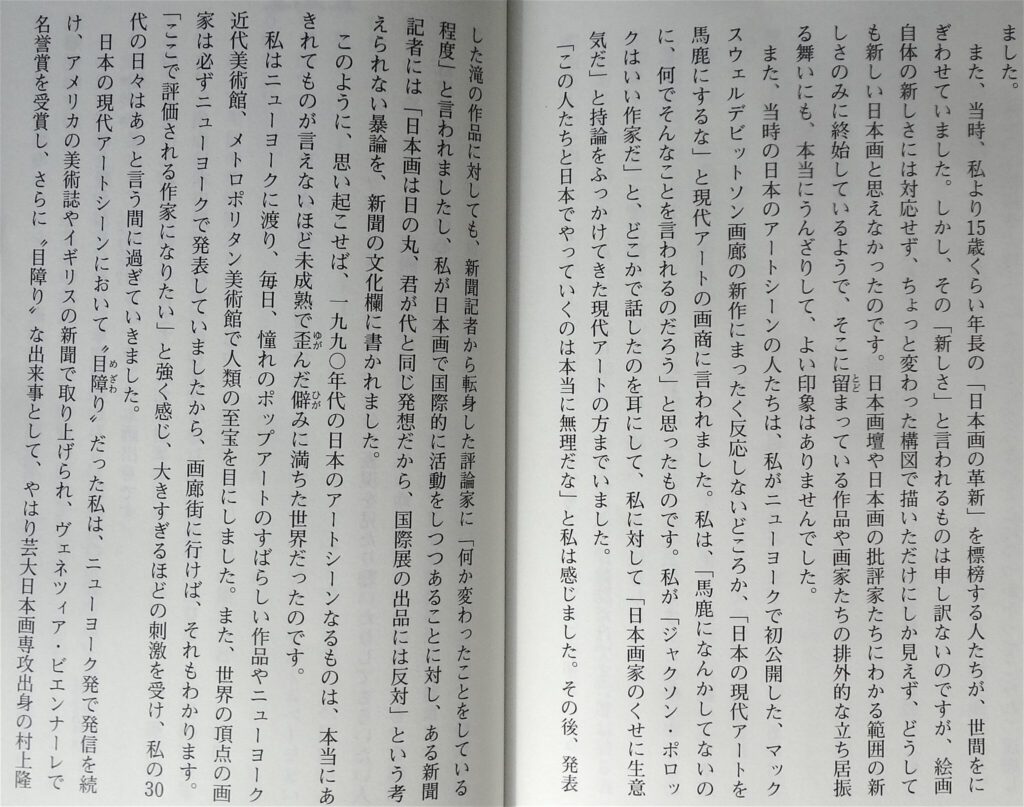
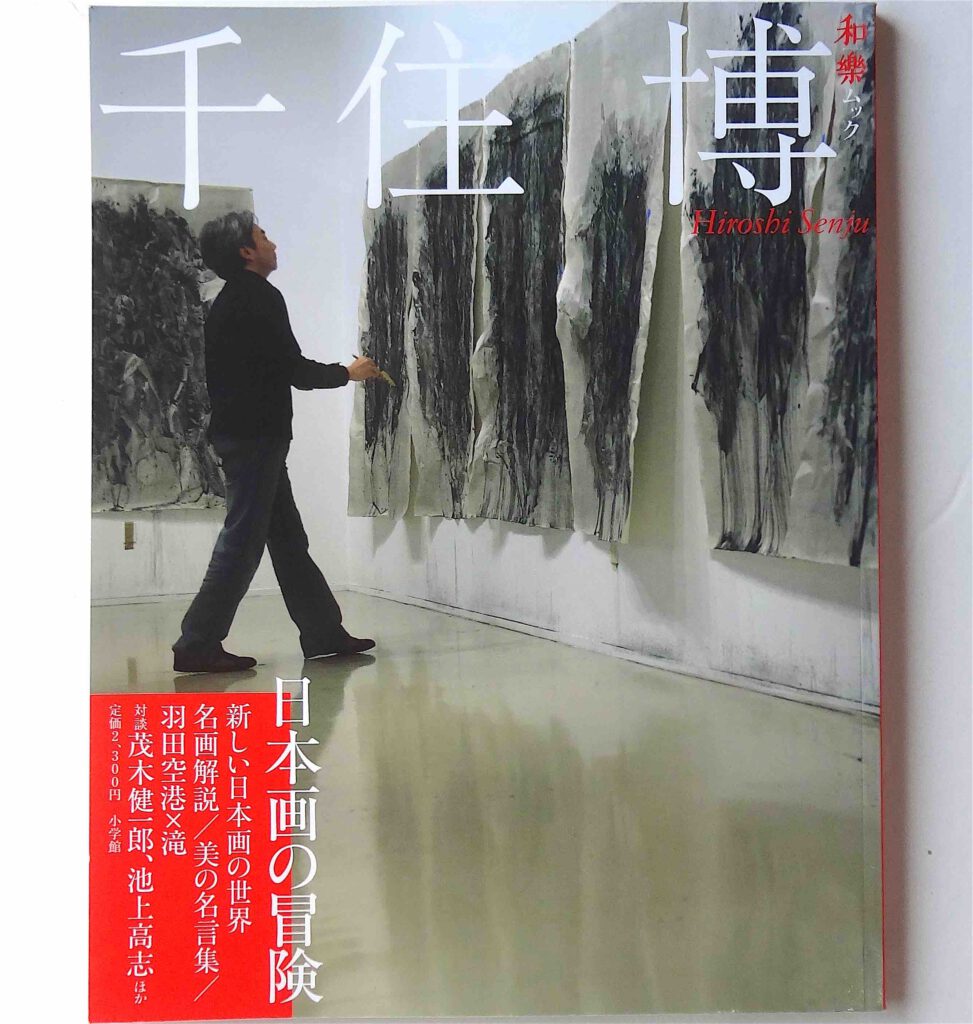
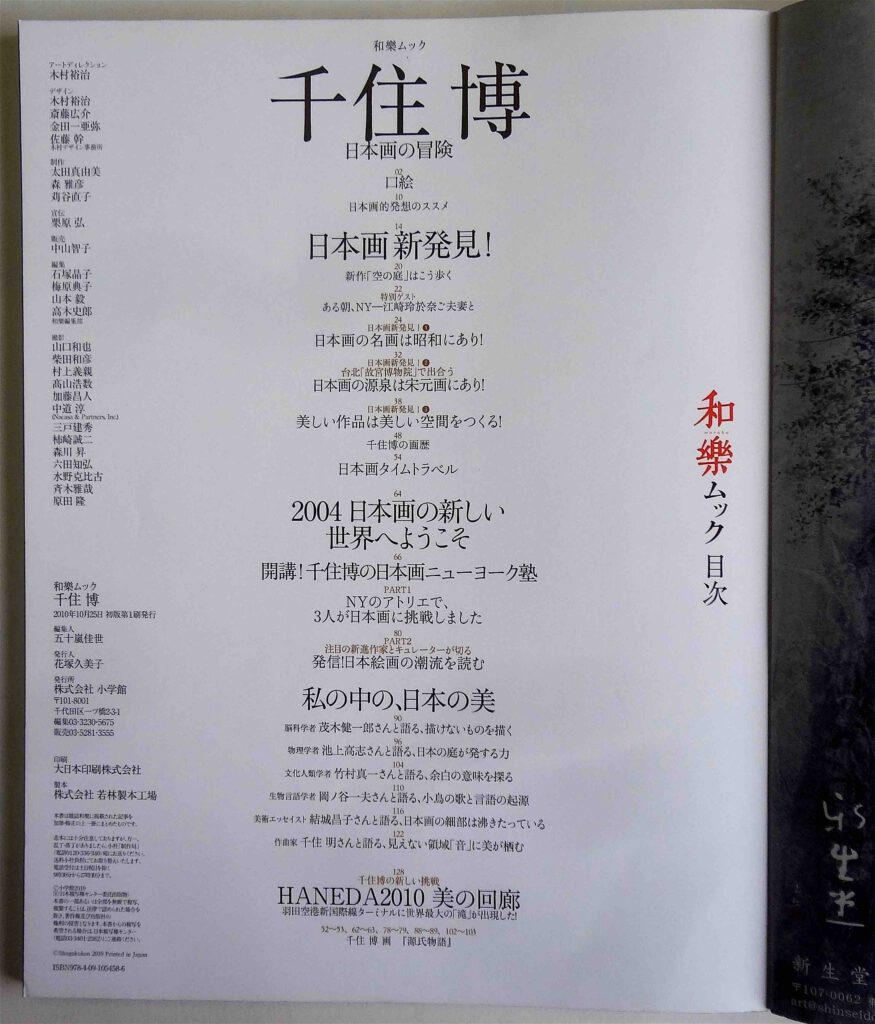
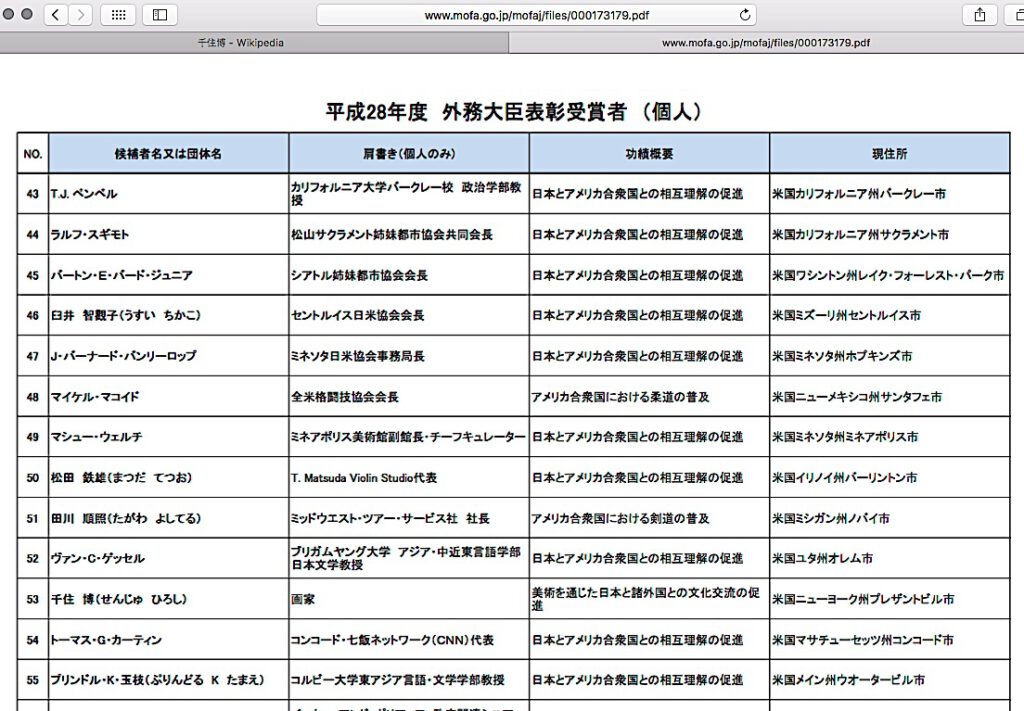
美術を通じた日本と諸外国との文化交流の促進
現住所:米国ニューヨーク州プレザントビル市 http://www.mofa.go.jp/mofaj/files/000173179.pdf
令和7年11月18日のアップデート
BIOGRAPHY
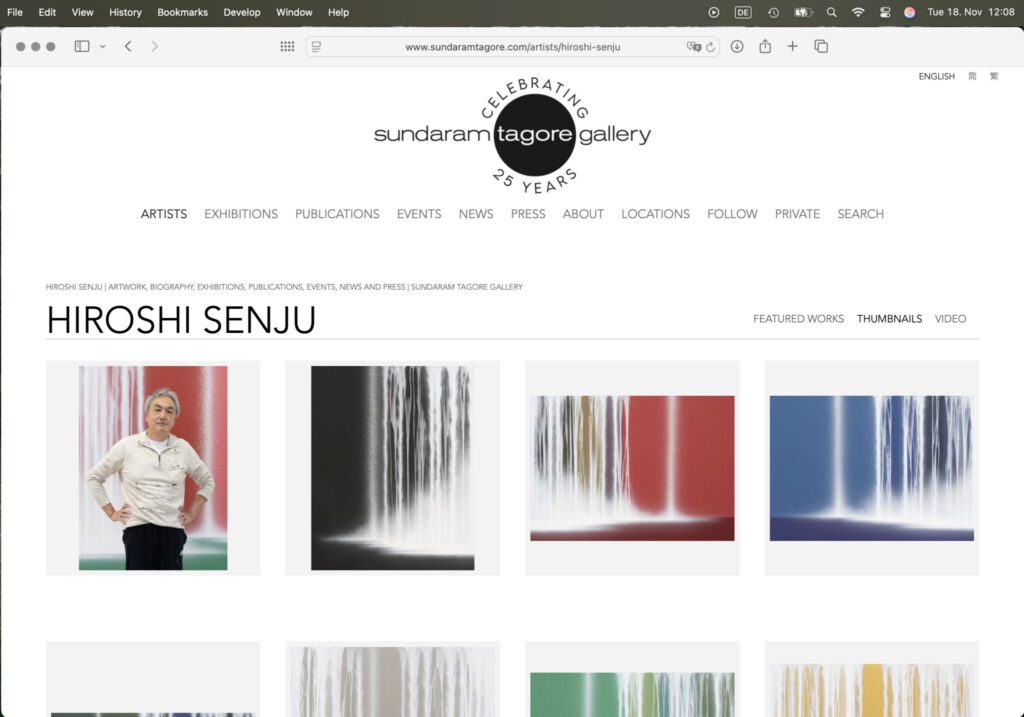
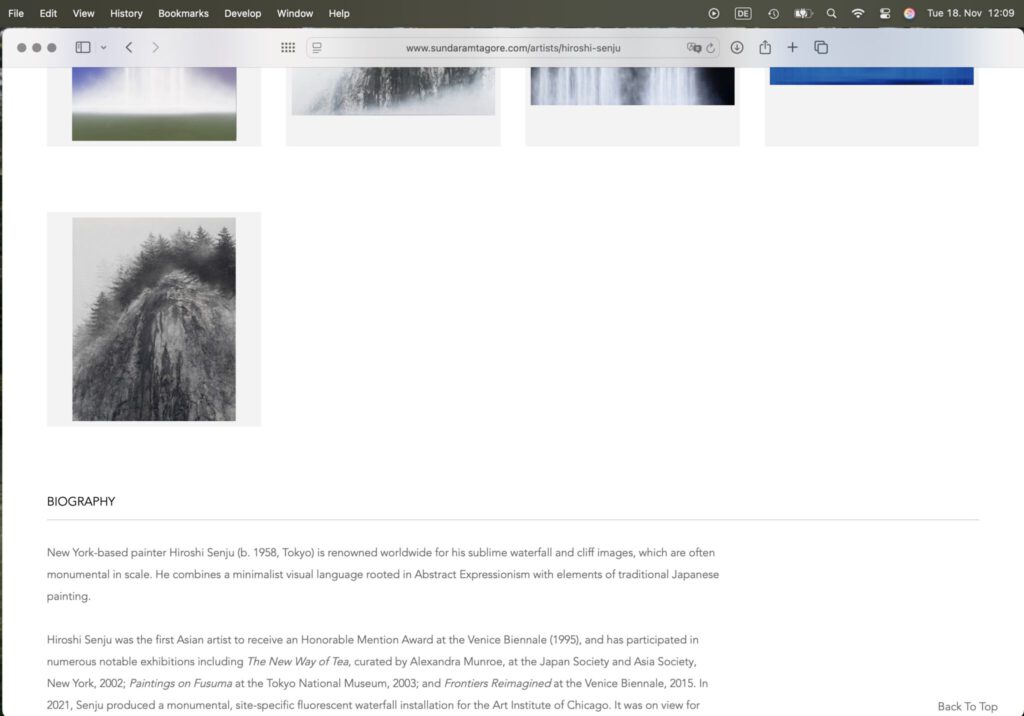
New York-based painter Hiroshi Senju (b. 1958, Tokyo) is renowned worldwide for his sublime waterfall and cliff images, which are often monumental in scale. He combines a minimalist visual language rooted in Abstract Expressionism with elements of traditional Japanese painting.
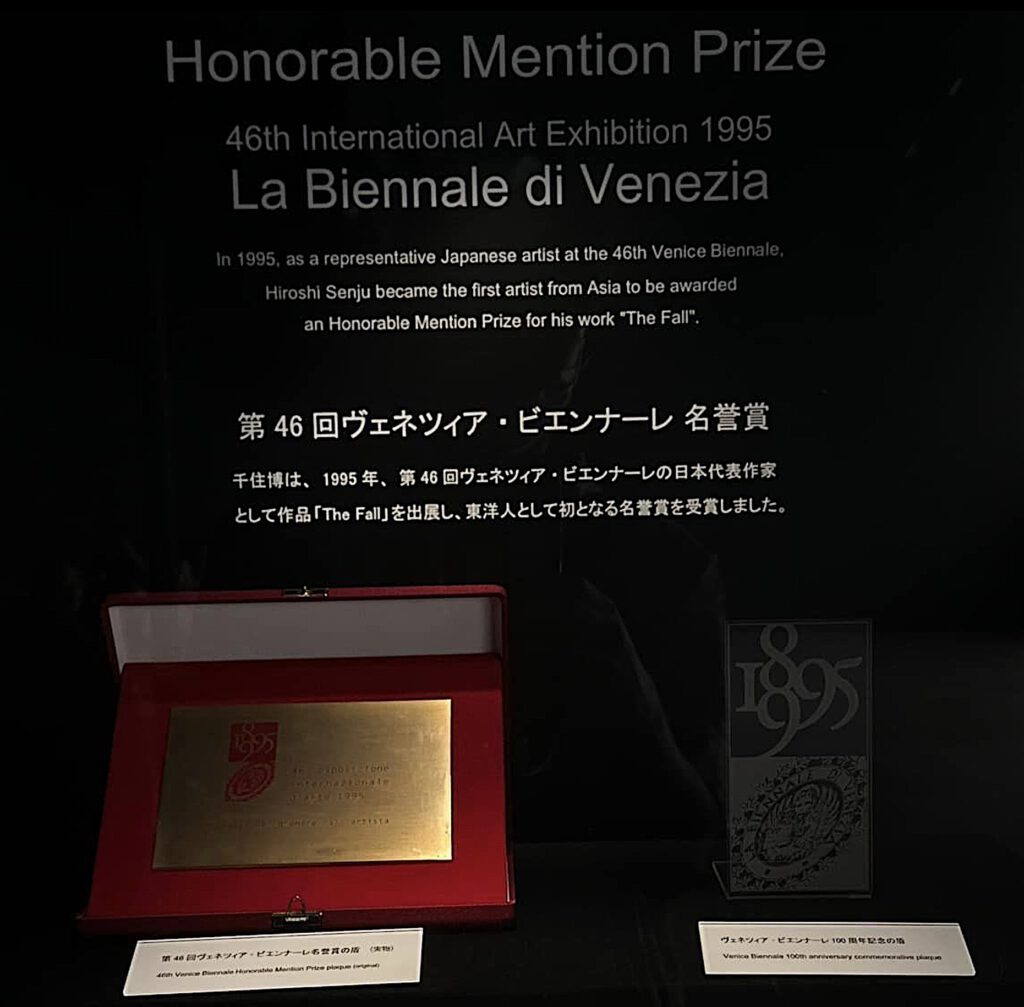
Hiroshi Senju was the first Asian artist to receive an Honorable Mention Award at the Venice Biennale (1995), and has participated in numerous notable exhibitions including The New Way of Tea, curated by Alexandra Munroe, at the Japan Society and Asia Society, New York, 2002; Paintings on Fusuma at the Tokyo National Museum, 2003; and Frontiers Reimagined at the Venice Biennale, 2015. In 2021, Senju produced a monumental, site-specific fluorescent waterfall installation for the Art Institute of Chicago. It was on view for eight months in a gallery in the Asian wing designed by Pritzker Prize-winning architect Tadao Ando. The fifty-foot wide folding screens are now part of the museum’s permanent collection. In 2023 two specially commissioned waterfall paintings were installed in the United States Embassy in Tokyo. A waterfall painting is currently on view in the Victoria & Albert Museum in London.
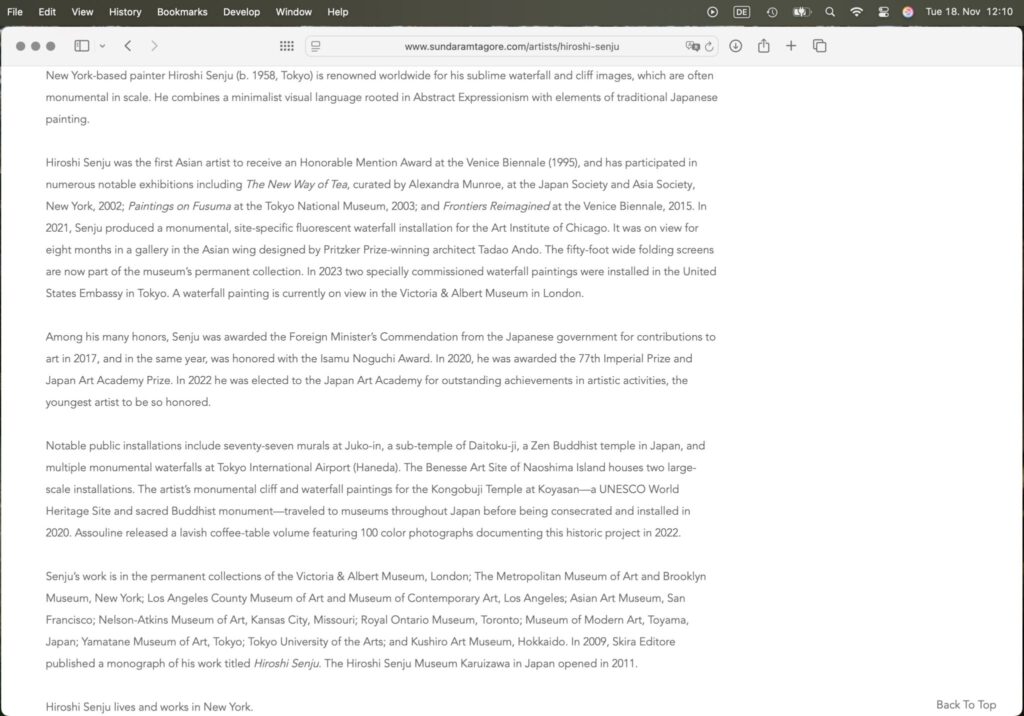
Among his many honors, Senju was awarded the Foreign Minister’s Commendation from the Japanese government for contributions to art in 2017, and in the same year, was honored with the Isamu Noguchi Award. In 2020, he was awarded the 77th Imperial Prize and Japan Art Academy Prize. In 2022 he was elected to the Japan Art Academy for outstanding achievements in artistic activities, the youngest artist to be so honored.
Notable public installations include seventy-seven murals at Juko-in, a sub-temple of Daitoku-ji, a Zen Buddhist temple in Japan, and multiple monumental waterfalls at Tokyo International Airport (Haneda). The Benesse Art Site of Naoshima Island houses two large-scale installations. The artist’s monumental cliff and waterfall paintings for the Kongobuji Temple at Koyasan—a UNESCO World Heritage Site and sacred Buddhist monument—traveled to museums throughout Japan before being consecrated and installed in 2020. Assouline released a lavish coffee-table volume featuring 100 color photographs documenting this historic project in 2022.
Senju’s work is in the permanent collections of the Victoria & Albert Museum, London; The Metropolitan Museum of Art and Brooklyn Museum, New York; Los Angeles County Museum of Art and Museum of Contemporary Art, Los Angeles; Asian Art Museum, San Francisco; Nelson-Atkins Museum of Art, Kansas City, Missouri; Royal Ontario Museum, Toronto; Museum of Modern Art, Toyama, Japan; Yamatane Museum of Art, Tokyo; Tokyo University of the Arts; and Kushiro Art Museum, Hokkaido. In 2009, Skira Editore published a monograph of his work titled Hiroshi Senju. The Hiroshi Senju Museum Karuizawa in Japan opened in 2011.
Hiroshi Senju lives and works in New York.
https://www.sundaramtagore.com/artists/hiroshi-senju
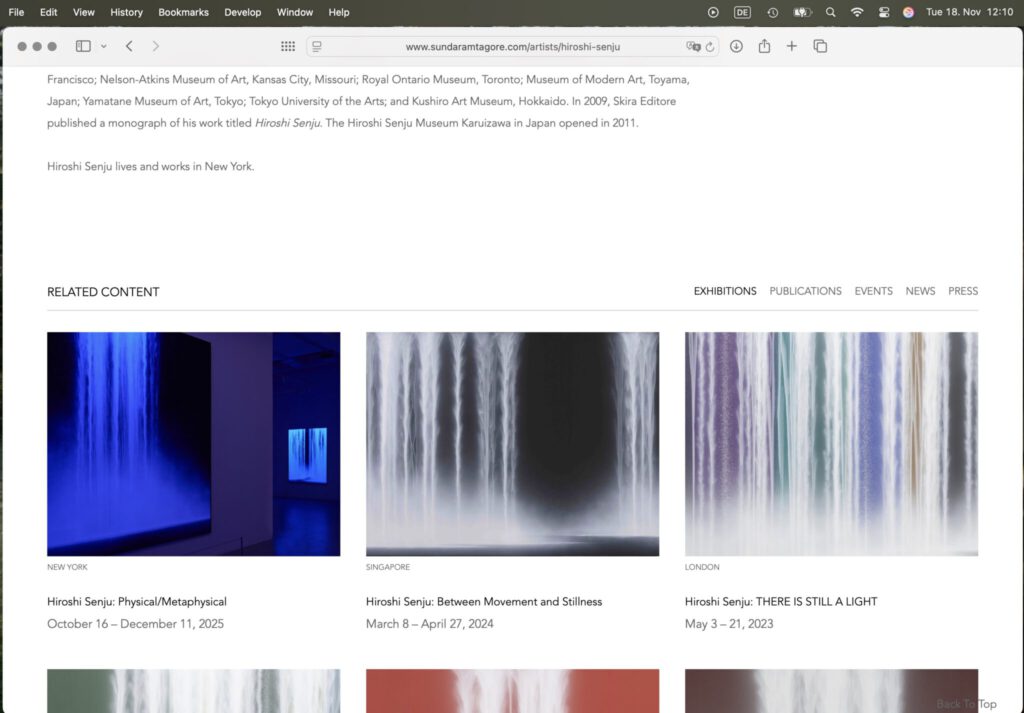
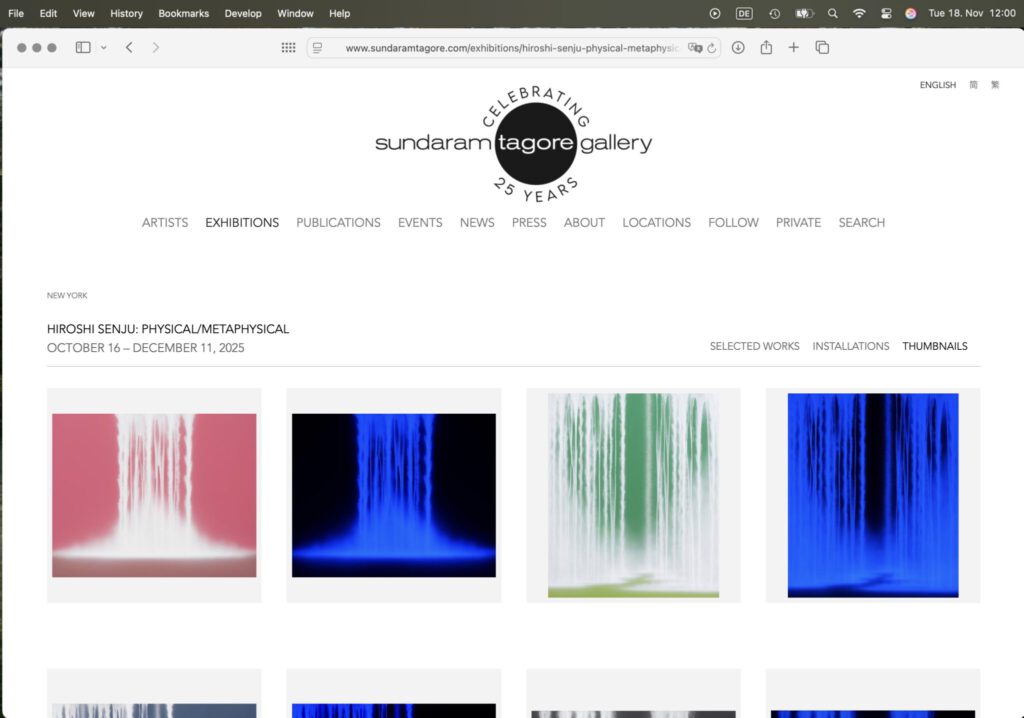
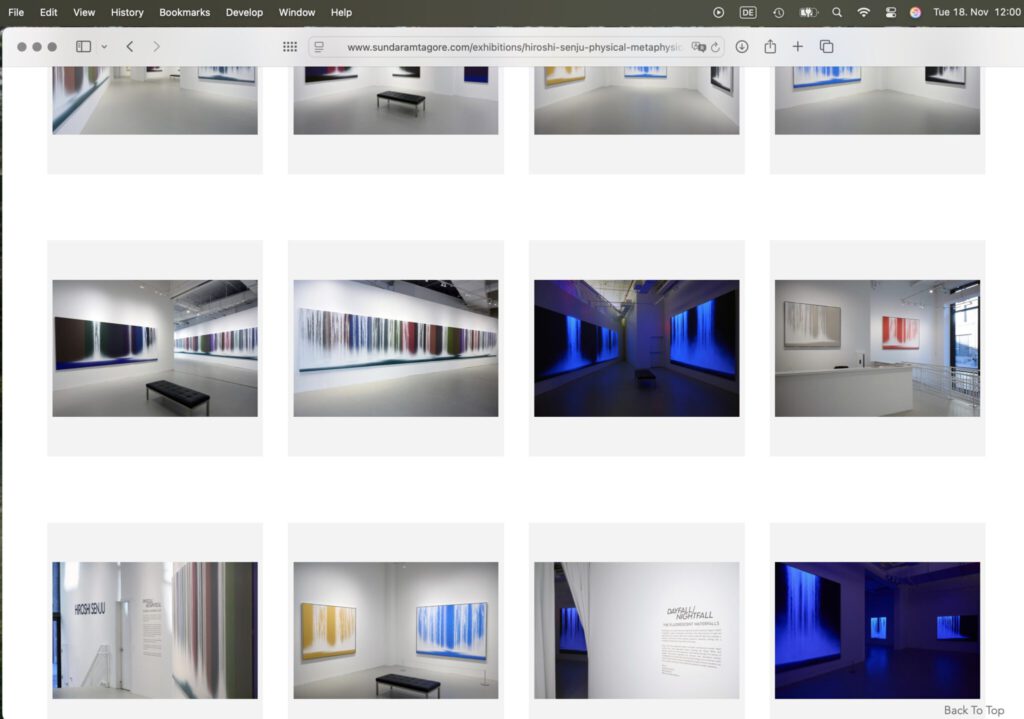
https://www.sundaramtagore.com/exhibitions/hiroshi-senju-physical-metaphysical
Contemporary artist Hiroshi Senju discusses his work at his studio in upstate New York
(in case of censorship:)
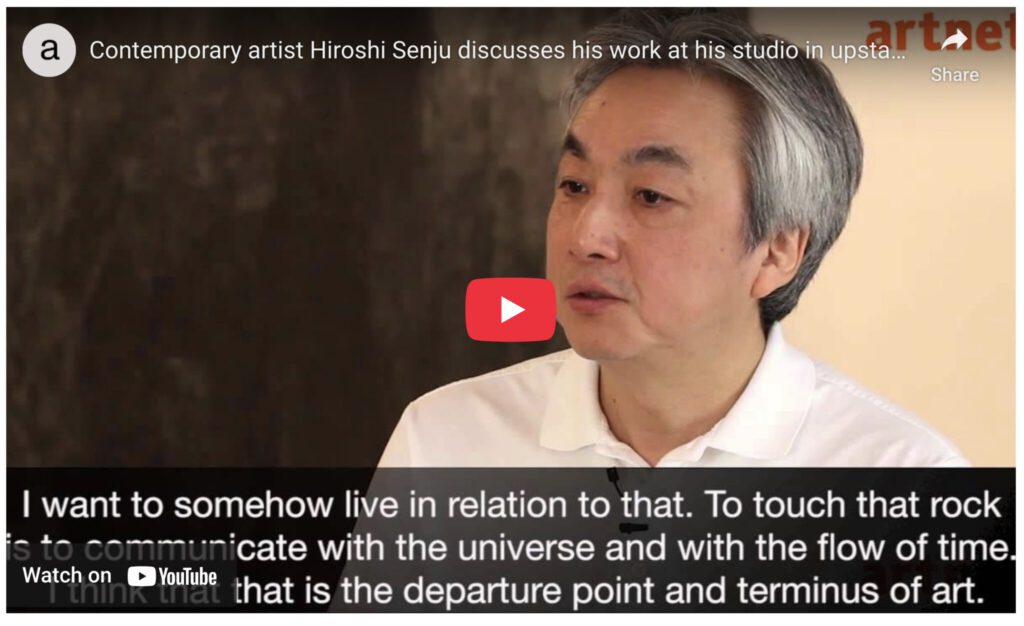
3,928 views 30 Jan 2015
Best known for his large-scale depictions of waterfalls, Hiroshi Senju describes his artistic process as a collaboration with the forces of nature. The artist uses natural pigments and minerals on paper. Watch the full video now to find out more about Senju’s artistic career and process.
Link_https://www.youtube.com/watch?v=2CjNIVF4Kyg
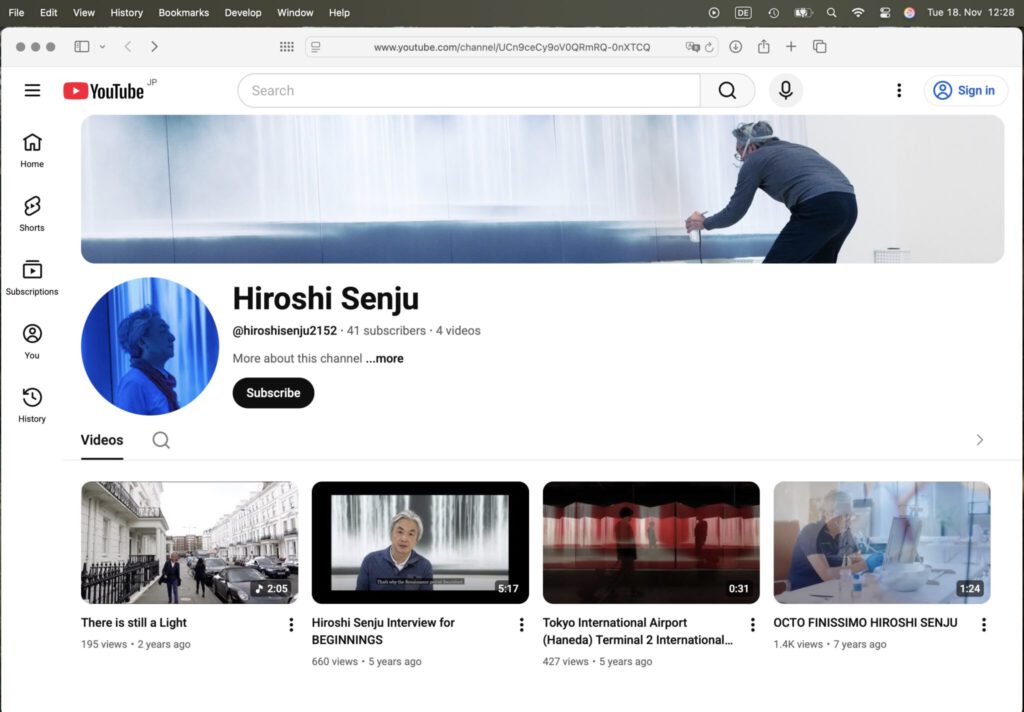
Link_https://www.youtube.com/channel/UCn9ceCy9oV0QRmRQ-0nXTCQ
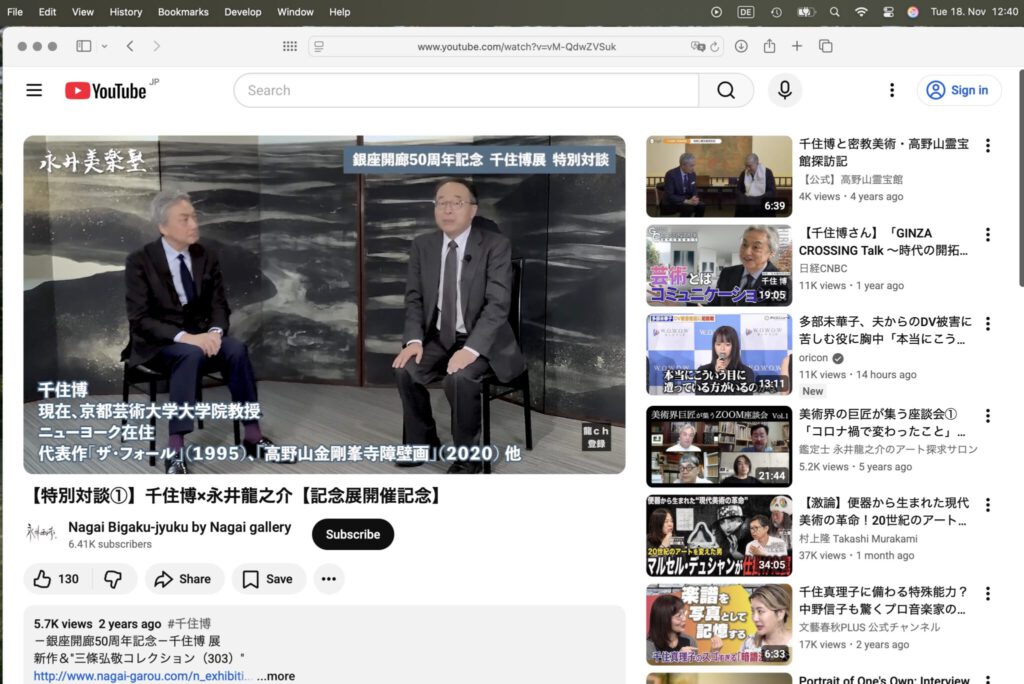
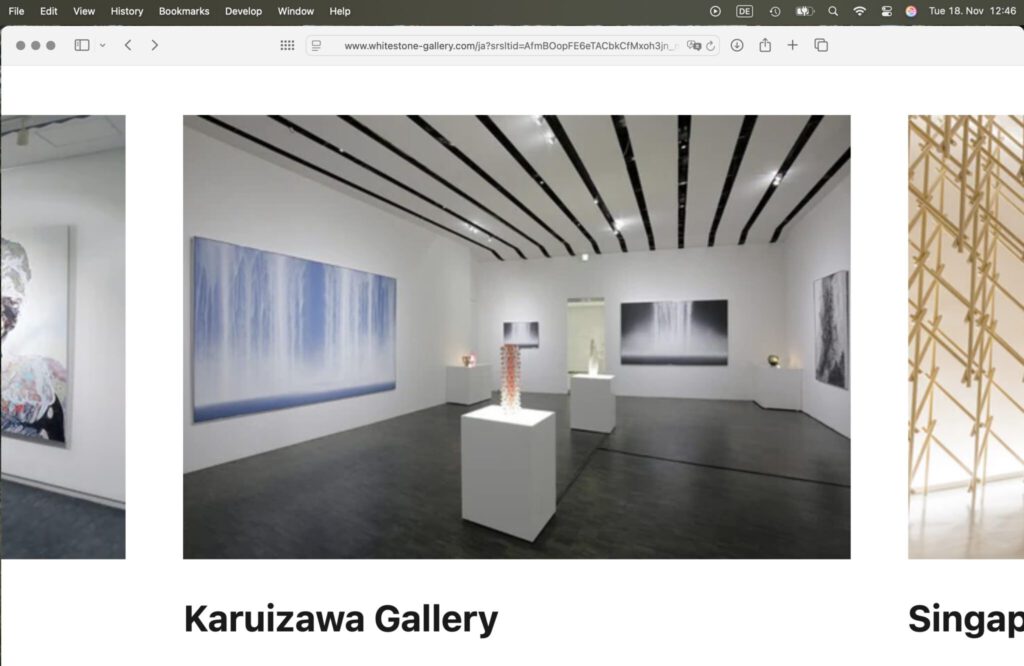
https://www.whitestone-gallery.com/ja?srsltid=AfmBOopFE6eTACbkCfMxoh3jn_mo1MXo1xcZwU8Xcg39uefCocPTXypB
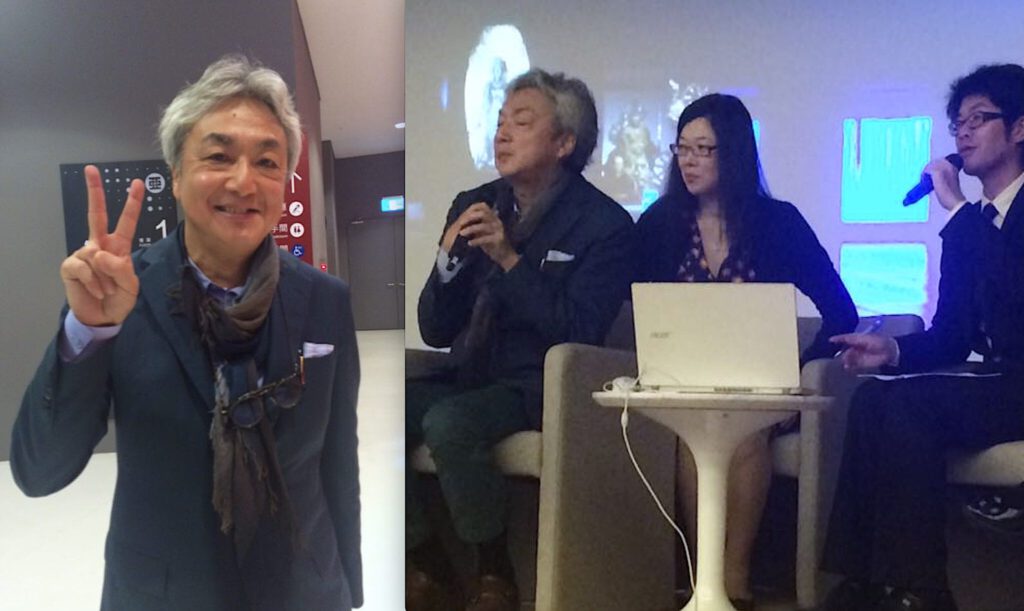
(美術手帳より:)
SERIES / アートと法 / Art Law
裁判所はどのように契約書を解釈したのか? 千住博事件東京地裁判決を読み解く
アーティスト・千住博とWhitestone Galleryを運営する株式会社のあいだで巻き起こった、契約違反に関する裁判。約3年にわたる争いの末、東京地裁は被告である千住博に対して約2億3460万円の支払いを命じた。このケースを、「Art Law」を業務分野として掲げる日本で数少ない弁護士のひとり、木村剛大が読み解く。
文=木村剛大
2020.10.24
アーティスト・千住博がWhitestone Galleryを運営する株式会社(以下「WS」という)から契約違反で訴えられ、約3年にわたり争われてきた裁判の判決が2019年9月27日に東京地裁で出された(*)。東京地裁は17億9172万円の支払いを求めていた原告WSの主張を一部認め、被告千住氏に対して約2億3460万円の支払いを命じた。
WSの主張は、千住氏が専属的制作販売義務を負っていたにもかかわらず、他の4つの画廊(K1堂、E1堂、画廊O1、ギャラリーL1)にも作品を販売していたことがWSとの契約違反であるため、損害を支払えというものであった。
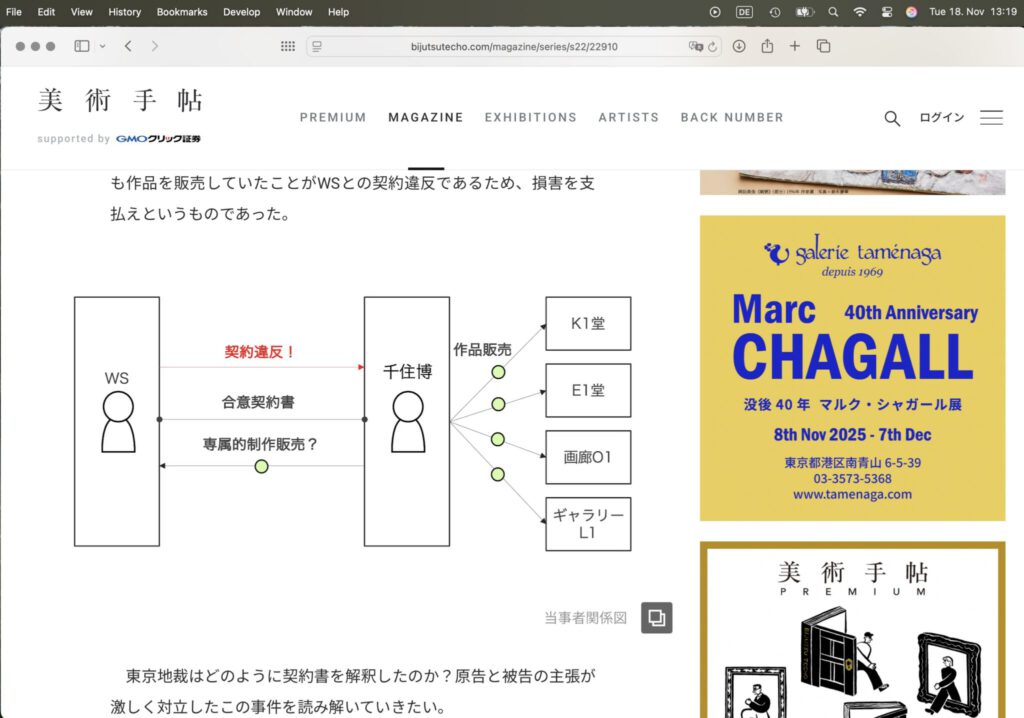
東京地裁はどのように契約書を解釈したのか?原告と被告の主張が激しく対立したこの事件を読み解いていきたい。
合意契約書の内容
問題となったのは平成14年2月20日に交わされた合意契約書という書面の内容である。この合意契約書の4条に千住氏が違反したかが法廷で争われることになった。合意契約書の内容は、次のとおりである。
“画家・Y1(以下、甲とする)と株式会社A1(以下、乙とする)は、アーティストとアートディーラーの責任ある取引と円滑な業務分担を目的として本合意契約書を締結した。 第一条 甲の画家としての活動を経済的に大きく支援し、安定した画業を営むことを目的とする。 第二条 乙の開催するY1個展、及びグループ展に安定的に作品を供給することを目的とする。 第三条 甲の芸術作品の価格の安定を図り、作品の芸術的完成度の高まりに対して価格の上昇を図ることを目的とする。 第四条 甲が制作した作品は価格の安定と上昇を図るため、乙を経由して販売することを、甲乙合意する。ただし、甲の諸事情により、第三者に直接納品しなければならない作品が発生した場合は例外とする。 第五条 展覧会を開催するにあたり、営業催事は乙が中心となって、甲の協力のもとに行う。文化催事は甲が中心となって、美術館、新聞社及び公的機関の主催、後援のもとに行うものとする。 第六条 作品の制作内容の絵の大きさやモチーフについては、乙の希望を取り入れるが、その芸術的表現の内容については、甲の自由な発想と芸術的裁量によるものとする。 第七条 画料は作品の芸術的完成度の高まりと、美術市場の人気や美術関係者の意見を参考にして乙の提案を甲が了承する形で決定する。 但し、甲への画料の支払は乙の関連会社である、株式会社B1画廊を通じて行う場合もある。 第八条 この契約は平成14年4月1日から実施するものとする。 但し甲乙の申出により、契約の内容を変更する場合は1年前に文章にて通知し、甲乙合意の上改訂するものとする。 第九条 上記各項に取り決めのない事項は甲乙協議の上決定する。”
当事者の主張
WSは、4条ただし書きに書いてある「甲の諸事情により、第三者に直接納品しなければならない作品が発生した場合」とは、空港、地下鉄の駅等のために制作するパブリック・アートについて専属的制作義務を課さないために規定したもの、と主張した。
これに対して、千住氏は、「甲の諸事情」という主観的な事情があれば広く例外とするよう修正をし、被告がそれまでに深い付き合いのあった画廊等長年にわたる多大な恩のある画廊等と取引を行うことを例外とするための規定である、と主張した。
このように真っ向からこの4条ただし書きの解釈が食い違っているのである。
なお、じつはこの4条の文言は、千住氏からの要求によって当初の文言から修正されている。
当初、平成13年12月にWSから提案のあった文言は、「甲が制作した作品は価格の安定と上昇を図るため、全作品全て乙を経由して販売することを、甲乙合意する。」であった。
その後、平成14年1月中旬、千住氏からの修正要望を一部取り入れ、「甲が制作した作品は価格の安定と上昇を図るため、全作品全て乙を経由して販売することを、甲乙合意する。ただし、甲の諸事情により、第三者に直接納品しなければならない作品が発生した場合、乙と相談の上、例外とすることもある。」に修正された。
さらに、千住氏が修正を要望し、平成14年2月20日付け合意契約書では、「甲が制作した作品は価格の安定と上昇を図るため、乙を経由して販売することを、甲乙合意する。ただし、甲の諸事情により、第三者に直接納品しなければならない作品が発生した場合は例外とする。」となった経緯がある。
はたして東京地裁の判断は?
東京地裁は、WS、千住氏のいずれの主張を採用するのでもなく、独自にこの4条の文言を次のような意味だと解釈した。
専属的制作販売義務があるか?
裁判所は、「全作品全て」の削除によって、A1(WS)を経由して販売しなければならない被告の作品の範囲が不明確になっているとしながらも、ただし書きは本文の例外を定めるものであることも指摘し、「同条ただし書と同条本文とを合わせ読めば、同条本文の対象となる被告の作品とは、被告の諸事情により第三者に直接納品しなければならない作品以外の被告の作品であると解することができることを総合考慮すると、本件契約書の4条は、被告の諸事情により第三者に直接納品しなければならない作品以外の被告の作品は、全てA1を経由して販売しなければならず、その限度において、被告は、A1に対し、専属的制作販売義務を負っていると解するのが相当である。」と判断している。
例外となる場合は?
東京地裁は、大きな争点となった専属的制作販売義務の例外となるただし書きの「甲の諸事情により、第三者に直接納品しなければならない作品」に当たるためには、次の2つの条件(以下では(a)を「取引時期の条件」、(b)を「非競合の条件」という。)を満たす画廊に直接納品する被告の作品である必要があると判断した。
(a)C1画廊(筆者注:WSの前身画廊)と交際する前から大作等のコレクターを抱え、かつ、
(b)その客筋が個人美術館を前提としたコレクターや官庁が主なものであり原告と競合しない画商を例外の対象とすること
東京地裁がこの解釈をする際に考慮したと思われるのは、WSの代表取締役からの契約違反の指摘に対して、千住氏が出した書面の内容だ。
千住氏は、WSから「うちの価格上昇能力を信じるのであるから、Whitestonegallery一社に任せる契約を以前結ばれたのですよね。…絵の価格の安定を図るためにうちを契約画廊にし、散々投資させておいて、うちに黙って絵をばら撒き、その結果として絵の価格云々、その文句と責任をうち一社にいうのは筋違いです。」との指摘や取引停止も辞さないとの通知を受けた。
これに対して、千住氏は、平成28年3月に「謝罪と回答」と題する次の内容の書面を出していた。
“また契約うんぬんに関しては、20年前、独占契約という形が日本の画商界には全くそぐわない、しかしそれがC1画廊(当時)のビジネスにとってプラスになるのであれば考えようと会長と決めたことです。 しかし、C1画廊と交際する前から、大作等のコレクターを抱えていたいくつかの画商に対しては、例外事項として、会長と必要とあらば相談しながら事を進めていくという事を話し合い、会長も納得してくださり、円満な、しかし複雑なグレーゾーンを含む取引形態であることを、誰よりも会長がよくご存じです。そうでなければこの形態が20年も持続するわけがないのですから。契約不履行という話は、少なくとも今日まで全く議題に上がっておりません。会長とのお約束が、このような形の緩やかでデリケートな内容であったという事実をご理解ください。 またこれらの画廊の客筋が個人美術館を前提としたコレクターや官庁が主なものであったため、C1画廊とは競合せず順調に推移しておりました。A1そしてX1ギャラリーと移行した今日においてもこの会長との信頼関係に満ちた紳士協定は円満に続いているものと理解しています。”
(a)取引時期の条件、(b)非競合の条件をみたす必要がある、という東京地裁の解釈が千住氏の「謝罪と回答」の内容を汲んでいることが分かるだろう。
このように、裁判所は当時作成していた書面の内容は、信頼性が高いものとして取り扱うことが多い。
また、裁判所は、本件契約の目的を考え、どのような解釈が合理的かを検討している。つまり、「被告の作品の安定と上昇を図るという本件契約の目的(本件契約書の3条)を達成するためには、作品の価格の安定や上昇を目指さず自己の利益のみを追求するような画廊等に被告の作品が販売された場合に、発表価格を下回る価格の作品が市場に出回り価格が下落するという事態を防ぐ必要があるため、原告としては、例外については極めて限定的にする必要が高い」と指摘した。
他方で、「例外を広く認めると、営業催事を原告が中心となって行ったとしても(本件契約書の5条)、被告から直接作品を購入して保有する他の画廊等が原告による同催事の効果を何らの費用も掛けずに享受することを許す結果となることから不当であると考えられることからも裏付けられる。」とした。
このように、裁判所は契約書の文言を解釈するときに、まずはその文言自体からどのように読み取れるのかを検討する。しかし、それでも明らかにならない部分がある場合には、裁判官がその内容を補充していく。
4つの画廊は例外に当たるか?
画廊O1、ギャラリーL1は、本件契約締結前から千住氏との取引はなかった。そのため、(a)取引時期の条件をみたさないと認定された。
また、裁判所は、K1堂、E1堂についても、本件契約締結前から千住氏と取引はあったものの、千住氏の作品の供給を巡って原告と競合する関係にあったと認定して、(b)非競合の条件をみたさないと結論付けた。
そのため、千住氏が4つの画廊に作品を販売した行為は、いずれもWSとの契約に違反すると裁判所は認定した。
損害額はどうやって算定されたか?
損害額の認定は、かなり悩ましい。原告の損害は、被告が契約違反をしなかったらそれらを原告が供給された作品を販売できたことが前提となる。
しかし、本件では原告の前身であった会社の会長が平成19年11月に所得税法違反及び法人税法違反の罪により有罪判決の言渡しを受けた事実がある。
そして、千住氏は、会長の逮捕を契機に、原告には実際に供給を受けた作品以外のものを第三者に販売して利益を得るだけの販売余力はなくなったと主張した。裁判所も、原告が被告の企画展を開催していた百貨店の数は、会長の逮捕を契機に激減しており、原告がそれらをすべて販売できなかった可能性がある程度あった、としている。
それでも、裁判所は、4つの画廊が販売した金額で計算した損害額(販売した作品の総号数で認定したり、この方法によると画料の総額を下回るものは画料の総額としたりしている。そして、原告の得られた利益はその10パーセントと認定した)は、実際の損害額を大幅に下回ると考えられることも考慮すると、販売余力の点があっても認定した損害額を下回らないとして、約2億3460万円を原告の損害として認めた。
おわりに
約3年にわたり争われた裁判であり、互いに様々な主張が繰り広げられ、対立点は多い。
裁判所は、やはり契約書の文言をまず重視する。そして、その文言が明確ではないときは、契約の目的や経緯などから内容を補充して独自に何が合理的かを考えて文言を解釈する。
裁判所の認定は、両当事者から提出された証拠に基づくものであり、認定された事実もあくまで事後的に検討した結果浮かび上がったものに過ぎない。
当事者が契約書の文言と異なる行動をしていたり、合意があるといったりしても、それが契約内容となっていたことを事後的に立証するのは、かなりハードルが高い。
基本ではあるが、契約書の文言をよく検討し、アーティストの立場からは特に自分の活動を制限する内容は本当に守れるのか、例外を明確に書くか、慎重に検討することが求められる。
千住氏は、本件契約書の署名押印前に、WSの会長に対し、「原告以外の画廊等との取引をやめる意思は全くなく、他の画廊等との取引を制限するような契約を締結するつもりはない」と伝えたところ、会長は了承したので、本件契約を締結した、と主張している。
しかし、これが仮に事実であったとしても、事後的に立証できない情報であれば、様々な要因によって簡単に流れ落ちてしまうのだ。
*──東京地判令和元年9月27日(平成28年(ワ)第38221号)
2020年10月27日追記:関係画廊から、「令和2年3月12日に東京高等裁判所において、双方に一切の金銭の支払いがないなかで円満に和解が成立し同訴訟は終結した」との情報提供がありました。
https://bijutsutecho.com/magazine/series/s22/22910
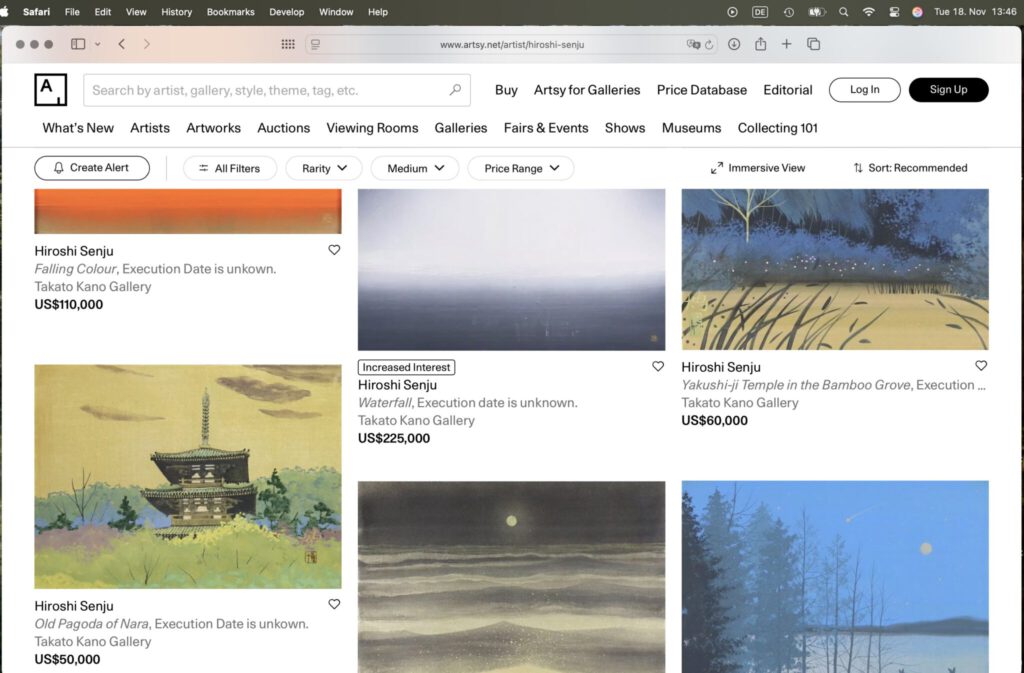
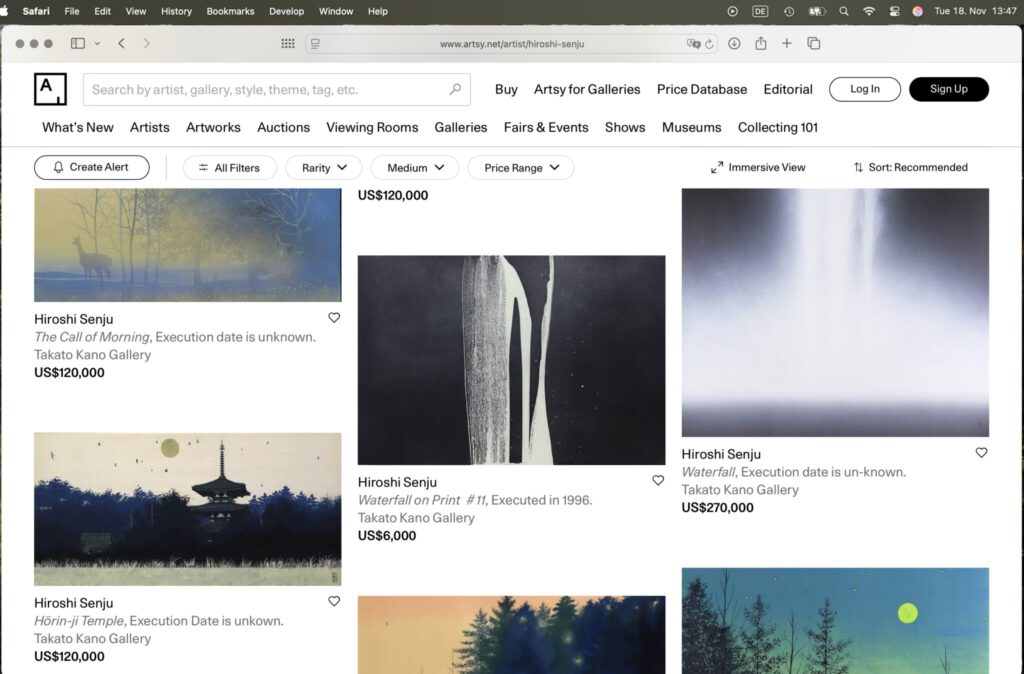
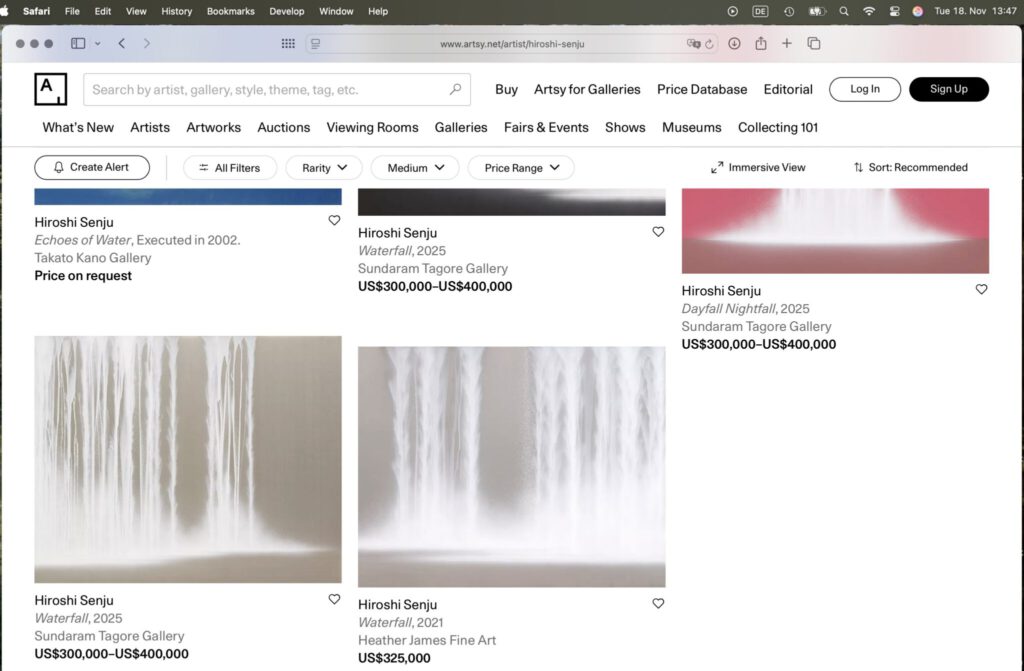
https://www.artsy.net/artist/hiroshi-senju
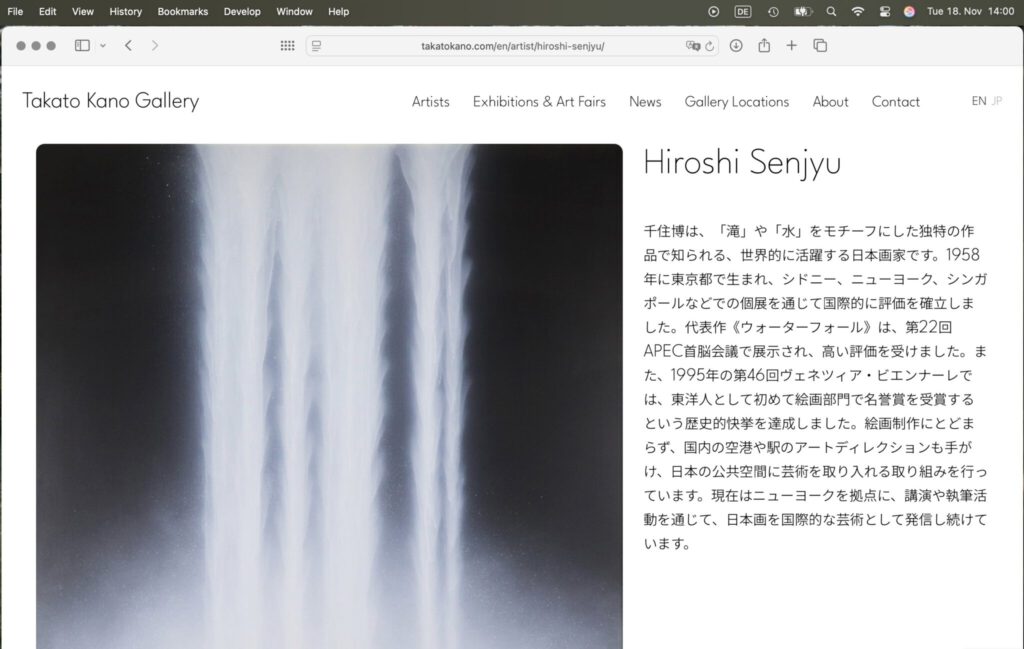
https://takatokano.com/en/artist/hiroshi-senjyu/
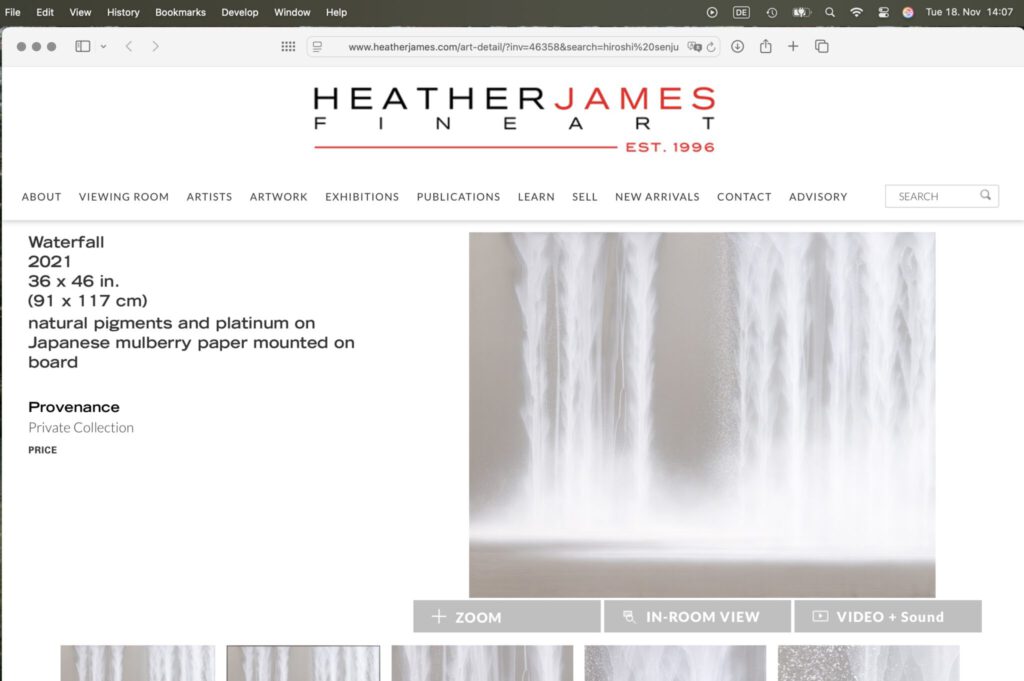
Known for his ability to blend traditional Japanese techniques with modern aesthetics, Hiroshi Senju’s sublime depictions of bands of cascading veils of paint evoke sensations of tranquility and awe. Senju began exploring waterfall imagery in the early 1990s, pouring translucent pigment onto mulberry paper mounted on board, creating cascading movement. In this work, “Waterfall,” he masterfully bonds ribbons of cascading water into two curtain-like ethereal panels. Senju’s interest in synesthesia is undeniable. “Waterfall” conjures sound, smell, and feel sensations as much as the rushing water’s appearance. In the present work, he placed these dynamic elements in a context that grounds the viewer’s sense of place within the natural world. A wedge of blue in the upper left corner contrasts the otherwise monochromatic palette, providing a sky association bounded by a hillside or cliff (for which Senju is known). Additionally, as the cascading water descends, it reaches a destination expanse at the bottom of the picture plane, where the force of the water disperses into a fine mist at the point of contact, serving as a visual anchor.
Senju’s finesse is evident throughout. He uses mulberry paper, a traditional Japanese material known for its delicate texture and strength. The paper’s natural fibers absorb pigments in ways that create subtle gradients and fluidity, enhancing the visual effect of the cascading water. He employs traditional Nihonga techniques, such as layering washes to build depth and movement and utilizing varied brush strokes to achieve different effects. Additionally, he incorporates modern methods like the airbrush to apply fine mists of pigment, creating smooth and seamless gradients that mimic the delicate spray and vapor associated with cascading water.
Hiroshi Senju pays homage to the traditional art forms of his heritage while pushing the boundaries of contemporary art. His ability to convey the sublime through simplicity and abstraction makes this artwork a testament to his unique vision and artistic mastery. It stands as a serene reminder of nature’s timeless beauty, captured through the ability of a master painter and artist.
https://www.heatherjames.com/art-detail/?inv=46358&search=hiroshi%20senju
Renowned Japanese artist Hiroshi Senju chooses Hong Kong for his solo debut – interview
Posted by artradar on October 2, 2009
Quotes:
Which artists do you admire?
I admire Claude Monet, Max Ernst, Andy Warhol. All these masters created art and art history. I respect this and all the arts. If I had to choose one, which is very hard, I would choose the Italian Renaissance. Those people have left a big footprint in art history.
Which contemporary artists are you most interested in?
Since I am an artist I am most interested in myself.
What things inspire you?
The inspiration I value the most are the emotions that all humans feel. I value this not as an artist, but as a human being. Also, I like to read Haruki Murakami.
What are your favorite things to do when you are not making art?
I play with my kids, my 3 sons. They are 16, 15, and 12. They are in New York.
Why did you first start painting in the ancient style?
As I have studied oil and acrylic painting, I found this style had the most potential. The pigments themselves are extraordinary and paper is very attractive and has many possibilities. Mulberry paper is very strong, even if you tried to rip it you can’t. This paper has a long history in Japan. I didn’t choose this because it is Japanese, but having equal distance from all techniques, I chose this because it had the most potential.
…
Do you have a deep connection to any other places or cultures other than Japan?
I don’t necessarily feel connected to Japan. I do not follow any certain culture, but a modern culture. We eat Indian, Chinese, and French food, we drink wines and sake. And sushi. This is what modern people are all about. I want to speak as a cosmopolitan, so therefore I do not necessarily want the audience to feel ‘oh, this is Japanese, or this is Chinese’. There may be some connections to German works of art as well. I try to keep an equal distance from all cultures. But, at the same time, I explained that I love the pigments and that’s why I started this kind of painting. I would like to connect to before the ages when all the people were divided, before the races were divided into east and west, before the culture was divided into east and west.
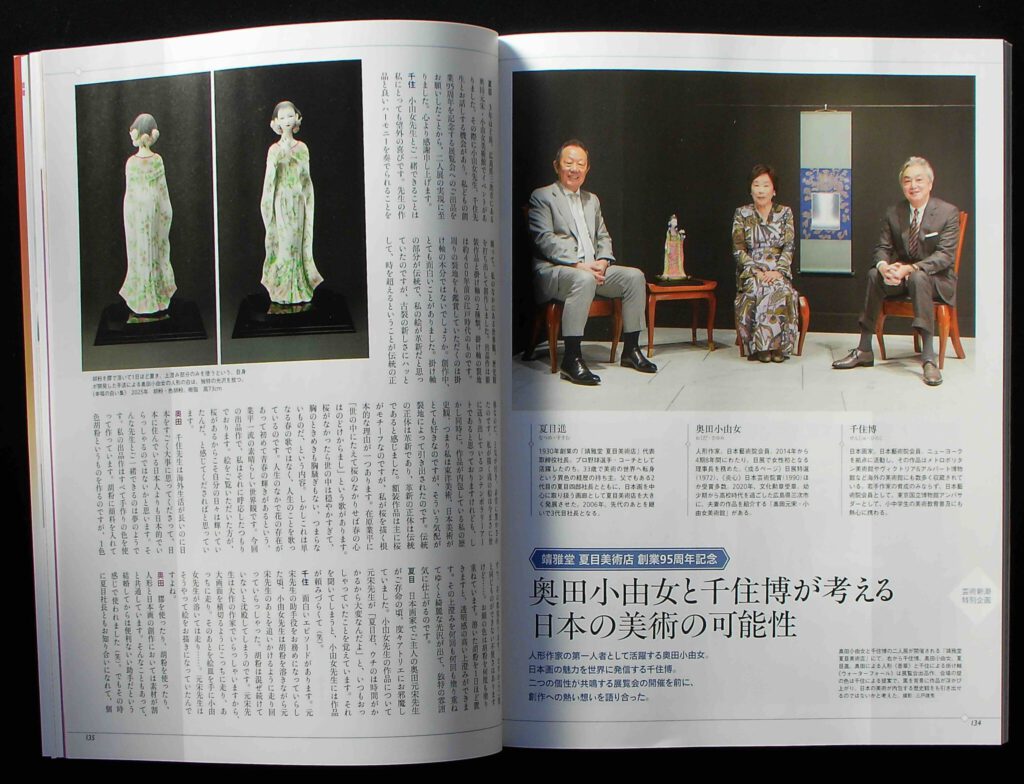
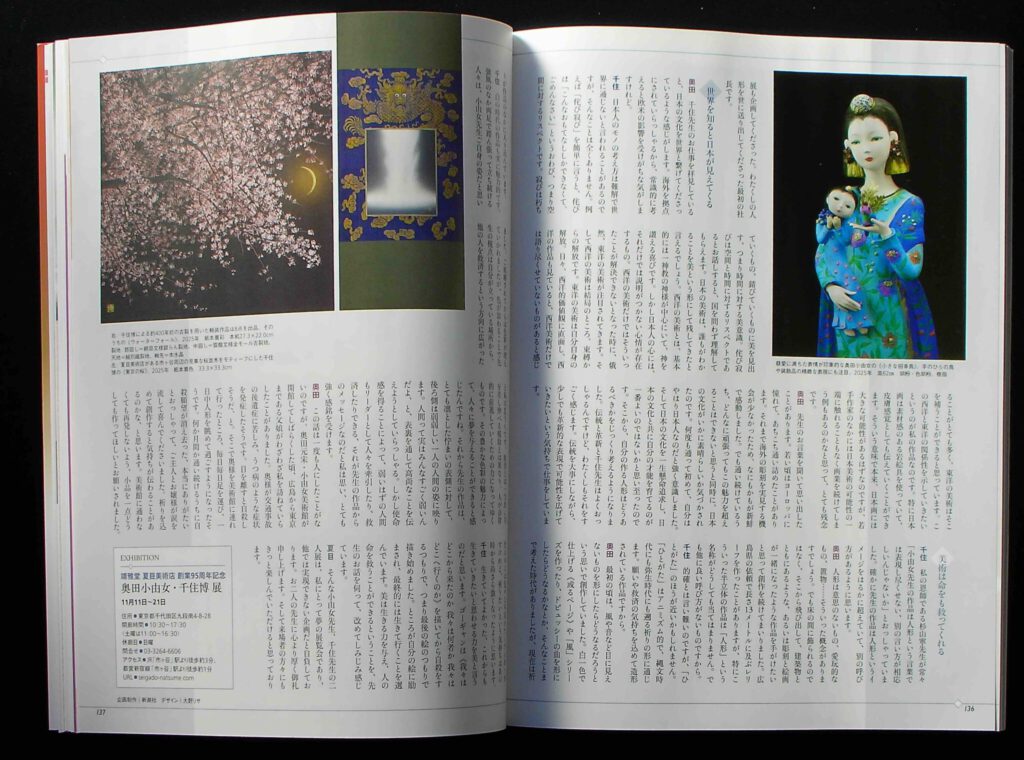
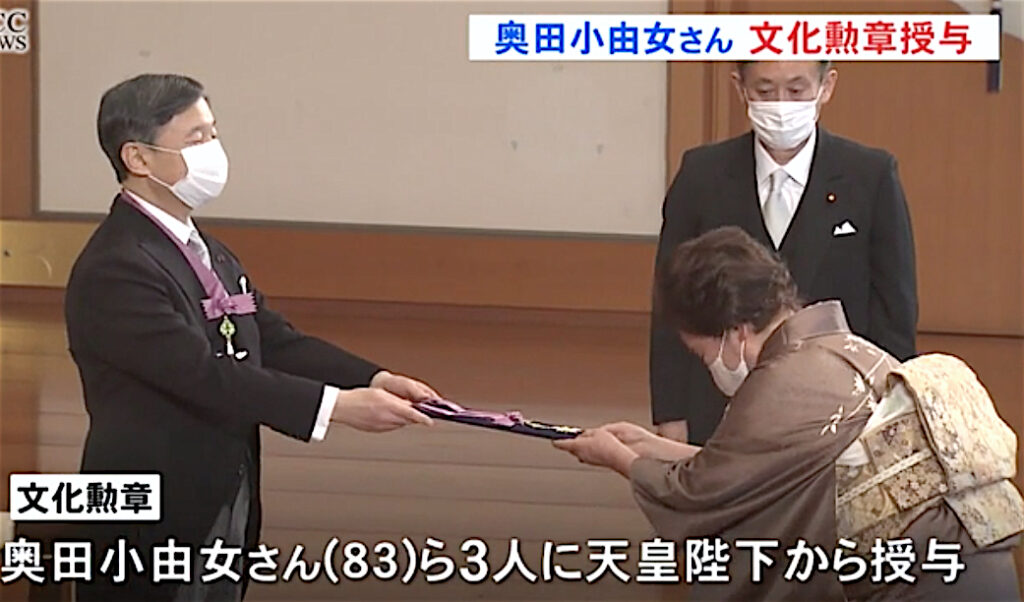
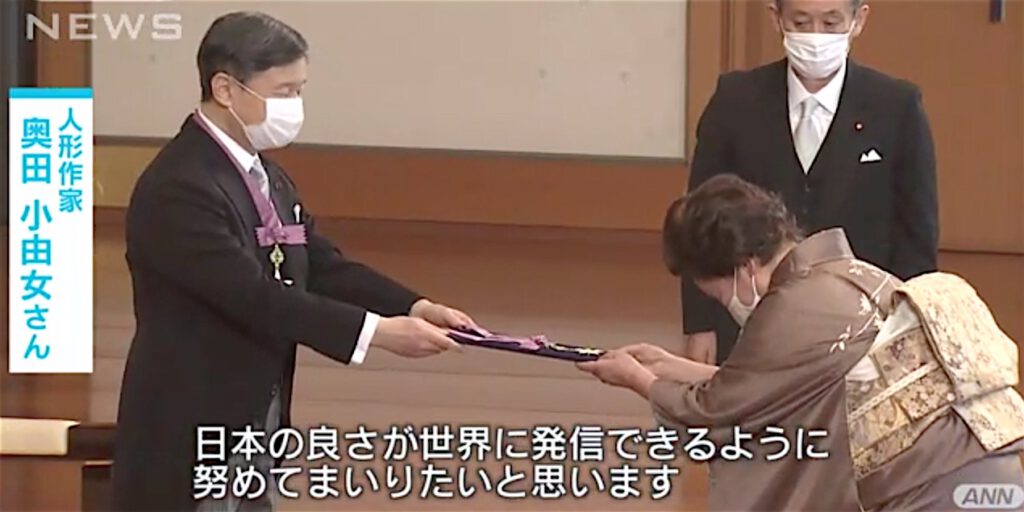
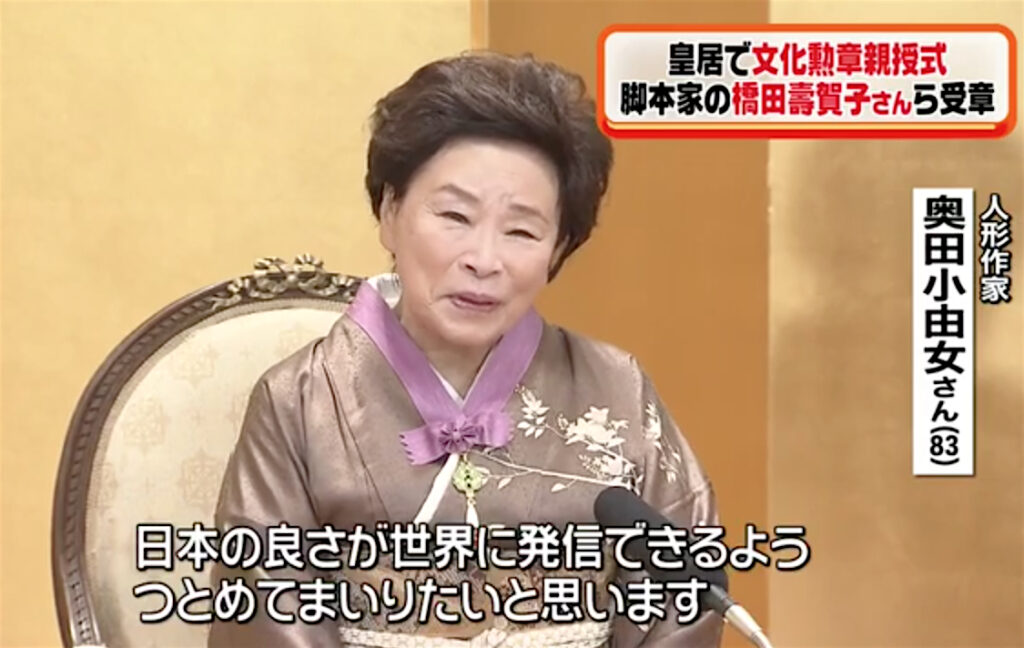
日本初、夫婦で文化勲章。日展理事長の奥田小由女先生におめでとうございます
https://art-culture.world/reviews/nitten-order-of-culture-日展-文化勲章/

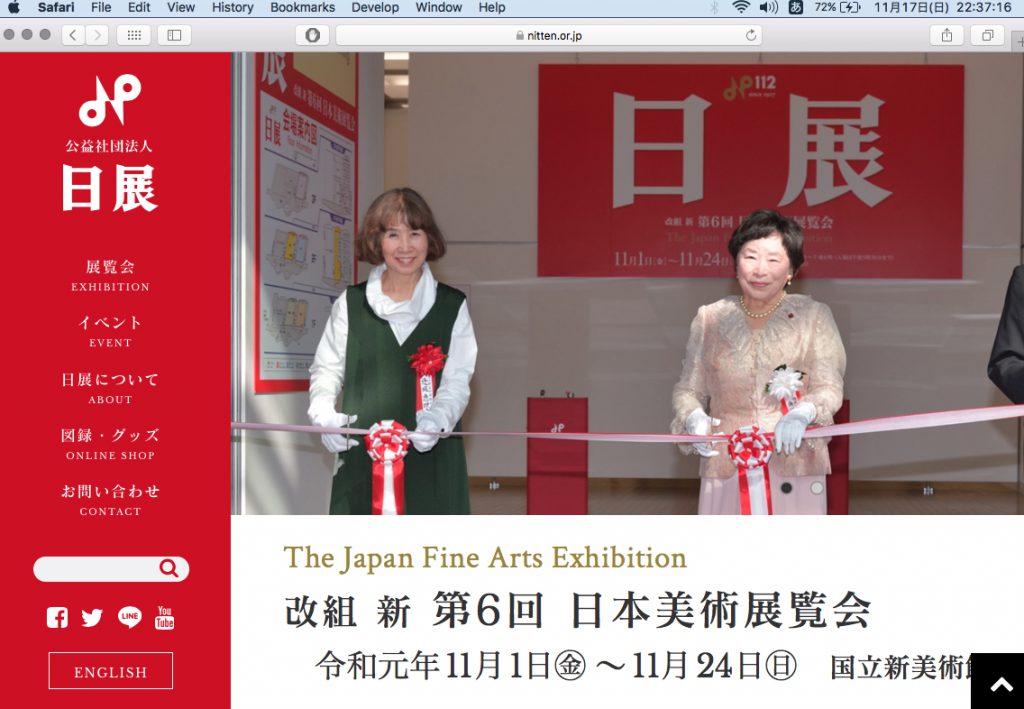
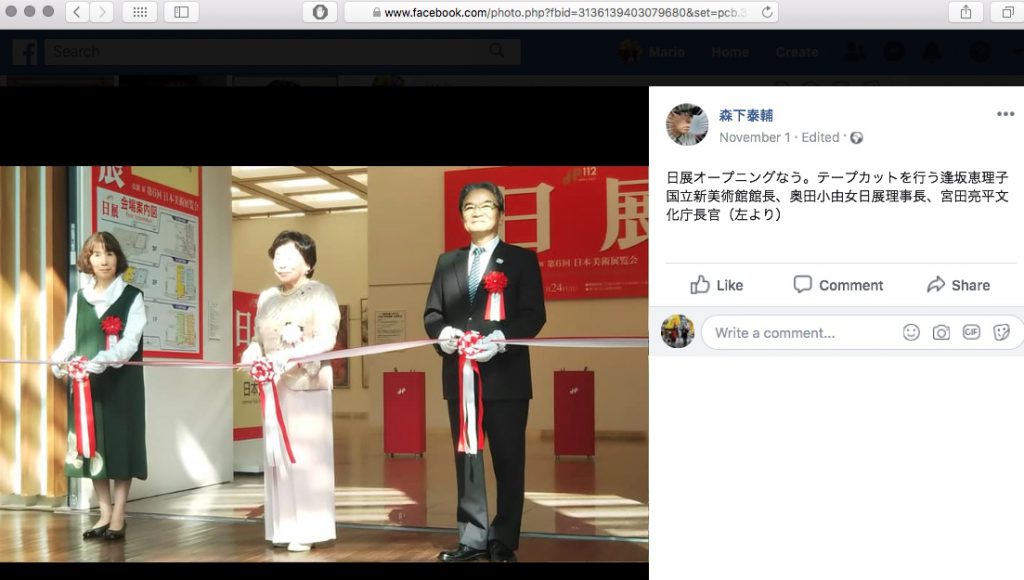
日展オープニングなう。テープカットを行う逢坂恵理子国立新美術館館長、奥田小由女日展理事長、宮田亮平文化庁長官(左より)
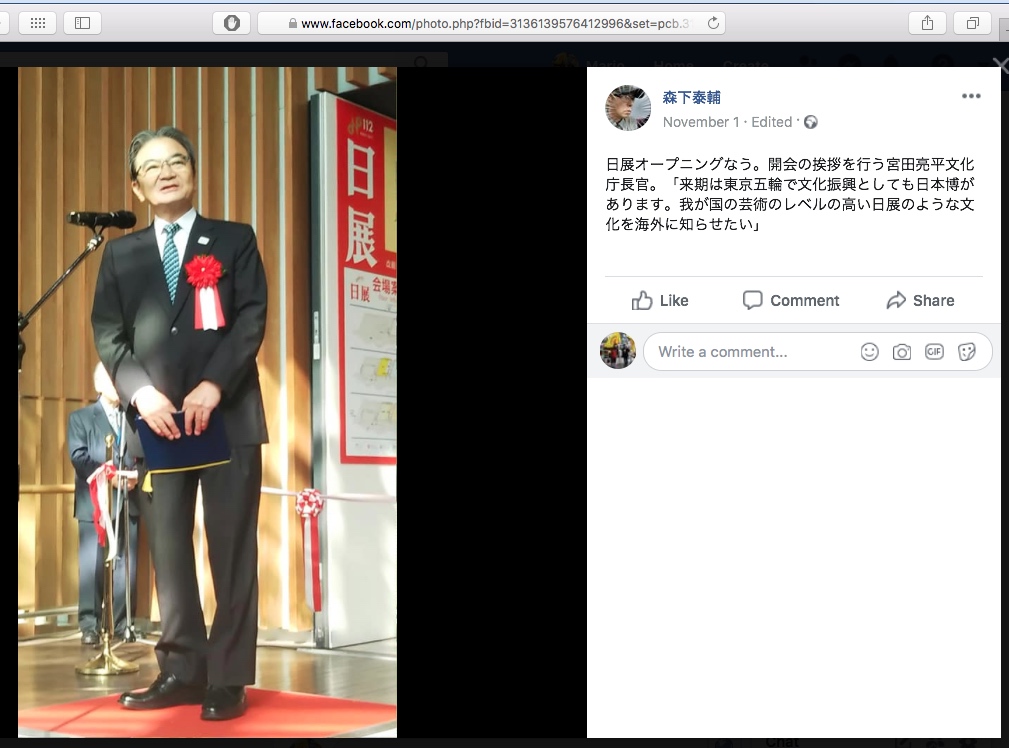
日展オープニングなう。開会の挨拶を行う宮田亮平文化庁長官。「来期は東京五輪で文化振興としても日本博があります。我が国の芸術のレベルの高い日展のような文化を海外に知らせたい」
Commissioner of the Agency for Cultural Affairs MIYATA Ryohei: A culture like “high level artists’ group NITTEN” should be known in foreign countries. (what ever that means…)
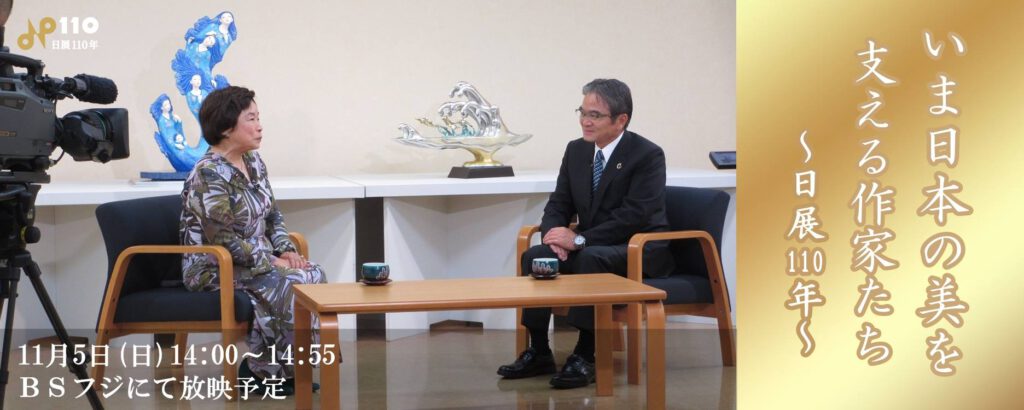
令和7年12月27日のアップデート
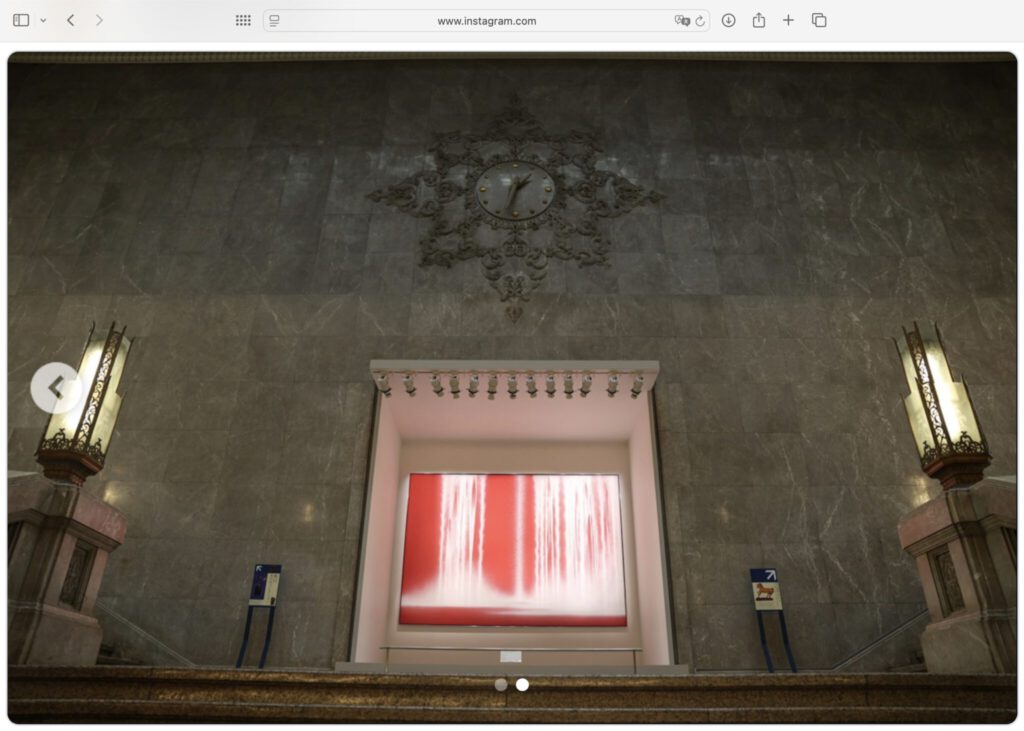
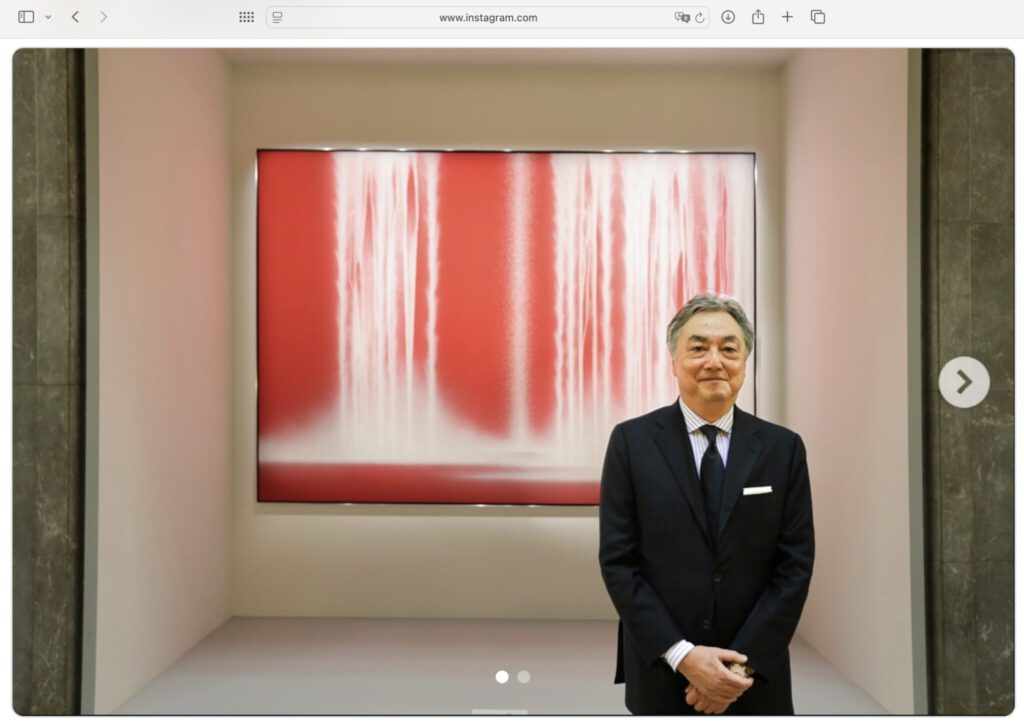
新しい年の幕開けを彩る迫力の作品、その溢れるエネルギーをぜひ体感してください。
#東京国立博物館 #TokyoNationalMuseum #正月 #博物館に初もうで #初もうで #ウォーターフォール
https://www.instagram.com/p/DStfae3gce7/?img_index=1
注意!ATTENTION!
All pictures and texts have to be understood in the context of “Creative Commons Attribution Noncommercial-NoDerivative Works.” ここに載せた画像やテクストは、すべて「好意によりクリエーティブ・コモン・センス」の文脈で、日本美術史の記録の為に発表致します。 Creative Commons Attribution Noncommercial-NoDerivative Works, photos: cccs courtesy creative common sense
All these texts and pictures are for future archival purposes, in the context of Japanese art history writings.