Keith Whittle from Tokyo: “After the New: Institutional Ritual in Roppongi Crossing 2025” 六本木クロッシング2025展:時間は過ぎ去る わたしたちは永遠 @ 森美術館
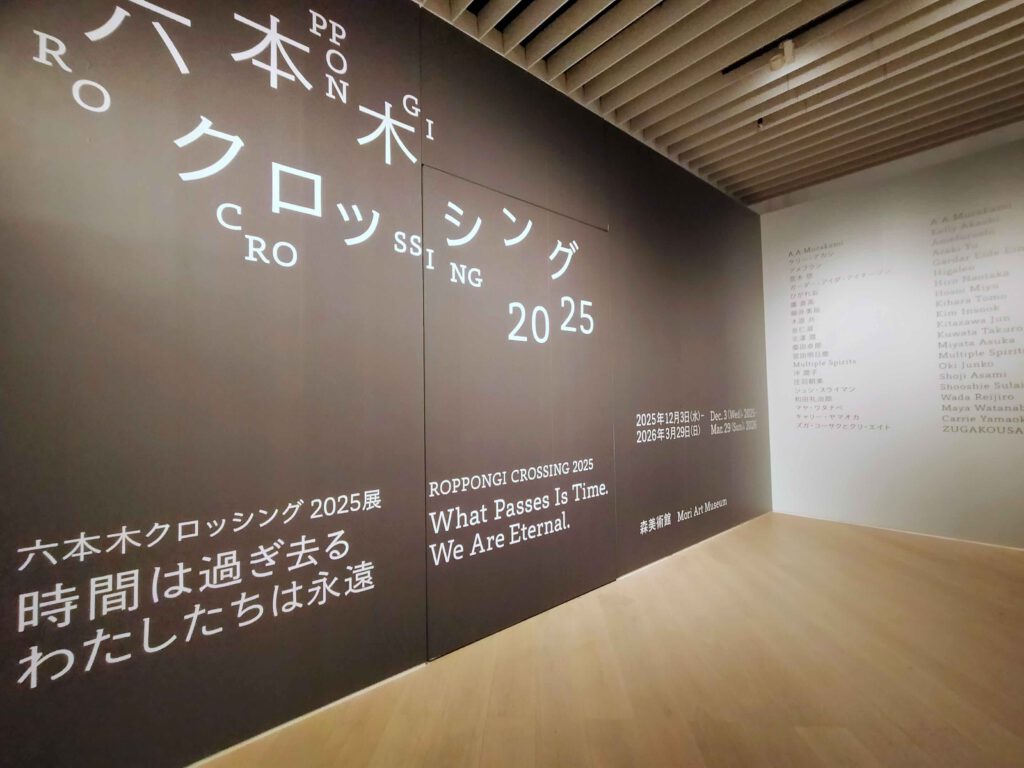
Roppongi Crossing 2025
What Passes Is Time. We Are Eternal
Mori Art Museum, Tokyo 2025/12/3 – 2026/3/29
After the New: Institutional Ritual in Roppongi Crossing 2025
I have often felt that Roppongi Crossing, staged approximately every three years—though not always explicitly positioned as a triennial—occupies an awkward middle ground: too expansive for a coherent curatorial thesis to hold, yet too limited to offer any genuinely comprehensive view of contemporary art in Japan. Presented at the Mori Art Museum, the latest edition, Roppongi Crossing 2025: What Passes Is Time. We Are Eternal., follows the series’ familiar survey format. This time curated by Leonhard Bartolomeus, KIM Haeju, TOKUYAMA Hirokazu. YAHAGI Manabu around the expansive theme of the “preciousness and transience of time” and various forms of “temporal experience,” the framework proves so elastic that it risks becoming conceptually diffuse. With works spread across media and scale, the exhibition often feels uneven and episodic; several works read less as independent propositions than as illustrations of the curatorial theme.
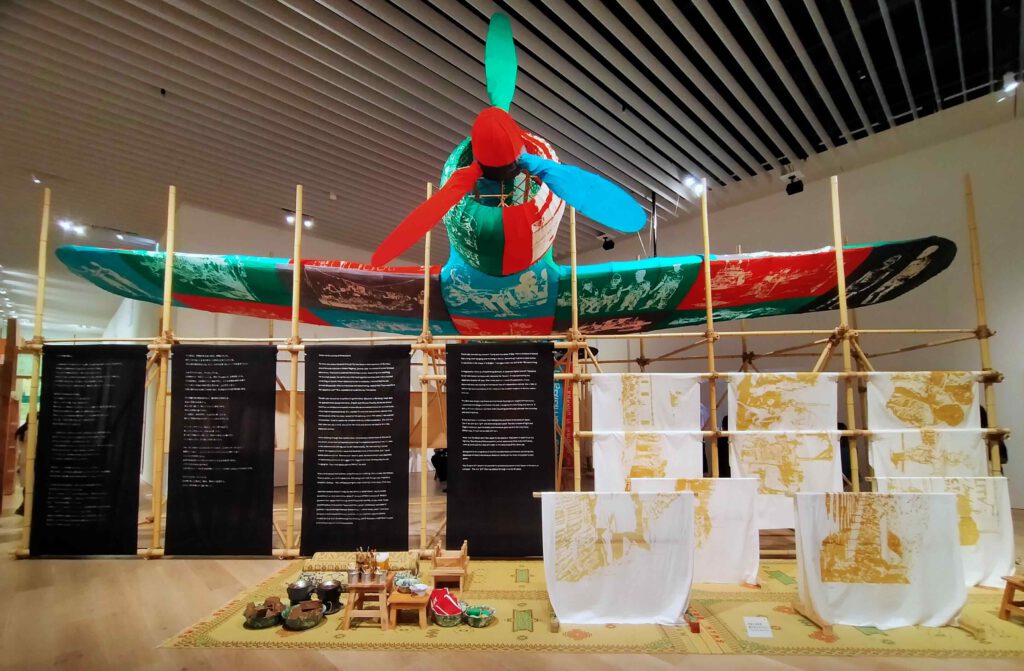
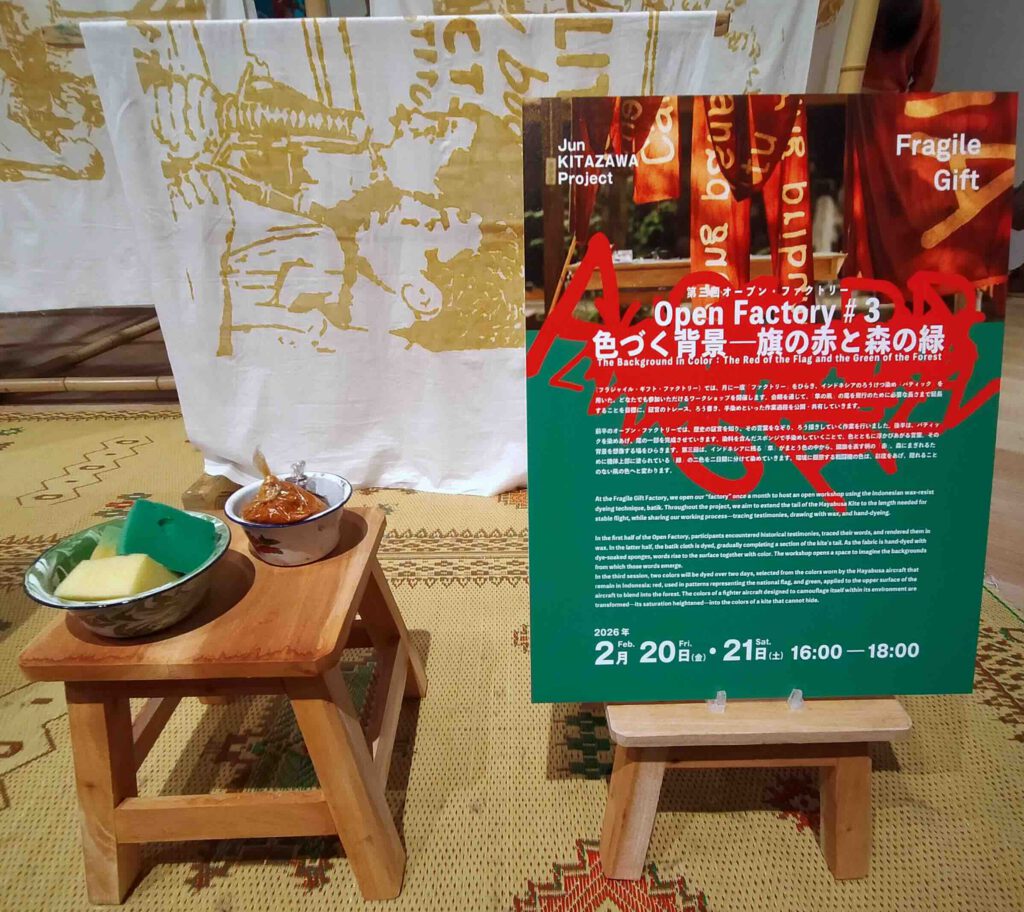
More fundamentally, the exhibition still struggles with the question of what constitutes “Japanese contemporary art” today. While the curators broaden the field to include artists working in Japan regardless of nationality, the perspective remains largely institutional and bound by convention. As with previous editions, many of the artists and curatorial positions framed as “new” or “emerging” are already well embedded within museum, residency, and biennial circuits, reinforcing the sense that the exhibition affirms existing structures rather than uncovering genuinely untested positions.
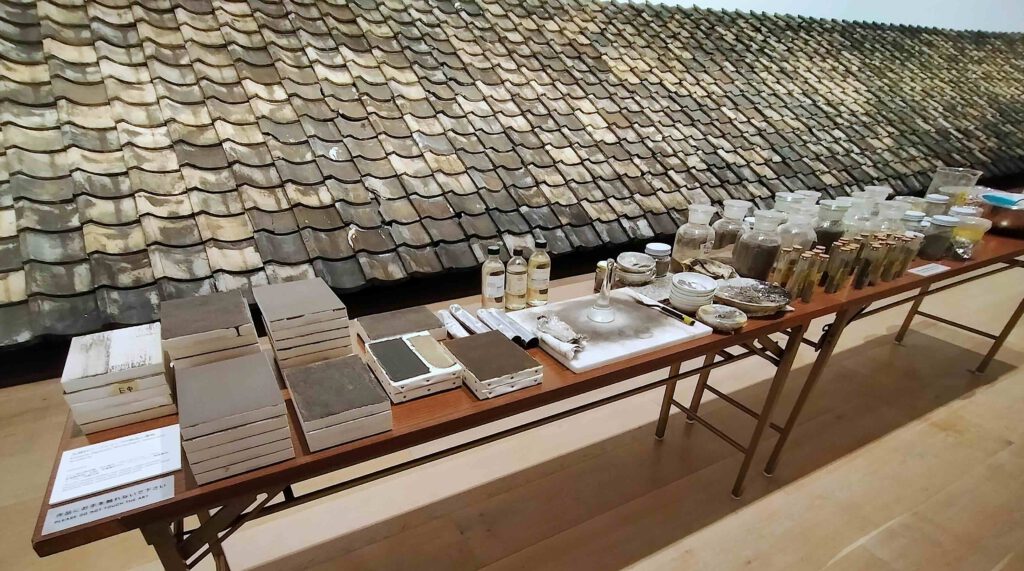
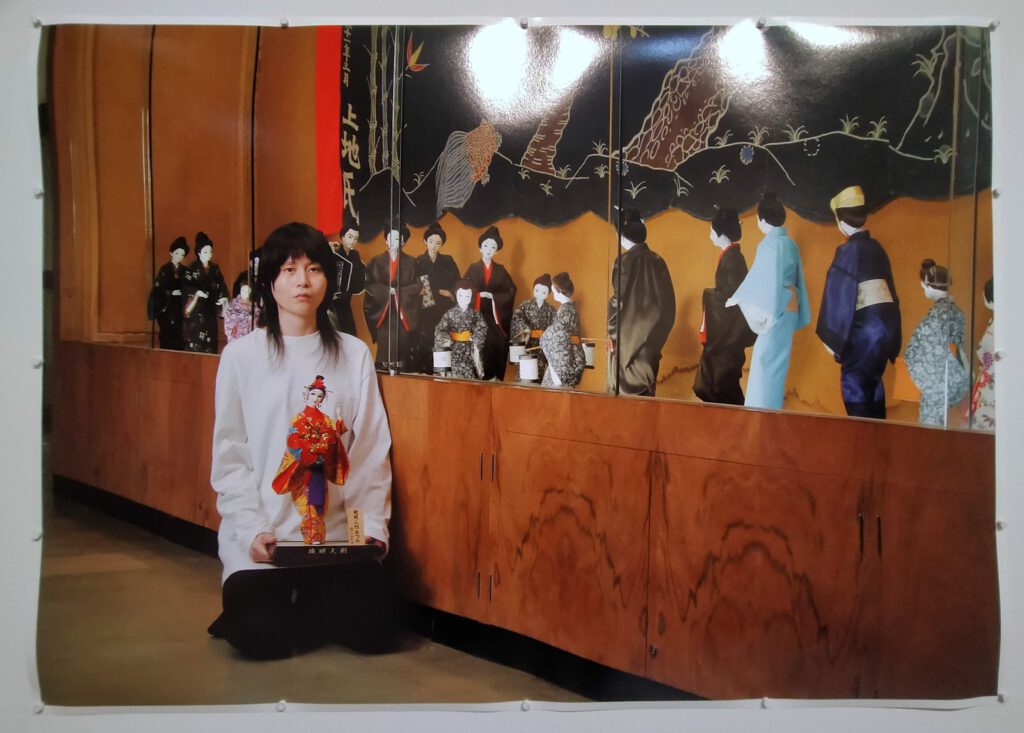
This edition of Roppongi Crossing feels less like a critical intervention than an institutional ritual: a periodic temperature check that reflects the prevailing ecology, aesthetic tendencies, and discursive preoccupations of contemporary art in Japan rather than actively challenging them. In this sense, the exhibition mirrors a broader condition within contemporary art, often described in the wake of Arthur Danto’s “end of art history” thesis. When no singular narrative of stylistic progression remains, exhibitions frequently default to pluralism as a curatorial principle. Yet such pluralism—while inclusive—can also produce a flattening effect, where heterogeneous practices coexist without friction and difference is absorbed into an overarching curatorial neutrality. The result is a form of managed diversity: a display of varied practices that signals openness while leaving the underlying institutional logic largely intact.
If anything, this exhibition functions less as a map of emergent artistic directions than as a mirror of the structures that sustain the tendencies of the Japanese contemporary art system itself.
What passes is time, what remains is ritual.
Keith Whittle
Keith Whittle is a curator and writer based between London and Tokyo, engaging with contemporary art and cultural projects across diverse contexts.