Satomi Nakai from New York: Mitsumasa Kadota “Dissolving Horizons” @ GOCA by Garde 中井里美のニューヨークアート通信:門田光雅「Dissolving Horizons」@ GOCA by Garde (チェルシー23丁目ハイライン下)
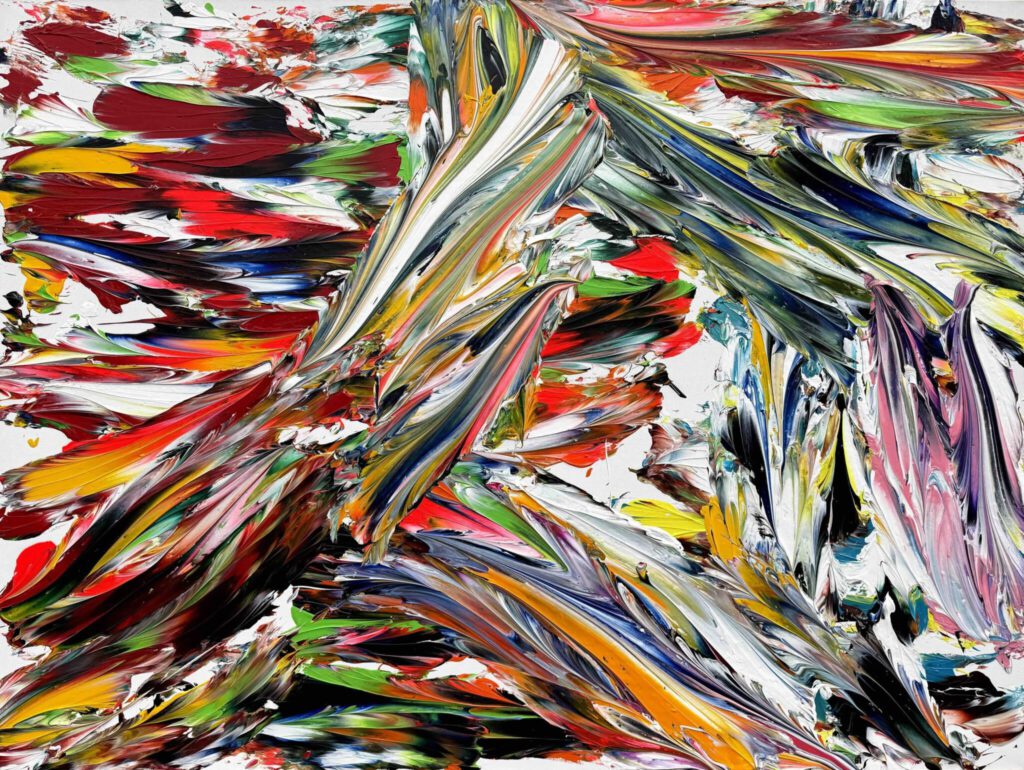
Mitsumasa Kadota: Dissolving Horizons
GOCA by Garde
515W 23rd Street, New York, NY 10011
May 7 — June 18, 2026
私が門田光雅さんのことを知ったのは昨年であります。アートの国内外の情報を日々チェックしている者としては気づくのが遅かったと思います。
きっかけは門田さんは、ソーシャルネットワークで知り合った、某ウォール街日本人初女性金融ブローカーのイチ押しの作家でした。普通金融の人が推すアーティストは既に有名な作家か、知り合いレベルの作家の可能性が高いです。普通はクオリティが高くないこともあるのでちょっとバイアスがかかります。しかしストレートに作品が良いと思ったので名前を検索して調べてみると、私と同じ東京の美大の絵画科出身の作家とわかりました。すぐに連絡先を見つけ、コンタクトをとりました。私の知っている絵画科の先生の教え子で、絵からもそれが伝わった等、メッセンジャーで大学ネタ交換ピンポンをしました。
昨年12月に私は日本行きを予定していました。偶然門田さんが武蔵野市にあるFLYMEeという、家具をインターネットで販売している会社のショールームで作品を展示しておりました。京都、伊勢と後半に西日本行きを予定していた私のスケジュールでは東京は一週間ぐらいの滞在でした。会いたい人に昼・夜とスケジュールを埋めていく中で、門田さんの作品を観に行くのが今回の日本滞在での唯一の美術鑑賞となりました。(京都・東寺の国宝の仏像群や奈良の大仏は観ました。日本の国宝レベルのクオリティは凄かったです)
武蔵野市のFLYMEeのショールームに門田さんの作品が百点は展示してあったと思います。圧倒的熱量。一企業が気前よくこれだけ作家を支援してくれていることに驚きました。
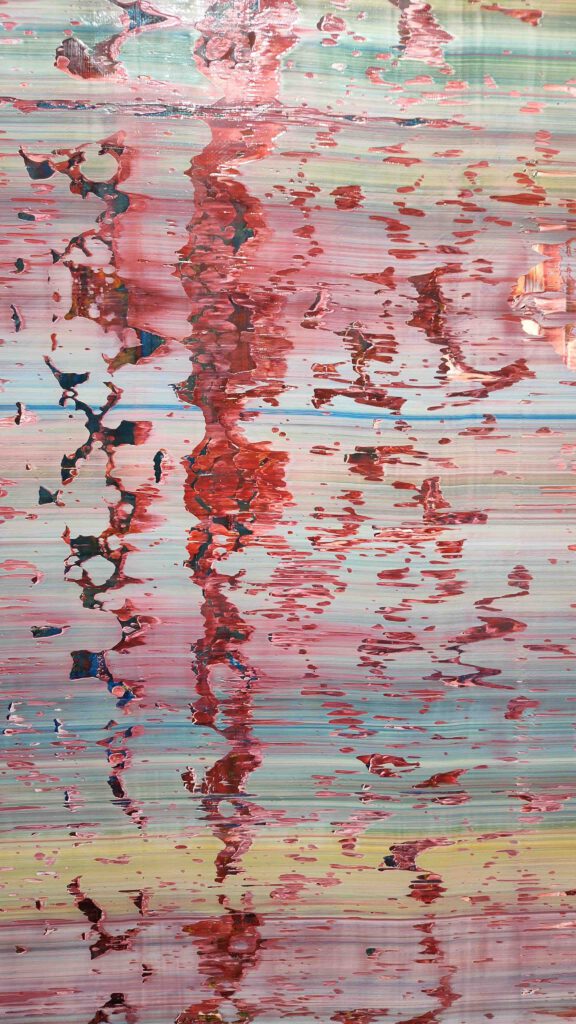
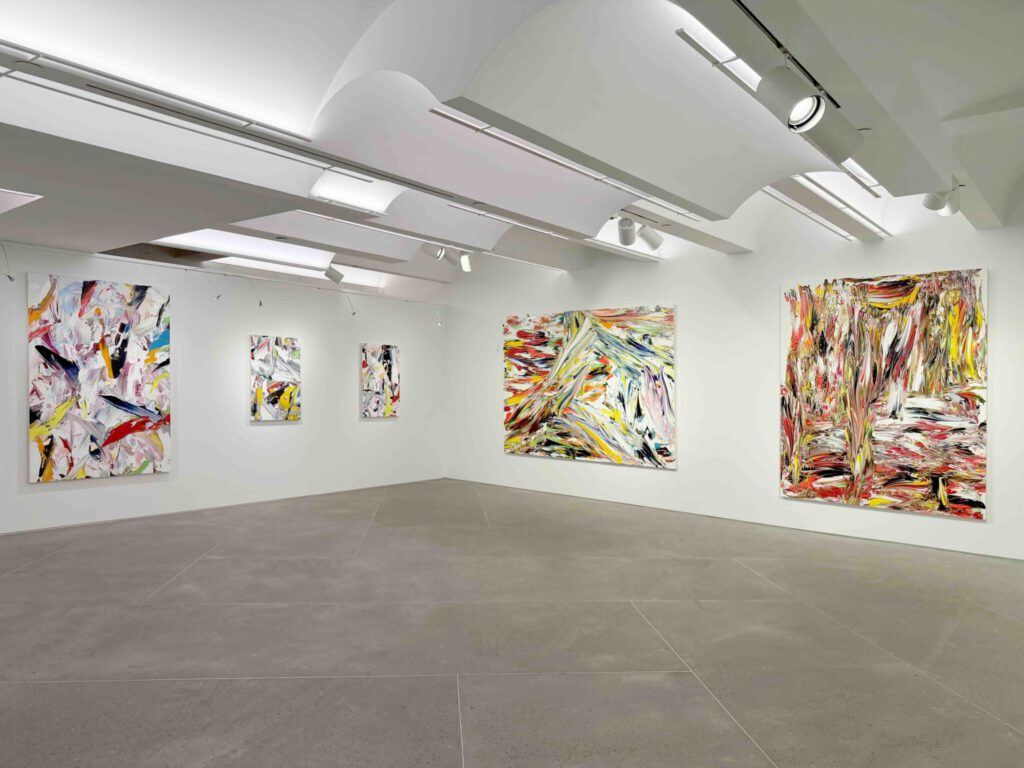
ブラッシュストロークのきいた抽象絵画であります。タイトルが作品を観るためのヒントになりました。使用している色味(絵の具の配色具合)から、ゲルハルト・リヒターの抽象絵画を思い出しました。リヒターは色々な色をキャンバスに置いた後、キャンバスの画面全体を一度に動かせる巨大ヘラで表面を平らにすることによって画面構成をし、完成後の作品が、得ても言えない戦慄感(旋律感?)があります。リヒターはドイツ出身の絵画の王道をいっている作家ですが、写実的な作品のシリーズもあり、その実力から高額で取引される巨匠の殿堂入りを果たしております。門田さんの作品からも同じぐらいの勢いの絵画の熱量を感じますが、門田さんの作品はヘラでスキージー(画面表面を数ミリの厚さでぬぐい取る)していないのでリヒターと絵画の制作方法が異なります。
既にニューヨークの某有名コレクターにも認められ、リンカーン・センター内のスタンリー・H・カプラン・ペントハウスの会場で過去に展覧会をしたこともあると伺いました。身の回りにそれほど成功している作家を知らなかったので素直に驚きました。
そして今回、ニューヨーク、チェルシー、ハイライン高架下23丁目にあるGOCA ギャラリーにて展覧会オープニングがあったので伺いました。
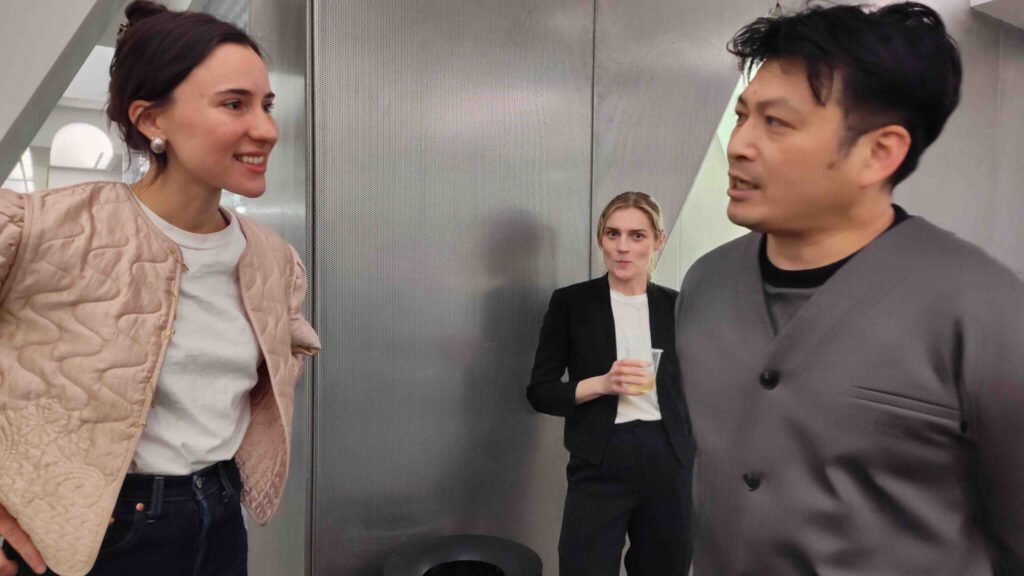
私はこのギャラリーに伺うのは実は初めてでした。午後6時過ぎに伺いましたが既に活気に溢れておりました。作品を熱心に観ているアフロアメリカンのかっこいい人達がいたので彼らと作品を一緒に撮ってもいいかと聞きポーズを取ってくれて、門田さんにも紹介しました。
アジア系女性グループの方ともお話しました。門田さんの英語は完璧でないというので即時、私は通訳役になりました。彼女の聞いていたことは、作品は筆で描いているようにみえないがどうやって描いているのかという質問でした。門田さんは彼女に対し、公表していないと答えました。私もあらためて、目の前の作品がどのように描かれているか知らなかったことに気づかされました。
アーティストは制作過程を秘密にした方がいいことがあります。全部明かしてはいけない。
私はコロナの時からZoomで東京の大学の先生とアートトークのオンライン授業をしております。お陰様ではじめてから6年が経ち、膨大な知識量とリサーチ能力が身につきました。
各週一つのテーマに従ってリサーチしていきます。ニューヨークの美術館や展覧会がテーマの日もあれば、未来派やダダ等の歴史的アートについてや、アーティスト一人に焦点をあてることもあります。作家の制作過程やコメントを聞いていくと、作品を観ただけではわからなかったことがわかり、作品の見え方が変わっていくことも多いです。
つい最近立て続けに、アーティストが作品を作る際のヒント、種明かしをしているのを聞いてしまいました。80年代からニューヨークアートシーンで一世を風靡したジュリアン・シュナーベルはニューヨークのギャラリートークでそれを明かし、グッゲンハイム美術館でも個展を開催された李禹煥は日本の美術館でのトークイベントのビデオでの告白でした。ついでに書くと、フランシス・ベーコンの絵画の秘密もついこないだ某書籍編集者の投稿で知ってしまいました。シュナーベルも李禹煥も成功してから30年以上経ってからの告白で、これは長年秘密にしてきたことなのではないかと思いました。30年後に種明かしをしてもその作家の築き上げてきた評価、価値は変わりません。フランシス・ベーコンは作家没後にフランシス・ベーコンのアトリエに行った際に制作過程のモチーフや彼の所有物をみて書籍編集者が気づいたことでありました。その内容は衝撃的でした。
よく、観る人の想像にお任せしますといいますが、それがいいのであります。
話を門田さんの作品に戻しますと、私は門田さんの使う白い色が光に見えます。絵画は空間なのです。ブラッシュストローク(筆勢・筆は使っていないかもしれないけれど)の先に空間が広がってみえます。
例えばキャンバスを床に平らに置き、絵の具をドリッピングしたジャクソン・ポロックの絵画と比較してみることが出来ます。絵の具の滴る線と線の間に空間がうまれます。たしかに門田さんの絵画にもそれがあります。
私は抽象表現主義の作家より、それを飛び越して、フランス印象派の画家、クロード・モネの、ジヴェルニーの庭や木々、風景を描写した空間の筆跡を感じます。
私は東京の美大を卒業して、大学の先生の紹介を経て就いた仕事が、某大型商社の一部門で、バブルの際にコーポレートコレクションになった高額美術作品を、90年代バブル崩壊経済後退の後の企業の資産を現金化して世界のマーケットに戻す仕事でした。初日にはモネの該当作品に近い年代やサイズから過去のオークション落札価格データベースにアクセスし、作品価格の妥当性やエスティメート(査定)をするものです。その職場に8年在籍しておりましたので、普通の方や他の美術業界の方より作品の実際と価値について観続けております。
それと1960年代に絵画が死んだといわれてコンセプチュアルアートやインスタレーションが流行り、80年代に絵画が復活して90年代にビデオアートが流行り、その当時は絵なんて描いている場合ではないという風潮や空気があって、2000年代前半はアーティストである私のパートナー(スペイン人)もせっせとビデオアートを作っておりましたが、2026年現在のニューヨークの画廊はほとんど絵画ばかりです!
その、絵画に見慣れた現在のニューヨークのアートシーンにおいても門田さんの作品はオリジナリティがあって力強いものでした。
是非会期中にタイミングが合いましたら是非会場に足をお運びくださいませ。
6月18日まで
文・写真 中井里美
https://www.instagram.com/kadota_art/
Mitsumasa Kadota: Dissolving Horizons
GOCA by Garde
515W 23rd Street, New York, NY 10011
May 7 — June 18, 2026
Where Light Becomes Paint: The Spatial Abstraction of Mitsumasa Kadota
My encounter with the work of Mitsumasa Kadota came only last year—an admission that feels almost negligent for someone who monitors the ebb and flow of the global art world daily. Yet the delay proved productive: it allowed me to meet his work without preconception, and with a clarity sharpened by distance.
The introduction arrived through an unlikely conduit: a Japanese woman who became the first female broker on Wall Street. When people in finance champion an artist, the recommendation often falls into two predictable categories—already‑canonized names or acquaintances whose work does not necessarily withstand critical scrutiny. But Kadota’s paintings resisted such expectations. Their force was immediate, unmediated. When I searched his name, I discovered that he had graduated from the same Tokyo art university as I had – though from a different major. That shared institutional background nevertheless created a sense of proximity, and it became the basis for an unexpectedly rich exchange.
When I traveled to Japan last December, Kadota happened to be exhibiting at FLYMEe’s showroom in Musashino City, Tokyo. My Tokyo stay was brief, wedged between trips to Kyoto and Ise, and my schedule was dense with personal commitments. Yet visiting his exhibition became the sole contemporary art viewing of my trip—aside from encounters with Japan’s National Treasures at Tō‑ji and Nara, whose overwhelming presence belongs to a different order of experience.
At FLYMEe, nearly a hundred works filled the space. The sheer volume generated a palpable heat. It is rare for a single company to support an artist with such generosity; rarer still for the work to justify that scale of commitment.
Kadota’s paintings operate within the broad field of abstraction, but their logic is not reducible to gesture alone. The titles function as conceptual apertures. The chromatic density—how color is placed, layered, withheld—evoked, for me, the abstract works of Gerhard Richter. Yet the comparison is instructive precisely because the methods diverge. Richter’s squeegee, which drags chromatic strata into a single surface event, produces a tension between accident and control. Kadota, by contrast, refuses the squeegee’s erasure. His surfaces retain their own internal temporality; the paint is allowed to remain paint.
I later learned that a prominent New York collector had already recognized his work, and that Kadota had previously exhibited at the Stanley H. Kaplan Penthouse at Lincoln Center. Such achievements are not common among artists in my immediate orbit, and the information recalibrated my understanding of his trajectory.
When I heard he would open a new exhibition at GOCA by Garde beneath the High Line on 23rd Street, I attended. It was my first visit to the gallery. By shortly after six, the space was already animated—an encouraging sign in a city where openings can feel performative rather than engaged. A group of sharply dressed African American visitors were studying the works with unusual attentiveness; I photographed them with the paintings and introduced them to the artist.
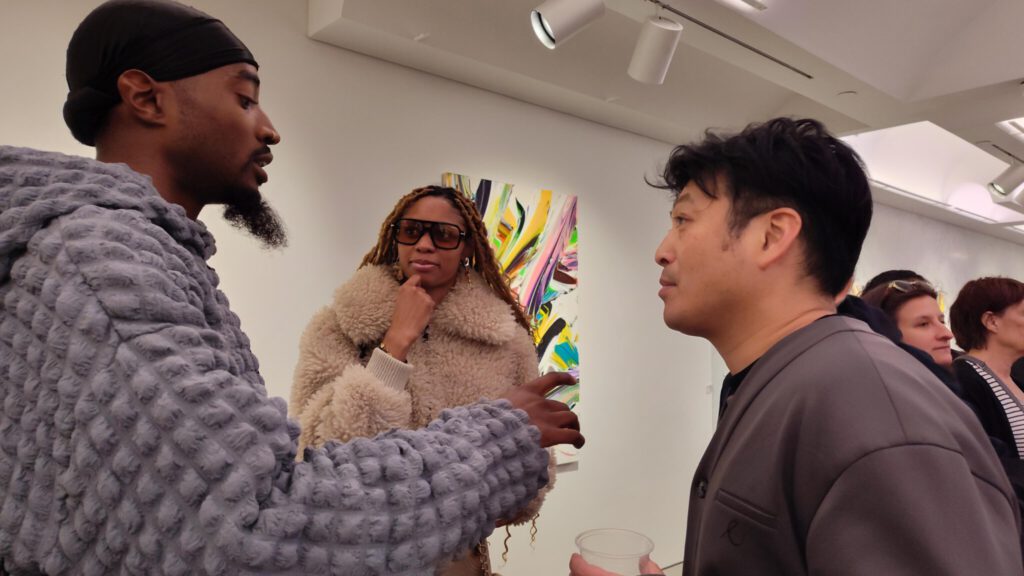
I also interpreted for a group of Asian women who asked how the works were made, noting that they did not appear to be painted with a brush. Kadota replied simply that he does not disclose his process. The refusal was elegant, and correct. Artists are entitled to opacity. Not everything should be revealed.
For the past six years, I have participated in weekly online art‑talk sessions with a professor in Tokyo. The sustained research has sharpened my ability to read artworks structurally. Recently, I encountered a series of revelations about artistic process: Julian Schnabel disclosed aspects of his method during a New York gallery talk; Lee Ufan revealed his own in a museum lecture in Japan; and a book editor’s post exposed a startling detail about Francis Bacon’s studio practice. Schnabel and Lee Ufan waited more than thirty years to reveal their secrets—long after their reputations were secure. Bacon’s case emerged posthumously. These disclosures underscore a simple truth: the work’s value does not lie in the mechanics of its making. The viewer’s imagination is not a deficit but a condition of meaning.
Painting itself has been declared dead more than once—first in the 1840s with the advent of photography, again in the 1960s and ’70s during the rise of Minimalism and Conceptual Art, and once more in the 1990s with the dominance of video and installation art.
These recurring proclamations form the backdrop against which contemporary painting must assert its relevance.
Returning to Kadota: the white in his paintings reads not as pigment but as light. Painting, after all, is a spatial proposition. At the terminus of each stroke—whether or not a brush was used—space opens. One could compare this to Jackson Pollock, whose dripped lines generate spatial intervals between gestures. Kadota’s works share this spatiality, but their lineage feels closer to Claude Monet: the atmospheric brushwork of Giverny, the dissolution of form into light, the articulation of space through chromatic vibration.
My own professional history inevitably shapes my reading. After graduating from art university in Tokyo, I spent eight years in the art division of a major trading company, tasked with researching and liquidating high‑value artworks acquired during Japan’s bubble economy. My first assignment involved analyzing auction data for Monet—comparing period, size, and provenance to determine fair estimates. That experience taught me to see artworks not only as images but as objects with histories, markets, and trajectories.
The art world has cycled through declarations of painting’s death and rebirth: conceptualism in the 1960s, the resurgence of painting in the 1980s, the rise of video art in the 1990s. My partner, a Spanish artist, produced video art diligently in the early 2000s, when painting seemed passé. Yet in New York today, in 2026, galleries are once again dominated by painting.
Even within this saturated field, Kadota’s work asserts itself with clarity and originality. It does not rely on nostalgia, nor does it mimic established formulas. It insists on its own logic.
If your schedule allows, I encourage you to experience the exhibition in person.
On view through June 18
Text & Photos by Satomi Nakai