A Natural Man, Klaus Honnef (1939 – 2026) : “Constantly Re-examine Your Own Point of View!” 自然体な人, クラウス・ホネフ (1939 - 2026) :「常に、自分自身の視点を問い直し続けよ!」
I shared many connections with Klaus Honnef. For me—an artist who has lived in Japan for 40 years—his concise, excellent writing style in German was of immense importance. He was an art critic through and through, always ready with a wealth of anecdotes, and possessed a deep understanding of the global context of contemporary art. Our discussions did not focus on Japan; rather, they centered on subjects such as Gerhard Richter—who hailed from East Germany—examined within the socio-political framework of German history.
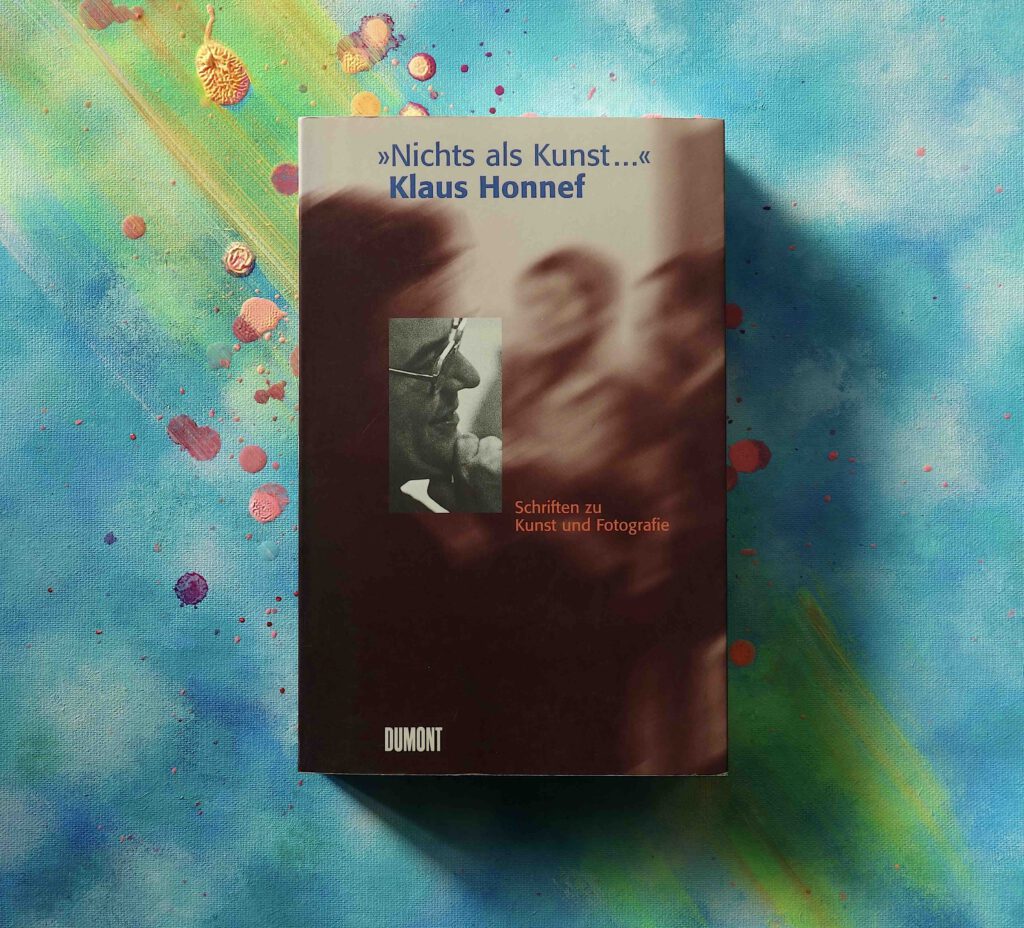
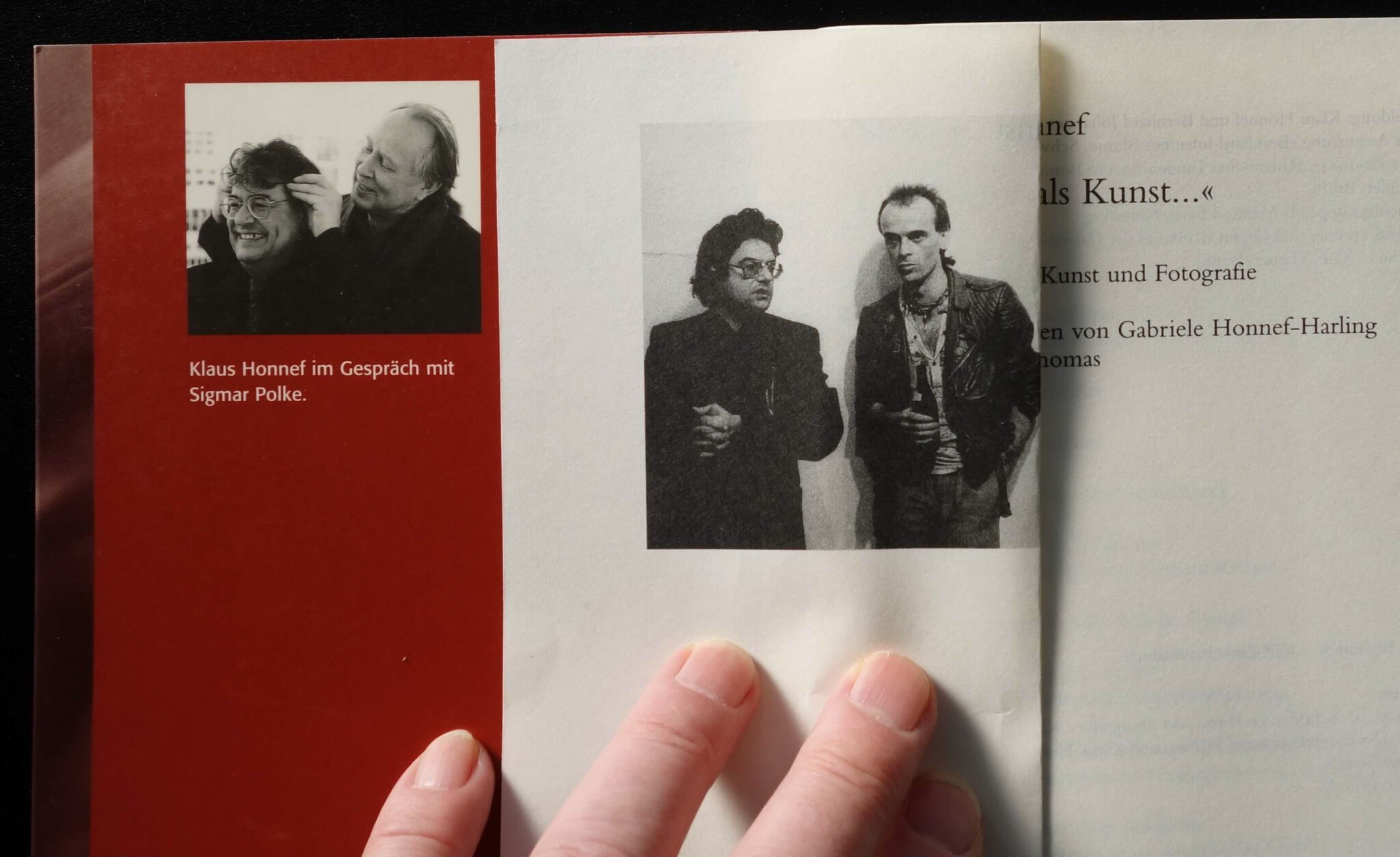
The first book of his that I purchased was *AMS* by Seiichi Furuya (1981). That copy is currently in Germany, while his book *Nichts als Kunst…* (“Nothing But Art…”) sits on my bookshelf here; today, I am presenting it to my *ART+CULTURE* readers, displayed atop a new oil painting.
What I also appreciate about Klaus Honnef is the subtle way he showed the reader that he was not a radical leftist—he was, in fact, more aligned with the FDP. In other words, he detested political fanaticism within the art scene, whether it came from the right or the left. Since I have voted for the Green Party exclusively since the age of 18, his political stances were crystal clear to me—straightforward, with no frills or attempts at camouflage.
I often found passages in his book of art criticism that I would “copy”—rephrasing them slightly from a Japanese perspective. I find his critiques—intellectual, eloquent, and superbly articulated—truly excellent. They are full of complex, nested subordinate clauses, yet they remain remarkably fluid and easy to read—far better than what is typically written in English or Japanese.
Honnef rightly pointed out that the autonomy of art cannot be conceived as detached from social conditions—especially when one takes Bourdieu’s concept of *habitus* into account. An individual’s *habitus*—that is, the internalized norms, values, and habits of thought resulting from socialization—shapes the perception and production of art, and can consequently influence an artist’s “autonomous” position. From this perspective, it seems plausible that artistic autonomy is always merely perceived or relative, given that it is anchored within a social field. In this, he hit the nail on the head—particularly for me, as an artist working in a “foreign” country: Japan.
Thank goodness Honnef kept returning to the visual medium of filmmaking. Admittedly, his intellectual reach was not sufficient to surpass the acuity and radicalism of Jean-Luc Godard.
Readers will know that I hold a rather firm, sharp-eyed opinion regarding *auteur* cinema. I cannot, for the life of me, imagine my films being affordable to produce, nor can I envision actors doing exactly what I demand, or my own aesthetic vision being successfully translated onto film. Government censorship—in any country—along with ever-shifting moral norms and “rules,” leave no room for my artistic autonomy or my artistic stance to take shape freely.
Honnef spoke very critically about the state of the USA. He left Asia out of the discussion, partly because he knew that, in doing so, he might find himself on rather slippery intellectual ground. For this reason, whenever the context allowed, I tried to share the Asian—specifically Japanese—perspective with him. He once coined a phrase that is as apt as it is universally applicable: “Constantly re-examine your own point of view!”
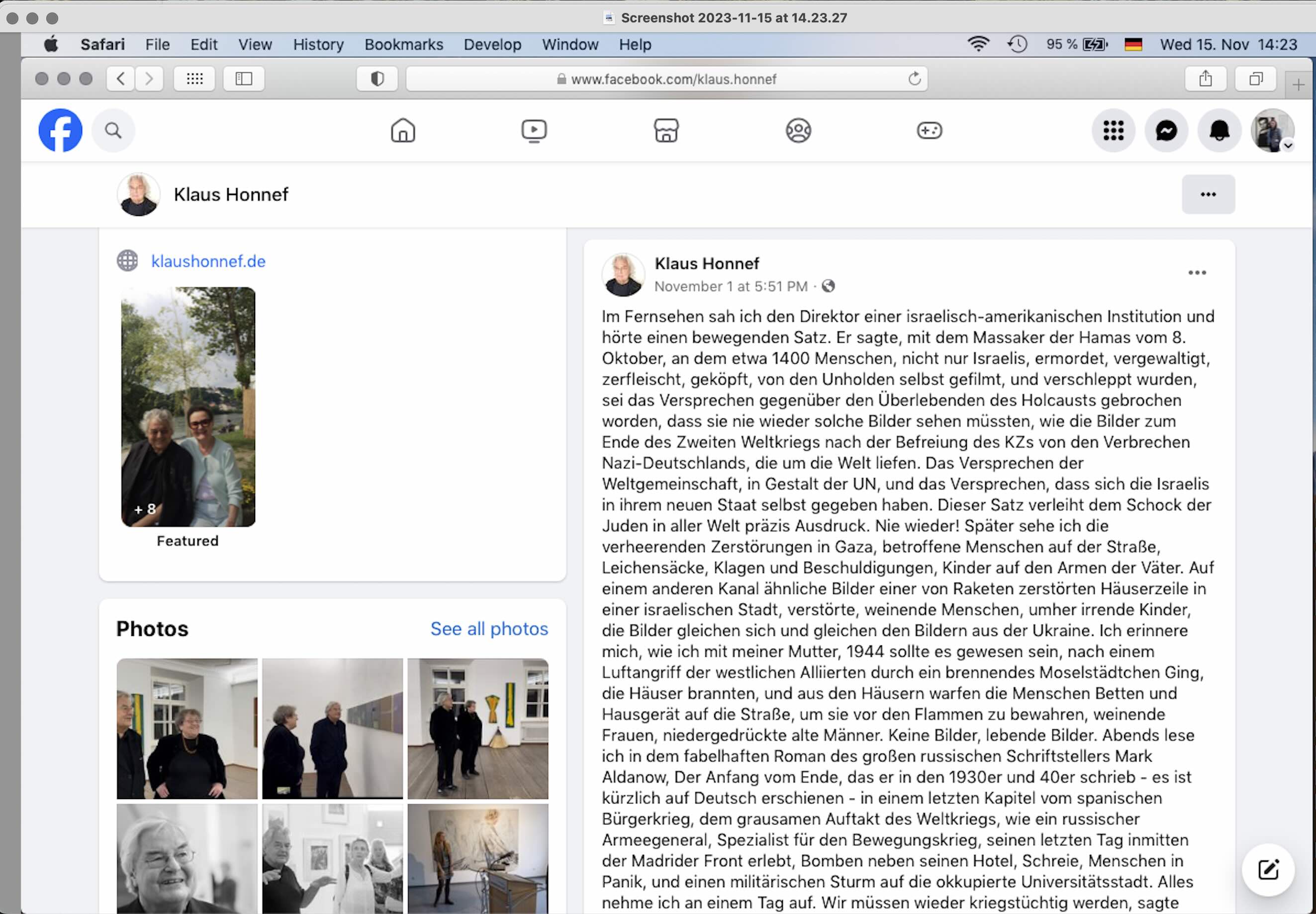
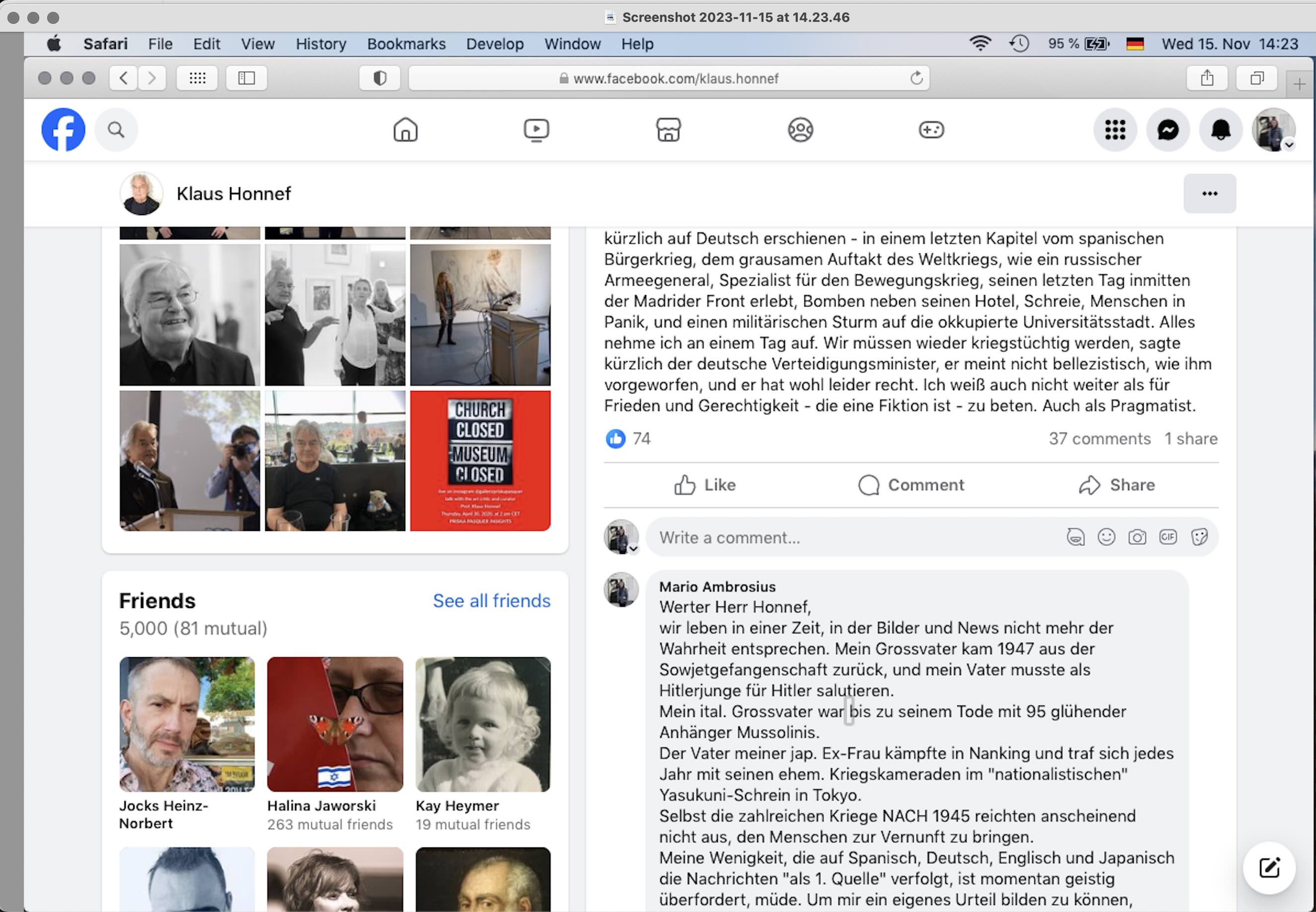
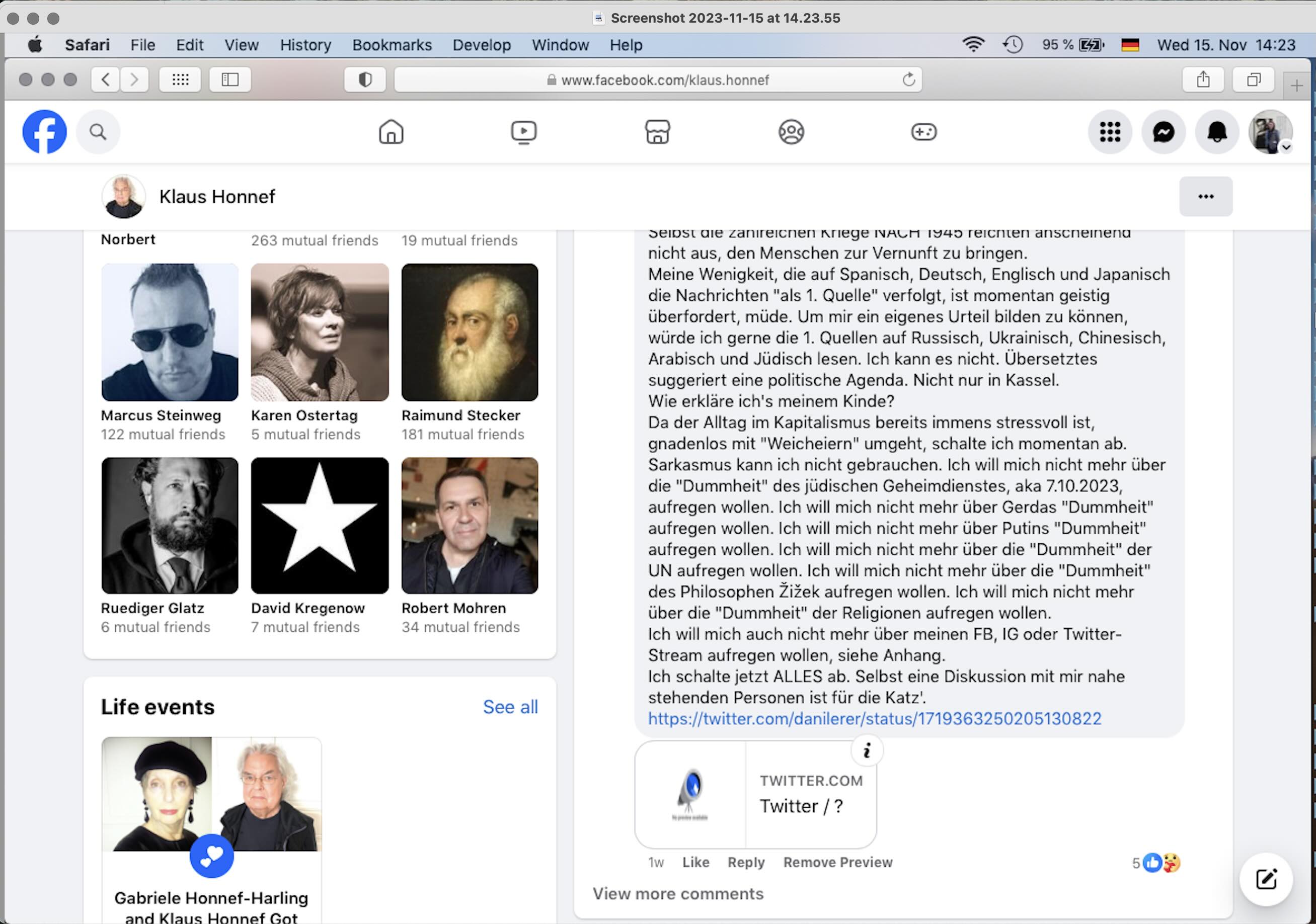
As an illustrative example, I would like to cite the following exchange that took place on Facebook:
Klaus Honnef
November 1 at 5:51 PM (public)
On television, I saw the director of an Israeli-American institution and heard a poignant statement. He remarked that the Hamas massacre of October 8—in which approximately 1,400 people—not only Israelis—were murdered, raped, mutilated, and beheaded (with the atrocities filmed by the perpetrators themselves) or abducted—represented a broken promise to Holocaust survivors: a promise that they would never again have to witness scenes like those that emerged at the end of the Second World War, following the liberation of the concentration camps and the revelation of Nazi Germany’s crimes—images that once shocked the entire world. It was a promise made by the global community, represented by the UN, as well as a pledge that the Israelis had made to themselves upon the founding of their new state. This observation precisely captures the shock felt by Jews across the globe. Never again! Later, I see the devastating destruction in Gaza: people in the streets, body bags, cries of grief and accusations, and children held in their fathers’ arms.
On another channel, there are similar images: a row of houses in an Israeli town destroyed by rockets, distraught and weeping people, children wandering about—the scenes are identical, echoing those from Ukraine. I recall walking with my mother—it must have been 1944—through a small town on the Moselle following an air raid by the Western Allies. The houses were ablaze, and people were throwing bedding and household goods out into the street to save them from the flames; there were weeping women and dejected, broken old men. These were not mere images—they were living, breathing scenes. That evening, I read the final chapter of *The Beginning of the End*—a magnificent novel by the great Russian writer Mark Aldanov, composed in the 1930s and 40s and recently published in German—which depicts the Spanish Civil War, that cruel prelude to the Second World War. It describes a Russian army general, an expert in mobile warfare, experiencing his final day on the Madrid front: bombs falling near his hotel, screams, people in a state of panic, and a military assault on the occupied University City. I take all of this in over the course of a single day. The German Defense Minister recently remarked that we must become “war-ready” once again—a statement for which he has been accused of warmongering, though, regrettably, he is likely correct. I, too, find myself with no recourse other than to pray for peace and justice—even if the latter is but a fiction. And I say this as a pragmatist.
(comment by me)
Dear Mr. Honnef,
we live in an era where images and news no longer correspond to the truth. My grandfather returned from Soviet captivity in 1947, and my father, as a member of the Hitler Youth, was required to salute Hitler. My Italian grandfather remained a fervent supporter of Mussolini until his death at the age of 95. The father of my Japanese ex-wife fought in Nanking and would meet with his former comrades-in-arms every year at the “nationalist” Yasukuni Shrine in Tokyo. Even the numerous wars that have taken place since 1945 have evidently not been enough to bring humanity to its senses. As for me—someone who follows the news in Spanish, German, English, and Japanese as “primary sources”—I find myself mentally overwhelmed and exhausted. To form my own judgment, I would ideally like to read primary sources in Russian, Ukrainian, Chinese, Arabic, and Hebrew; however, I cannot. Translated material often implies a political agenda—and not just in Kassel.
“How am I supposed to explain this to my (a) child?”
Given that daily life under capitalism is already immensely stressful—and shows no mercy to the “soft”—I am currently choosing to tune out. I have no use for sarcasm.
I no longer wish to get worked up over the “stupidity” of the Israeli intelligence services—referencing, for instance, October 7, 2023. I no longer wish to get worked up over Gerda’s “stupidity,” or Putin’s “stupidity,” or the “stupidity” of the UN, or even the “stupidity” of the philosopher Žižek. I no longer want to get worked up about the “stupidity” of religions.
I also don’t want to get upset about my Facebook, Instagram, or Twitter feeds anymore—see the attachment. I’m switching EVERYTHING off now. Even having a discussion with people close to me is a complete waste of time.
https://twitter.com/danilerer/status/1719363250205130822
Many thanks to Klaus Honnef, who provided me with a great intellectual pleasure and served as a source of profound enrichment within the global context of art criticism.
An exceptionally pleasant personality—so smooth, laid-back, and cool.
A natural man, indeed.
Tokyo, 24th of November 2026
Mario A
私はクラウス・ホンネフと多くの縁で結ばれていました。日本に40年間暮らしてきたアーティストである私にとって、ドイツ語で綴られた彼の簡潔かつ卓越した文章は、非常に重要な意味を持つものでした。彼は根っからの美術批評家であり、豊富な逸話を常に携え、現代アートをめぐる世界的な文脈を深く理解していました。私たちが交わす議論の焦点は日本ではなく、ドイツの歴史という社会政治的な枠組みの中で考察される、東ドイツ出身のゲルハルト・リヒターといったテーマに置かれていました。
私が彼に関連する書籍として最初に手に入れたのは、古屋誠一の『AMS』(1981年)でした。その一冊は現在ドイツにありますが、私の本棚には、彼が著した『Nichts als Kunst…(芸術以外の何物でもない…)』という本が置かれています。今日は、この本を、新作の油彩画の上に添えて、『ART+CULTURE』の読者の皆さんにご紹介したいと思います。
クラウス・ホネフについて私が評価しているもう一つの点は、彼が自身を急進的な左派ではないと、さりげないやり方で読者に示していたことだ。実際、彼の政治的立場はむしろFDP(自由民主党)に近いものだった。言い換えれば、彼は芸術界における政治的な熱狂――それが右派からであれ左派からであれ――を嫌悪していたのである。私自身、18歳の時から一貫して「緑の党」に投票してきた人間として、彼の政治的スタンスは極めて明確に理解できた。それは飾り気や隠し立てのない、実に率直なものだった。
私は彼の美術評論集の中で、自分の言葉で少し書き直して「書き写した」くなるような箇所にしばしば出会った。彼の評論は、知的で雄弁、かつ見事に言語化されており、実に素晴らしい。複雑で入れ子状になった従属節が多用されているにもかかわらず、文章は驚くほど流麗で読みやすい。英語や日本語で一般的に書かれる文章と比べても、はるかに優れたものだ。
ホンネフは、芸術の自律性を社会状況から切り離して考えることはできないと正しく指摘した。特に、ブルデューの「ハビトゥス」という概念を考慮に入れればなおさらである。個人のハビトゥス――すなわち、社会化の過程で内面化された規範や価値観、思考の習慣――は、芸術の知覚や制作のあり方を形作り、ひいては芸術家がとる「自律的」な立ち位置にも影響を及ぼしうる。こうした観点に立てば、芸術の自律性とは、社会的な場(フィールド)に根ざしている以上、常に相対的なもの、あるいは単にそう認識されているに過ぎないものだと考えるのが妥当だろう。この指摘はまさに核心を突いている。とりわけ、「異国」である日本で活動する芸術家としての私にとっては、なおさらである。
ホンネフが、映画制作という視覚的な表現媒体へと繰り返し立ち戻ってくれたことは幸いであった。もっとも、彼の知的射程は、ジャン=リュック・ゴダールの持つ鋭敏さや過激さを凌駕するほどのものではなかったと言わざるを得ない。
読者ならご存知の通り、私は「作家映画(オーテール・シネマ)」に対して、かなり確固たる、厳しい視点を持っている。私自身の映画を制作するにあたって、その費用を賄うことなど到底考えられないし、俳優たちが私の要求通りに完璧に動いてくれる姿も、私自身の美学的なヴィジョンが映画として見事に具現化される光景も、想像すらできない。どこの国であれ、政府による検閲、そして絶えず変化する道徳的規範や「ルール」といったものが存在するかぎり、私の芸術的な自律性や芸術的姿勢が自由に形を成す余地など、どこにもないのだ。
ホンネフは、アメリカの現状について非常に批判的な見解を語っていた。彼は議論からアジアを除外していたが、それは、アジアについて論じることが、彼にとって知的基盤の危うい領域に足を踏み入れることになりかねないと自覚していたからだろう。そのため、文脈が許す限り、私は彼に対してアジアの――とりわけ日本的な――視点を伝えるよう努めた。彼はかつて、極めて的確かつ普遍的な意味を持つ言葉を残している。「常に、自分自身の視点を問い直し続けよ」というものだ。
一例として、Facebook上で行われた以下のやり取りを紹介したい。
Klaus Honnef
November 1 at 5:51 PM (public)
テレビで、あるイスラエル系アメリカ人団体の代表が語る、胸を突くような言葉を耳にした。彼は、10月8日にハマスが引き起こした虐殺――イスラエル人を含む約1400人が殺害、レイプ、遺体の損壊、斬首(しかもその残虐行為は実行犯自身によって撮影されていた)、あるいは拉致されたという出来事――について、ホロコーストの生存者たちに対する「約束」が破られたものだと指摘した。その約束とは、第二次世界大戦末期、強制収容所が解放されナチス・ドイツの犯罪が明らかになった際に世界中を震撼させたような光景を、二度と目にしなくて済むようにするというものだった。それは、国連を筆頭とする国際社会が交わした約束であり、またイスラエルが建国に際して自らに誓った誓約でもあった。この指摘は、世界中のユダヤ人が抱いた衝撃を的確に言い表している。「二度と繰り返さない!」と。その後、私はガザの凄惨な破壊の光景を目にした。路上に溢れる人々、遺体袋、悲痛な叫びと非難の声、そして父親の腕に抱かれた子供たちの姿があった。
別のチャンネルにも、似たような光景が映し出されている。ロケット弾で破壊されたイスラエルの町の家並み、悲嘆に暮れ泣き叫ぶ人々、あてもなく彷徨う子供たち――それらの光景は、ウクライナで見られるものと重なり合っている。1944年のことだったと思う。連合軍による空襲のあと、私は母と一緒にモーゼル川沿いの小さな町を歩いた。家々は炎に包まれ、人々は寝具や家財道具を火から守ろうと、通りへと投げ出していた。泣き叫ぶ女たち、打ちひしがれ、心折れた老人たちの姿があった。それは単なる映像などではなく、生々しい現実そのものだった。その夜、私は『終わりの始まり(The Beginning of the End)』という小説の最終章を読んだ。ロシアの偉大な作家マルク・アルダノフが1930年代から40年代にかけて執筆し、最近ドイツ語版が出版されたこの壮大な作品は、第二次世界大戦の残酷な前奏曲となったスペイン内戦を描いている。そこには、機動戦の専門家であるロシア軍将軍が、マドリード戦線で迎えた最後の一日が描かれている。ホテルの近くに降り注ぐ爆弾、悲鳴、パニックに陥った人々、そして占拠された「大学都市」への軍事攻撃――。私はこれらすべてを、たった一日という時間のなかで受け止めた。ドイツの国防大臣が先日、「再び『戦争に備える』状態にならなければならない」と発言した。この言葉は戦争を煽るものだと非難を浴びたが、残念ながら、彼はおそらく正しいのだろう。私自身も、平和と正義を祈る以外に術を持たない――たとえ後者が単なる虚構に過ぎないとしても。しかも、これは現実主義者である私自身の言葉として言っているのだ。
(私のコメント)
ホンネフ様。
私たちは今、画像やニュースがもはや真実と一致しない時代を生きています。私の祖父は1947年にソ連の捕虜収容所から帰還しました。父はヒトラー・ユーゲントの一員として、ヒトラーに敬礼することを義務付けられていました。イタリア人の祖父は、95歳で亡くなるまで、ムッソリーニの熱烈な支持者であり続けました。私の元妻(日本人)の父は南京で戦い、毎年、東京にある「ナショナリスト的」な靖国神社でかつての戦友たちと集まっていました。1945年以降に起きた数多くの戦争でさえ、人類を目覚めさせるには至らなかったようです。スペイン語、ドイツ語、英語、日本語でニュースを「一次情報」として追っている私自身は、精神的に圧倒され、疲れ果ててしまいました。自分なりの判断を下すためには、ロシア語、ウクライナ語、中国語、アラビア語、ヘブライ語の一次資料にも目を通したいところですが、それは不可能です。翻訳された資料には、しばしば何らかの政治的意図が潜んでいます――それはカッセルに限ったことではありません。
この状況を、”どうやって自分(ある)の子供に説明すればよいのでしょうか”。
資本主義社会での日常生活はただでさえ非常にストレスが多く、「弱い者」に対して容赦がありません。
だからこそ、私は今、すべてを遮断することを選びました。皮肉など、何の役にも立ちません。イスラエル諜報機関の「愚かさ」――例えば2023年10月7日の出来事のような――について、もう腹を立てたくはありません。ゲルダの「愚かさ」やプーチンの「愚かさ」、国連の「愚かさ」、あるいは哲学者ジジェクの「愚かさ」についても、もう憤慨したくはないのです。宗教の「愚かさ」に心を乱されるのも、もうごめんです。
FacebookやInstagram、Twitterのフィードを見て苛立つのもやめにします(添付資料をご覧ください)。今、すべてをオフにします。身近な人たちと議論することさえ、時間の無駄でしかありません。
https://twitter.com/danilerer/status/1719363250205130822
クラウス・ホンネフに心から感謝したい。彼は私に大きな知的喜びをもたらし、世界的な美術批評の文脈において、深い豊かさを与えてくれる存在であった。
極めて心地よい人柄――実に穏やかで、肩の力が抜けていて、クールな人物だった。
まさに、飾らない自然体の人であった。
東京、2026年11月24日
亜 真里男
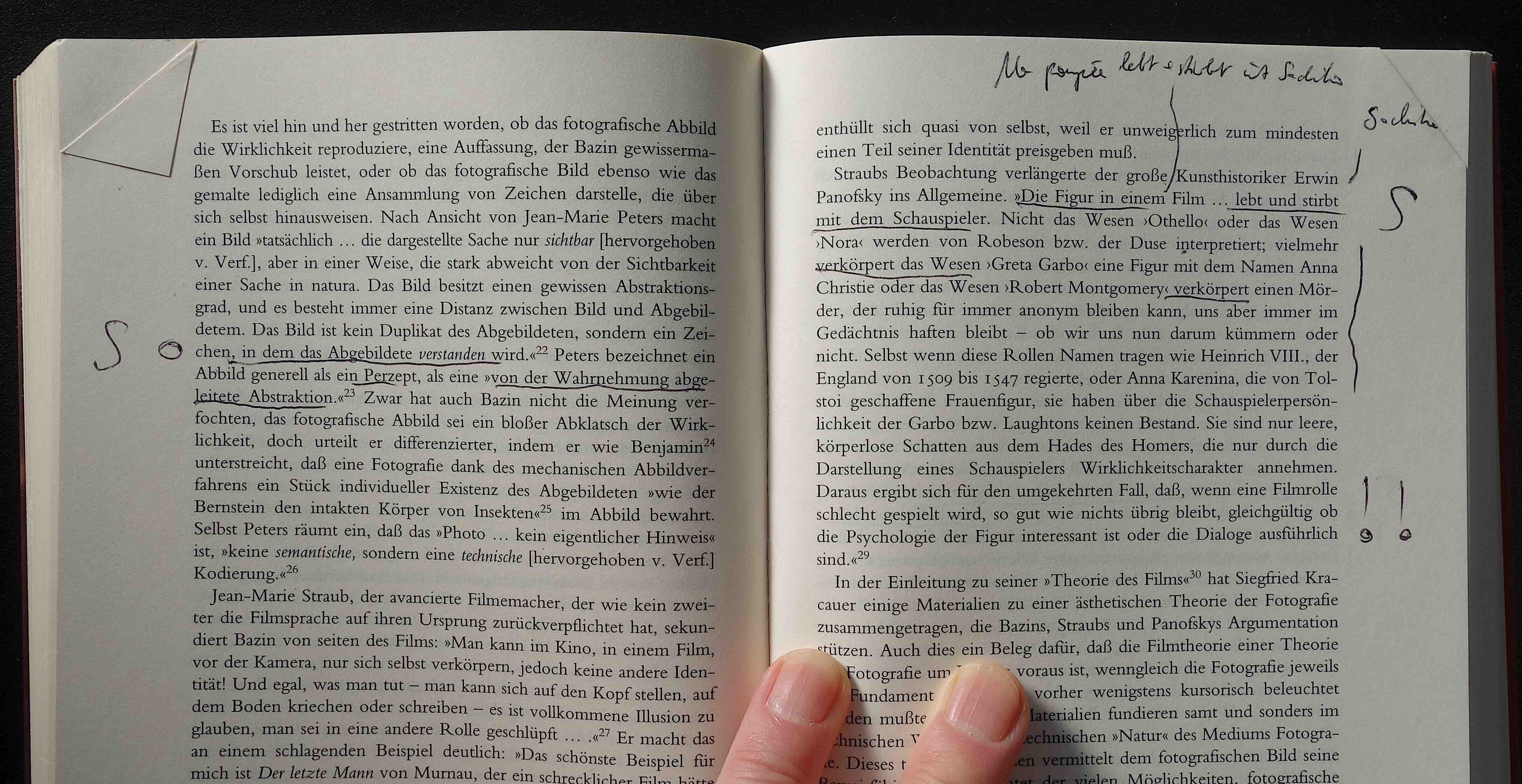
(facebook screenshots, in the original, German language)
Klaus Honnef
November 1 at 5:51 PM (public)
Im Fernsehen sah ich den Direktor einer israelisch-amerikanischen Institution und hörte einen bewegenden Satz. Er sagte, mit dem Massaker der Hamas vom 8.
Oktober, an dem etwa 1400 Menschen, nicht nur Israelis, ermordet, vergewaltigt, zerfleischt, geköpft, von den Unholden selbst gefilmt, und verschleppt wurden, sei das Versprechen gegenüber den Überlebenden des Holcausts gebrochen worden, dass sie nie wieder solche Bilder sehen müssten, wie die Bilder zum Ende des Zweiten Weltkriegs nach der Befreiung des KZs von den Verbrechen Nazi-Deutschlands, die um die Welt liefen. Das Versprechen der Weltgemeinschaft, in Gestalt der UN, und das Versprechen, dass sich die Israelis in ihrem neuen Staat selbst gegeben haben. Dieser Satz verleiht dem Schock der Juden in aller Welt präzis Ausdruck. Nie wieder! Später sehe ich die verheerenden Zerstörungen in Gaza, betroffene Menschen auf der Straße, Leichensäcke, Klagen und Beschuldigungen, Kinder auf den Armen der Väter. Auf einem anderen Kanal ähnliche Bilder einer von Raketen zerstörten Häuserzeile in einer israelischen Stadt, verstörte, weinende Menschen, umher irrende Kinder, die Bilder gleichen sich und gleichen den Bildern aus der Ukraine. Ich erinnere mich, wie ich mit meiner Mutter, 1944 sollte es gewesen sein, nach einem Luftangriff der westlichen Alliierten durch ein brennendes Moselstädtchen Ging, die Häuser brannten, und aus den Häusern warfen die Menschen Betten und Hausgerät auf die Straße, um sie vor den Flammen zu bewahren, weinende Frauen, niedergedrückte alte Männer. Keine Bilder, lebende Bilder. Abends lese ich in dem fabelhaften Roman des großen russischen Schriftstellers Mark Aldanow, Der Anfang vom Ende, das er in den 1930er und 40er schrieb – es ist kürzlich auf Deutsch erschienen – in einem letzten Kapitel vom spanischen Bürgerkrieg, dem grausamen Auftakt des Weltkriegs, wie ein russischer Armeegeneral, Spezialist für den Bewegungskrieg, seinen letzten Tag inmitten der Madrider Front erlebt, Bomben neben seinen Hotel, Schreie, Menschen in Panik, und einen militärischen Sturm auf die okkupierte Universitätsstadt. Alles nehme ich an einem Tag auf. Wir müssen wieder kriegstüchtig werden, sagte kürzlich der deutsche Verteidigungsminister, er meint nicht bellezistisch, wie ihm vorgeworfen, und er hat wohl leider recht. Ich weiß auch nicht weiter als für Frieden und Gerechtigkeit – die eine Fiktion ist – zu beten. Auch als Pragmatist.
(comment by me)
Werter Herr Honnef,
wir leben in einer Zeit, in der Bilder und News nicht mehr der Wahrheit entsprechen. Mein Grossvater kam 1947 aus der Sowjetgefangenschaft zurück, und mein Vater musste als Hitlerjunge für Hitler salutieren.
Mein ital. Grossvater war bis zu seinem Tode mit 95 glühender Anhänger Mussolinis.
Der Vater meiner jap. Ex-Frau kämpfte in Nanking und traf sich jedes Jahr mit seinen ehem. Kriegskameraden im “nationalistischen” Yasukuni-Schrein in Tokyo.
Selbst die zahlreichen Kriege NACH 1945 reichten anscheinend nicht aus, den Menschen zur Vernunft zu bringen.
Meine Wenigkeit, die auf Spanisch, Deutsch, Englisch und Japanisch die Nachrichten “als 1. Quelle” verfolgt, ist momentan geistig überfordert, müde. Um mir ein eigenes Urteil bilden zu können, würde ich gerne die 1. Quellen auf Russisch, Ukrainisch, Chinesisch, Arabisch und Jüdisch lesen. Ich kann es nicht. Übersetztes suggeriert eine politische Agenda. Nicht nur in Kassel.
Wie erkläre ich’s meinem Kinde?
Da der Alltag im Kapitalismus bereits immens stressvoll ist, gnadenlos mit “Weicheiern” umgeht, schalte ich momentan ab.
Sarkasmus kann ich nicht gebrauchen. Ich will mich nicht mehr über die “Dummheit” des jüdischen Geheimdienstes, aka 7.10.2023, aufregen wollen. Ich will mich nicht mehr über Gerdas “Dummheit” aufregen wollen. Ich will mich nicht mehr über Putins “Dummheit” aufregen wollen. Ich will mich nicht mehr über die “Dummheit” der UN aufregen wollen. Ich will mich nicht mehr über die “Dummheit” des Philosophen Žižek aufregen wollen. Ich will mich nicht mehr über die “Dummheit” der Religionen aufregen wollen.
Ich will mich auch nicht mehr über meinen FB, IG oder Twitter-Stream aufregen wollen, siehe Anhang.
Ich schalte jetzt ALLES ab. Selbst eine Diskussion mit mir nahe stehenden Personen ist für die Katz’.
https://twitter.com/danilerer/status/1719363250205130822