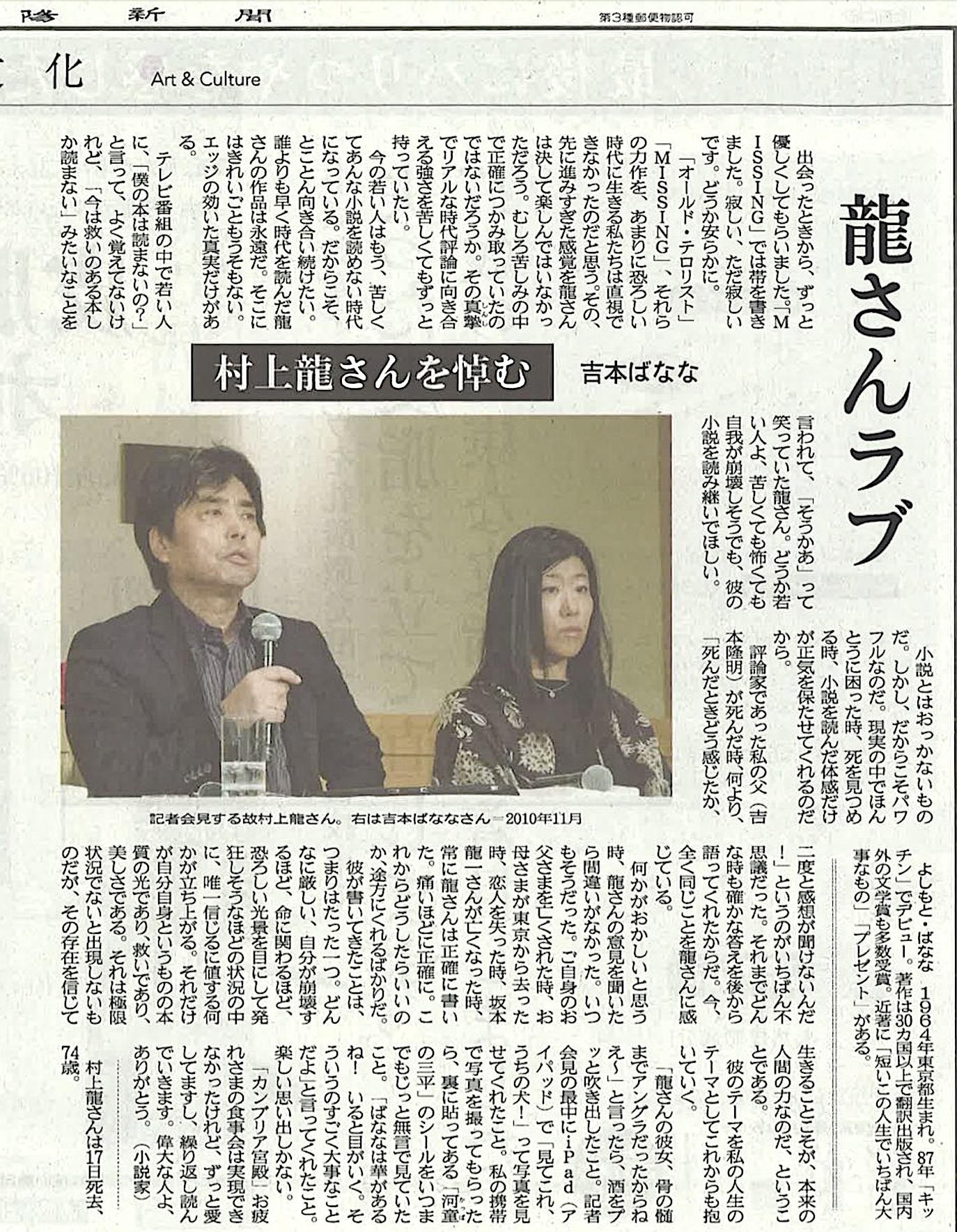
The best, most important and influential Japanese novelist SHIMADA Masahiko’s eulogy on MURAKAMI Ryu in today’s Asahi Shimbun Newspaper 日本を代表する、最も重要かつ影響力のある小説家、島田雅彦さんによる、村上龍への追悼文が、本日の朝日新聞に掲載された
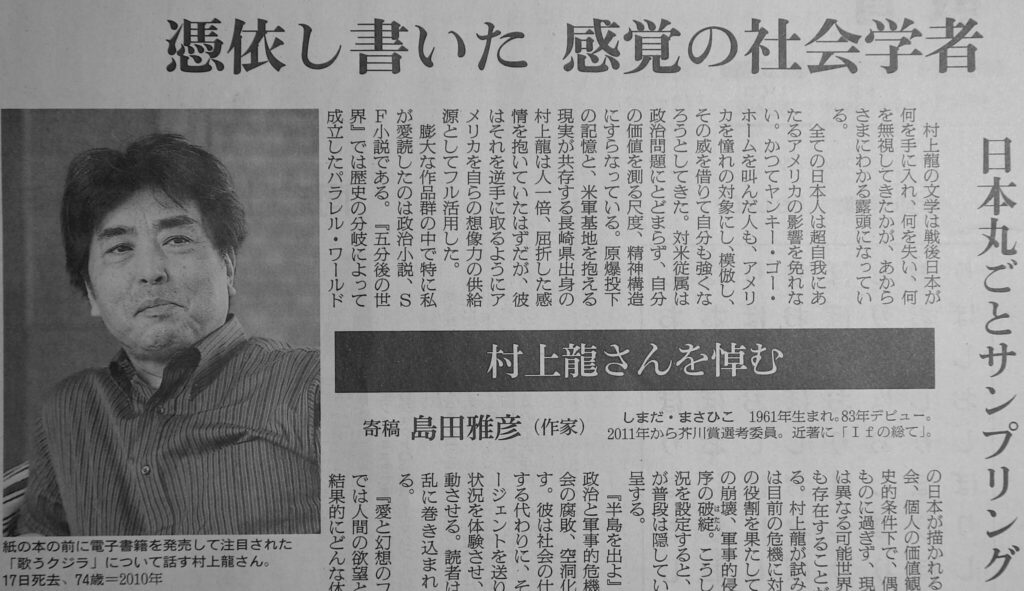
In the Asahi Shimbun, novelist SHIMADA Masahiko published a moving eulogy on MURAKAMI Ryu, who passed away on October 17, 2026, remembering him as a “sociologist of sensation” whose subversive and visceral writing laid bare the realities of postwar Japan. The essay reflects on how Murakami’s groundbreaking debut novel, Almost Transparent Blue, inspired Shimada’s own literary aspirations and how Murakami masterfully utilised the friction of American influence as a creative engine.
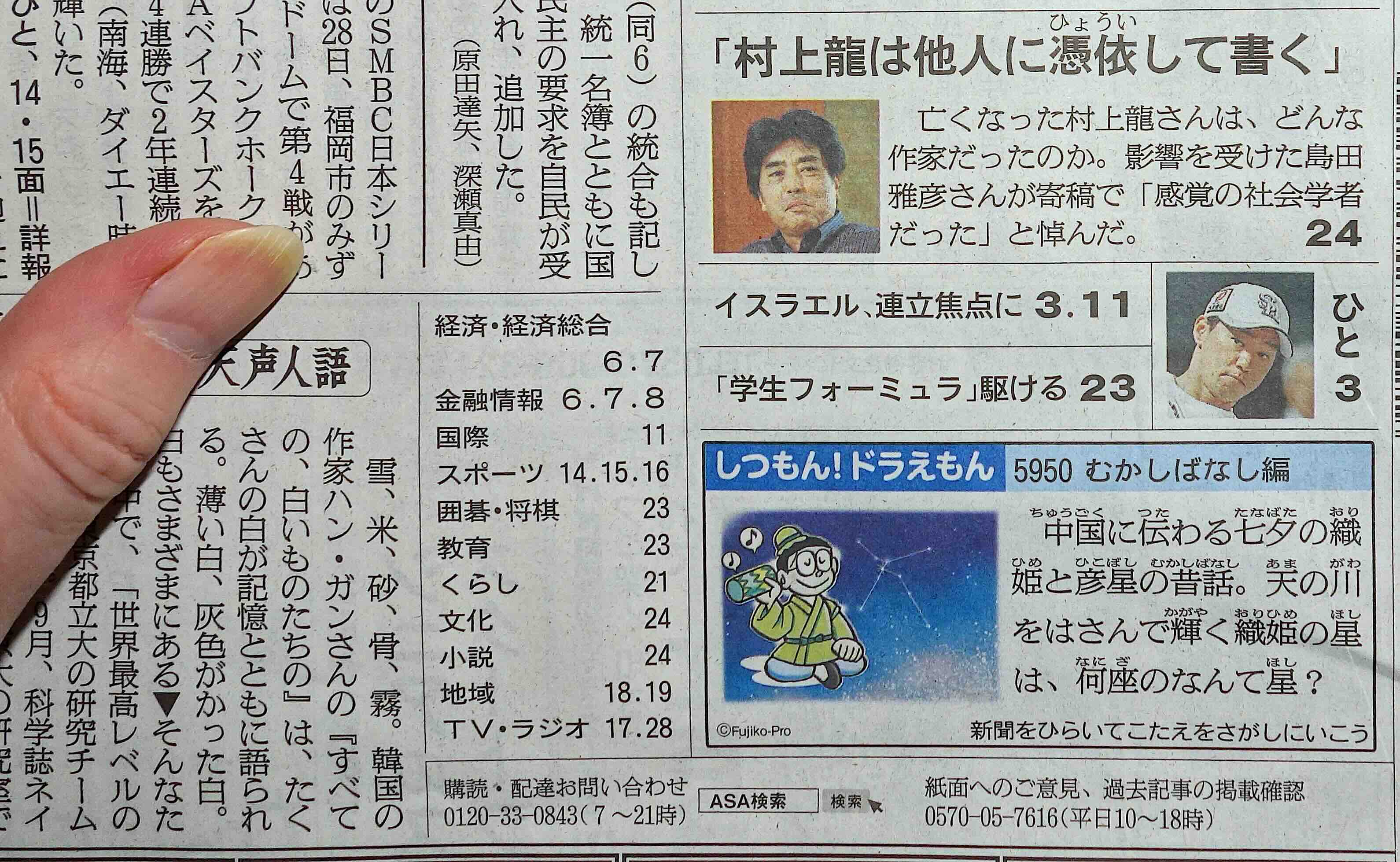
I had been eagerly awaiting the official tribute to Ryu Murakami written by my friend Masahiko Shimada, with great anticipation. And today, the moment has finally arrived! The Asahi Shimbun has published Shimada’s article in a prominent feature. In this deeply moving tribute, entitled ‘Mourning Ryu Murakami: “The Sociologist of Sensation Who Wrote Through Possession”’, Shimada goes beyond mere conventional eulogy to present the definitive key to unravelling the epoch-making transformation in post-war Japanese literature. By portraying Ryu Murakami not merely as a writer of literary fiction, but as a ‘sociologist of the senses’ and a prescient psychologist, Shimada vividly captures the essence of Murakami’s genius. This is his uncannily precise ability to diagnose structural national trauma based on a raw, unfiltered collective nervous system. With his incisive pen, Shimada brings into sharp relief the profound dimensions inherent in Ryu Murakami’s Gesamtkunstwerk. This is, in essence, a legacy bequeathed to Japanese society, and to the younger generation in particular. Needless to say, these novels serve as allegories that sharply depict the pathological mental state of the Japanese people, who sacrificially devote themselves to an obsession with ‘masculinity’ centred on ‘Ten no Kami’ (天の・紙 “Heavenly” paper), aka manuscript paper 原稿用紙 —an obsession that has itself become a parody. It emphasises how Murakami’s debut novel, *Almost Transparent Blue*, avoided political rhetoric in order to capture the psychological reality of the occupation. By focusing on the excess of stimulation—jazz, drugs and violence—swirling around US military bases, Murakami depicted how post-war Japan absorbed the culture of the conquerors not through intellectual assimilation, but as an intoxicating and unstable bodily fluid.
Whilst traditional sociology relies on statistics and data, Shimada points out that Murakami drew on what he ‘felt in his bones’. From the claustrophobic anxiety of *Coin Locker Babies* to the visceral horror of *In the Miso Soup*, Murakami treated the psychological distortions of contemporary Japan—isolation, psychosis, the escapism of otaku, apathy, paranoid female and male patients, and sudden outbreaks of violence—as acute sensory disorders arising from a hyper-capitalist vacuum. Shimada masterfully analyses the narrative techniques employed by Ryu Murakami in *The World in Five Minutes From Now* as a means of testing the complexity of human nature to its absolute limits. By casting his characters into absolute chaos—such as ‘the collapse of the state, military invasion and the breakdown of social order’—Murakami strips away the polite veneer of civilisation. Shimada accurately points out that such major disasters serve as a structural means of exposing human nature and the hidden essence of institutional systems. When social infrastructure ceases to function, we are confronted with the reality of who we truly are.
Furthermore, I would like to emphasise in particular how much ‘The End of the Visceral Avant-Garde’ is celebrated here. Indeed, I am profoundly and deeply moved by Shimada’s writing. This is partly because Shimada’s eulogy carries clear significance that transcends generations. As a contemporary who, alongside Ryu, raced through the landscape of postmodernism, Shimada recognises that ‘Murakami’s retirement’ heralds the end of an era in which literature still possessed the power to shake the social order. Murakami never comforted his readers. He implanted reality within them. Ultimately, Shimada’s tribute reminds us that Murakami was not writing about society from a safe, academic distance. He stood within the direct blast radius of Japan’s rapid modernisation and transformed its toxic aftershocks into a pure and unforgettable literary pulse. Through Shimada’s eyes, we can see Murakami as he truly was—the ultimate pathologist of the soul of modern Japan.
Interestingly, however, there was one point on which Shimada-kun and I did not see eye to eye. He argued that, as potential candidates for the Nobel Prize in Literature after Kenzaburō Ōe, we should name Kenji Nakagami and—not Haruki, but—Ryū Murakami. I, on the other hand, argued that Yuko Tsushima and Yoko Tawada should also be included on that list.
Tokyo, 29 October 2026, 19:21
Mario A
友人の島田雅彦さん(くん)による村上龍の公式追悼文を、大きな期待を込めて待ちわびていた。そして今日、ついにその時が来た!朝日新聞が島田さんの記事を大々的に掲載したのだ。「『憑依し書いた 感覚の社会学者』・村上龍を悼む」と題されたこの胸を打つ追悼文の中で、島田さんは単なる従来のユーロジーにとどまらず、戦後日本文学における画期的な変容を解き明かすための決定的な鍵を提示している。村上龍を単なる純文学小説家としてではなく、感覚の社会学者、先見の明のある心理学者、として描くことで、島田は村上の天才性の本質を鮮やかに言い当てている。それは、生々しく、何ものにも濾過されていない集合的神経系を基に、構造的な国家的トラウマを診断する、彼の不気味なほどの能力である。島田は鋭い筆致で、村上龍のGesamtkunstwerkに内在する深遠な次元を浮き彫りにする。それはすなわち、日本社会、とりわけ若い世代に向けられた遺産である。言うまでもなく、これらの小説は、天の・紙、aka 原稿用紙、を中心とした「男らしさ」への強迫観念――それもパロディと化したもの――に自らを犠牲的に捧げてしまうにっぽん人の、病的な精神状態を鋭く描き出す寓話となっている。村上のデビュー作『限りなく透明に近いブルー』が、占領下の心理的実相を捉えるために、いかに政治的なレトリックを回避したかを強調している。アメリカ軍基地周辺で渦巻くジャズ、ドラッグ、暴力による刺激の過剰に焦点を当てることで、村上は、戦後日本が征服者の文化を、知的な同化を通じてではなく、陶酔的で不安定な体液として取り込んでいった様子を描き出した。
伝統的な社会学が統計やデータに依拠する一方で、島田は、村上が「肌で感じるもの」に依拠していたと指摘する。『コインロッカー・ベイビーズ』の閉所恐怖症的な不安から、『イン ザ・ミソスープ』の生理的な恐怖に至るまで、村上は現代日本の心理的歪み――孤立、サイコーシス、オタクの現実逃避、無関心、偏執病な女性・男性患者、突発的な暴力――を、超資本主義的な真空状態から生じた急性感覚障害として扱った。島田は、村上龍の『五分後の世界』における物語の手法を、人間性の複雑さを極限まで試すものとして、見事に解説している。村上は、登場人物たちを「国家の崩壊、軍事侵攻、社会秩序の崩壊」といった絶対的な混沌の中に放り込むことで、文明の礼儀正しい表層を剥ぎ取っている。島田は、こうした大災害が、人間の本性と制度システムの隠された本質を暴くための構造的な手段であることを的確に指摘している。社会インフラが機能しなくなったとき、私たちは自分たちが実際にどのような存在であるかを突きつけられるのだ。
さらに、ここで「内臓的アヴァンギャルドの終焉」がいかに称えられているかを特に強調しておきたい。やはり、私は島田の文章に心から深く感動している。それは、島田のユーロジーが世代を超えた明確な意義を帯びているからでもある。龍さんと共にポストモダンという風景を駆け抜けてきた同時代人として、島田は、「村上の引退」が、文学がまだ社会秩序を揺るがす力を持っていた時代の終焉を告げるものであると認識している。村上は読者を慰めることはなかった。彼は読者に現実を植え付けたのだ。結局のところ、島田の追悼文は、村上が安全な学術的な距離から社会について書いていたわけではないことを私たちに思い出させてくれる。彼は、日本の急速な近代化の爆発の直撃圏内に立ち、その有害な余波を、純粋で忘れがたい文学的な鼓動へと変換したのだ。島田の目を通して、私たちは村上をありのままの姿――現代日本の魂の究極の病理学者――として見ることができる。
が、興味深いことに、島田くんと私には意見が一致しない点が一つあった。彼は、大江健三郎の次にノーベル文学賞の候補となり得る人物として、中上健次、そして(春樹ではなく)村上龍の名を挙げるべきだと主張した。一方、私は、津島佑子や多和田葉子もそこに加えるべきだと主張した。
東京、2026年10月29日、19:21
亜 真里男
2026/11/4 up-date
The New York Times, Obituaries Desk, Nov. 3, 2026
Ryu Murakami Has Died. His Writing Explored the Dark Side of Japan.
His books about sex, drugs and social misfits amid the country’s economic boom — and subsequent bust — sold millions of copies.
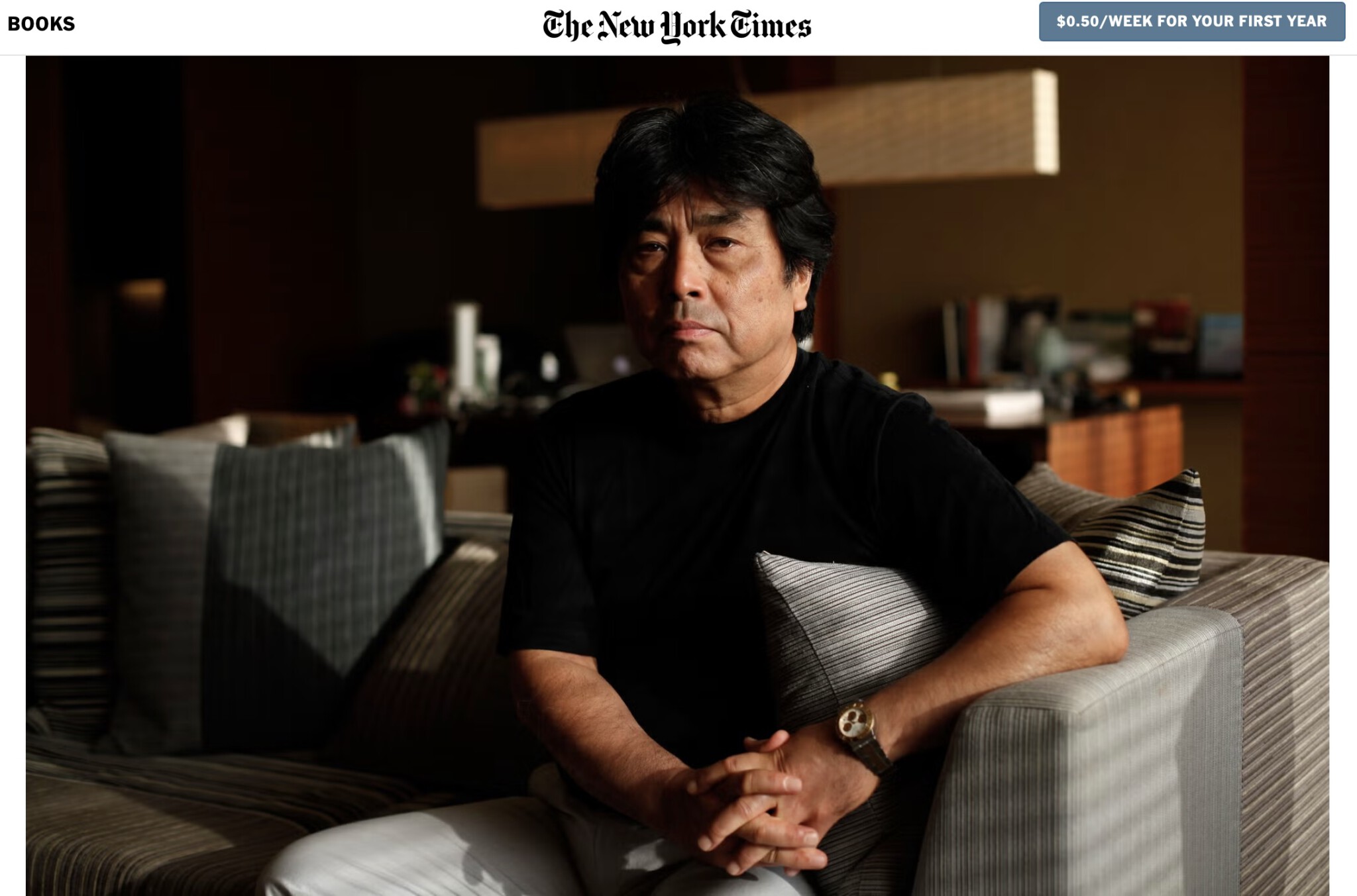
caption by the NYTimes
A middle-aged Japanese man with thick, dark hair sits on a sofa, looking somberly straight ahead.
Ryū Murakami in 2010. His first novel, “Almost Transparent Blue,” depicted a side of Japan that ran counter to the strait-laced, socially conservative image favored by the mainstream. (end of NYTimes caption)
Ryu Murakami, a novelist, filmmaker and television host whose bracing psychological explorations of the underside of Japanese society made him one of his country’s most popular writers, died on Sept. 17 at his home in Tokyo. He was 74.
Gentosha, the publisher of many of his novels, announced his death, but did not provide a cause.
Mr. Murakami wrote his first novel, “Almost Transparent Blue,” while still in art school. Published in 1976, it depicted a side of Japan that ran counter to the strait-laced, socially conservative image promoted by the nation’s mainstream — one of aimless youth, orgies and copious amounts of drugs.
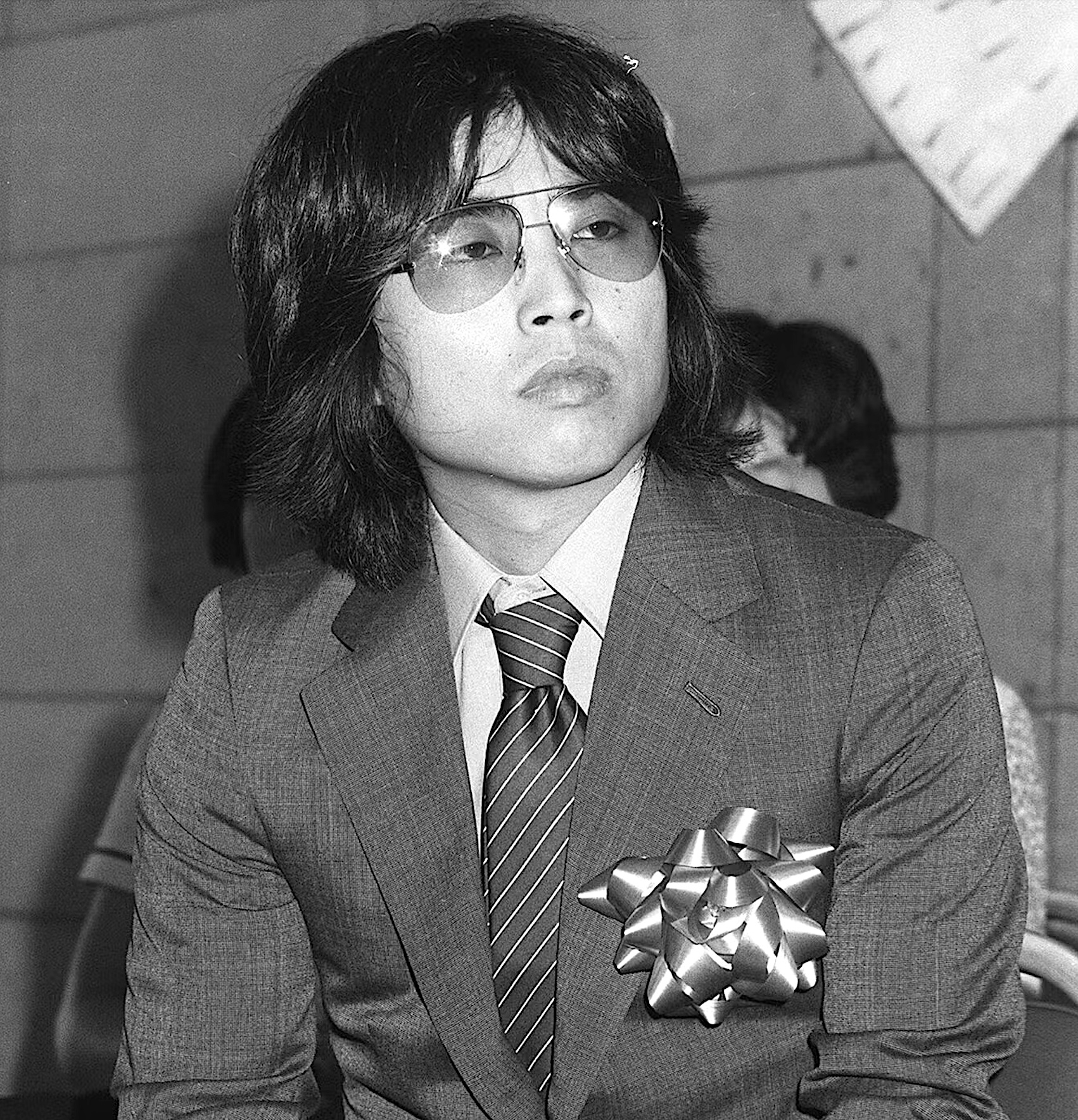
caption by the NYTimes
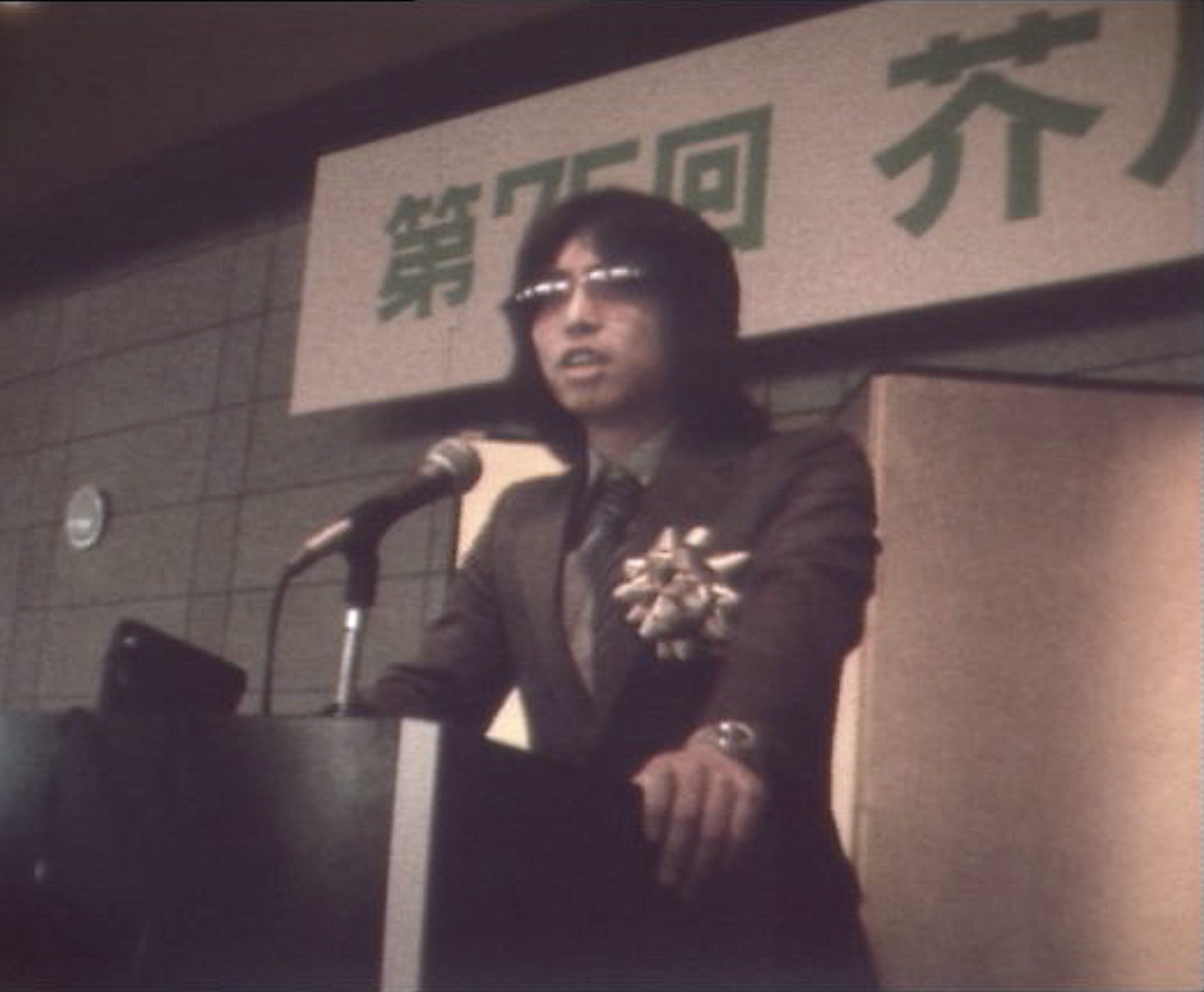
A black-and-white photo of a young Murakami with shoulder-length dark hair, wearing aviator glasses, a dark suit, striped tie and a gift bow attached to his jacket. Mr. Murakami at the ceremony for the Akutagawa Prize, in 1976. (end of NYTimes caption)
The book was a huge commercial and critical success, selling more than 1.2 million copies in its first six months and winning the esteemed Akutagawa literary prize. It established Mr. Murakami as a voice of Japan’s counterculture and a sharp-eyed analyst of the cultural and social costs of the country’s rapid postwar expansion.
“I have a feeling that during this chaotic postwar rush to tremendous economic growth, we Japanese may have lost or have sacrificed something very dear,” he told The New York Times in 1977. “And instead of sitting idly by and moaning, I believe novelists must provide active leadership in this quest.”
Mr. Murakami was not related to Haruki Murakami, another beloved Japanese author and a close contemporary. They were friends, but took very different approaches to writing: While Haruki Murakami’s densely psychological books lean heavily on dream fugues and magical realism, Ryu Murakami’s novels were grounded in blade-sharp criticism of Japanese culture and politics.
After the success of “Almost Transparent Blue,” Mr. Murakami wrote more than 40 additional novels, as well as countless short stories, screenplays and nonfiction essays. As a regular radio and TV host, he became a familiar voice and face to millions of Japanese.
He directed five films, including “Topaz” (1992), released in the United States as “Tokyo Decadence” — an unsubtle title for a movie centered on a prostitute named Ai and her encounters with Japan’s wealthiest and kinkiest.
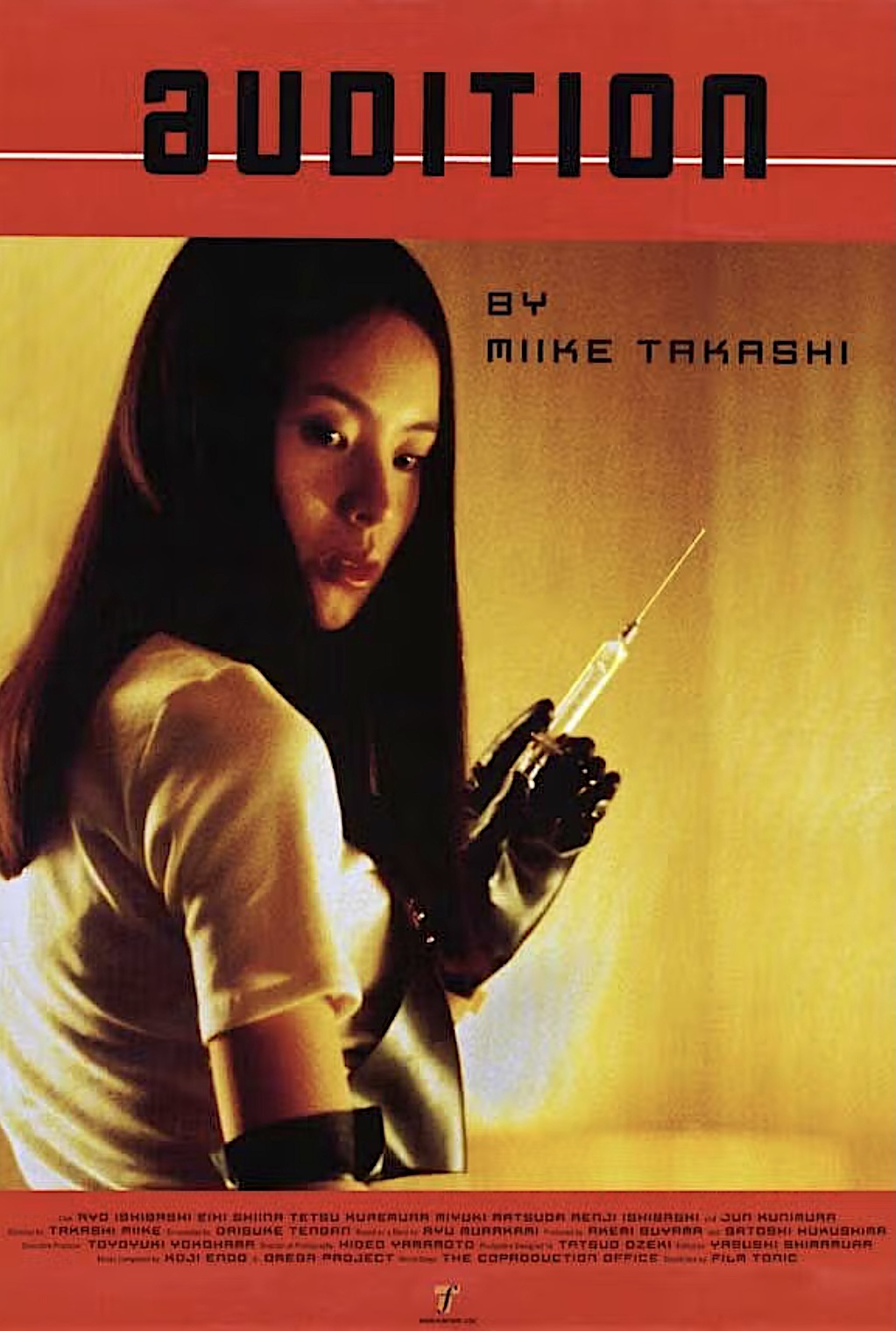
caption by the NYTimes
A movie poster in shades of red, yellow and black with a photo of a young woman wearing leather gloves and holding a large hypodermic needle, under the words “Audition” and “by Miike Takashi.”
Mr. Murakami’s 1997 novel “Audition” was adapted into a film of the same name two years later. (end of NYTimes caption)
His 1997 novel “Audition” was the basis for the 1999 movie of the same name that became a cornerstone of the so-called J-horror movement, alongside films like “Ringu” (1998) and “Ju-on: The Grudge” (2002).
The story revolves around Aoyama, a widowed TV producer who uses the pretense of auditioning actresses to find a girlfriend, eventually falling for a mysterious woman named Asami. As Aoyama slowly, terrifyingly learns the truth about her, Mr. Murakami unravels a story that revels in gory details and jump-scare shocks.
“The prose in these passages is elegiac and affecting, but it has the sharp, visceral feel of the butcher’s knife or surgeon’s scalpel,” the Scottish novelist Irvine Welsh wrote in a 2009 review of the English edition for The Guardian.
As Japan sank into the economic and social doldrums of the late 1990s, Mr. Murakami’s novels began to feel almost prophetic in their depiction of a population ready to burst in violent rage at suffocating social restrictions and the fading hope for a better tomorrow.
“Many Japanese are dissatisfied and frustrated,” he told The Financial Times in 2013. “But they are not good at expressing those feelings, so they tend to wall themselves off. And because they have this pent-up anger, they are very unstable.”
While keeping up a steady pace of fiction writing, Mr. Murakami turned his pen toward nonfiction as well, in essays, opinion pieces and books that assailed the government’s failure to adapt to the end of Japan’s decades-long economic expansion.
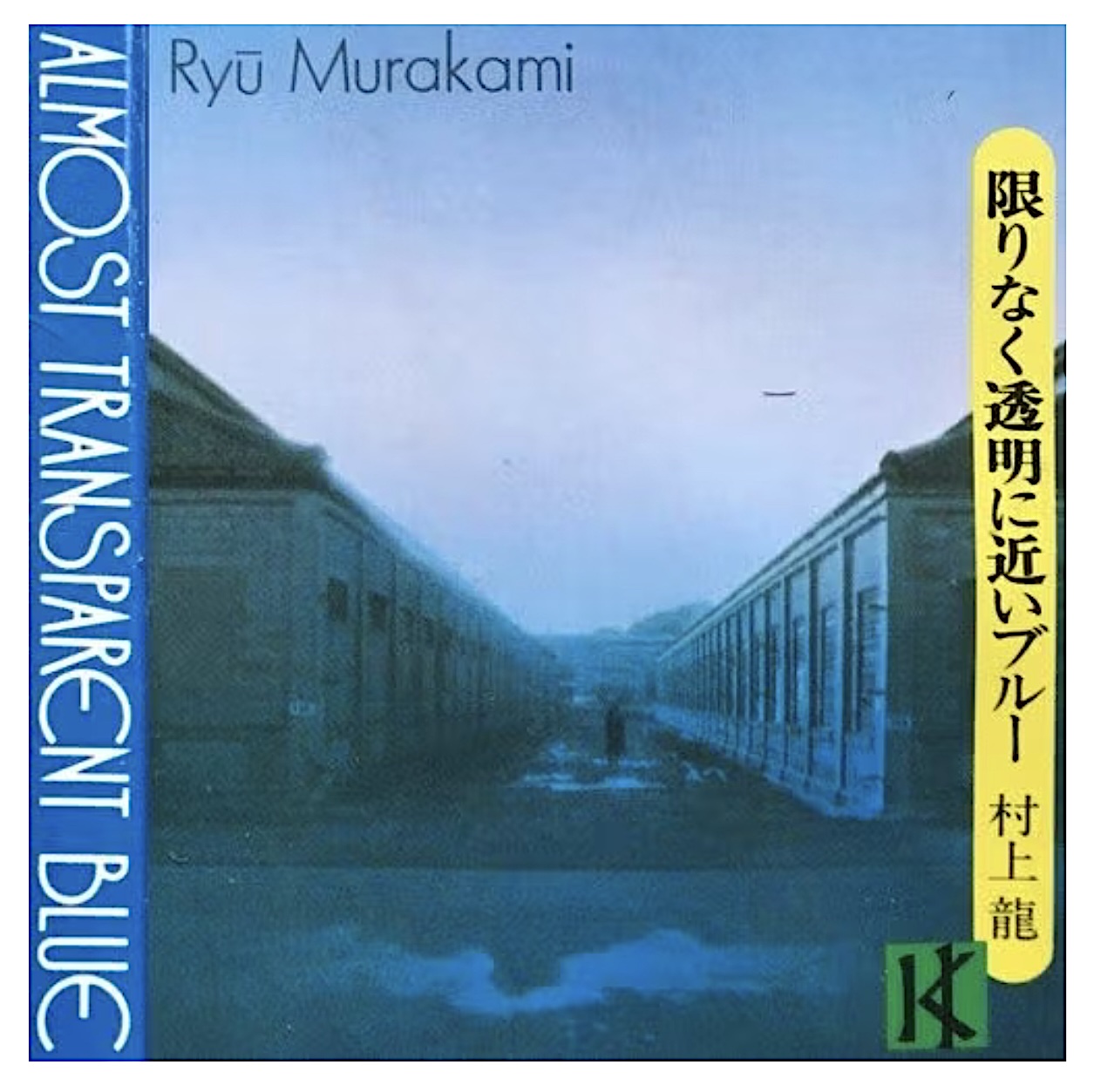
caption by the NYTimes
A blue book cover with a murky image of a dark figure standing between two large buildings, next to the words “Almost Transparent Blue.”
Mr. Murakami dropped out of college following the success of “Almost Transparent Blue” in 1976. (end of NYTimes caption)
“The days when everything worked like a dream and everyone’s standard of living kept rising are over, and have been for a long time,” he wrote in a guest essay for The New York Times in 2009. “Now that there is no longer enough money, the Japanese public has to make some hard choices.”
Surprisingly for a novelist who cut his teeth on the counterculture, Mr. Murakami became a favorite of the establishment. He once gave a lecture on Japan’s cultural crisis to 100 executives from NEC, the electronics company, and he served as an unofficial adviser to top politicians and policymakers.
But as a novelist, he insisted, his responsibility was always to the reader, not to politics.
“I’m not trying to make the world a better place,” he told The Financial Times in 2013. “Unlike politicians, whose job is to work on the masses by making society fairer and more prosperous, the duty of the novelist is to target a single reader, one person reading alone.”
Ryunosuke Murakami was born on Feb. 19, 1952, in Sasebo, a port city on the southern island of Kyushu. His father, Shinichiro, taught art; his mother, Fujiko, taught math.
Sasebo is home to major U.S. Navy installations, and from childhood Ryū was both drawn to and repulsed by America’s influence on Japanese society.
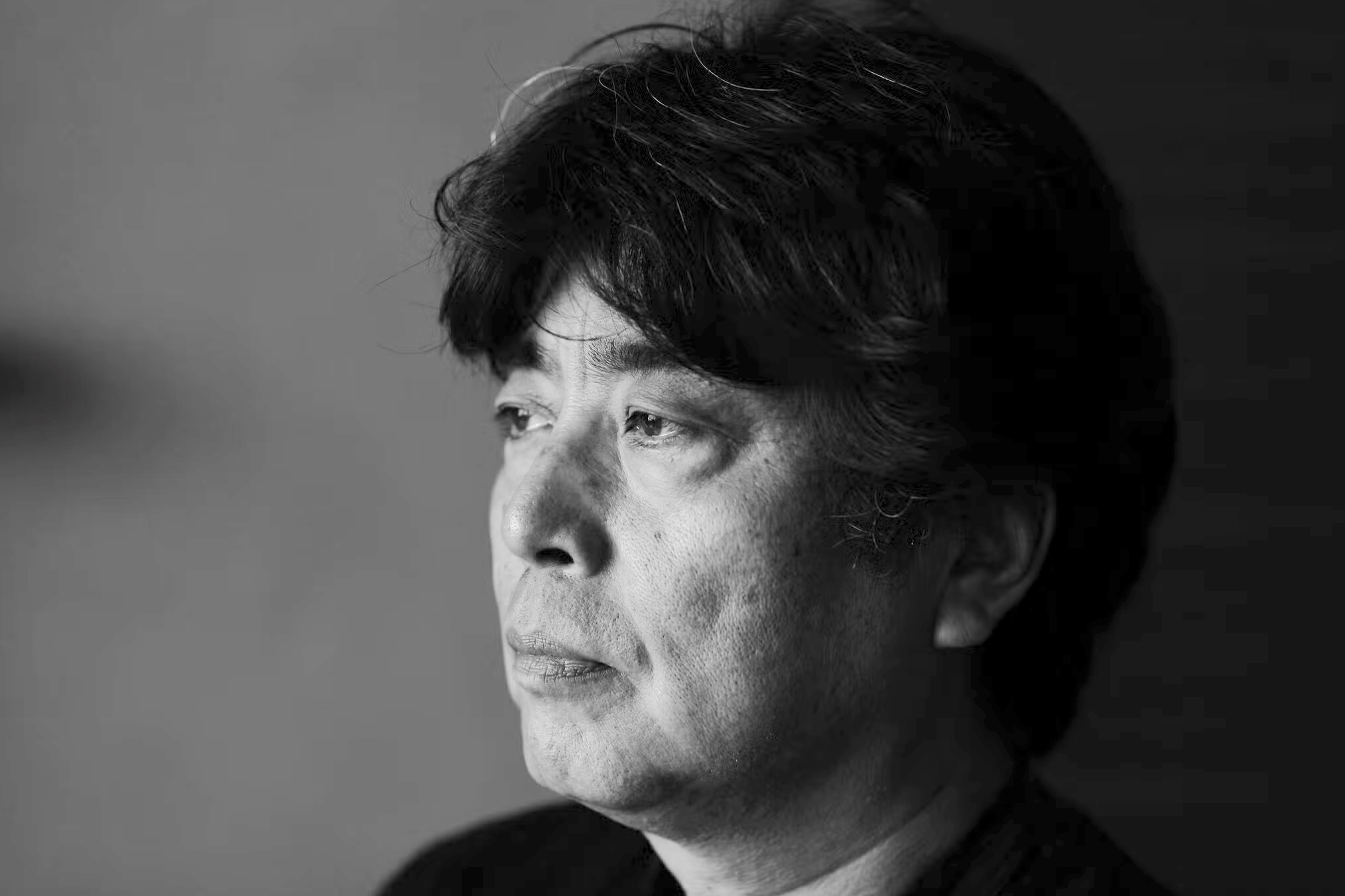
caption by the NYTimes
A black-and-white close-up of Murakami’s face, nearly in profile, as he looks seriously into the distance.
Mr. Murakami in 2010. “The days when everything worked like a dream and everyone’s standard of living kept rising are over, and have been for a long time,” he wrote the year before in an essay in The New York Times.(end of NYTimes caption)
He was a rebel from an early age: As a teenager, he played drums in a rock band, and he and some friends once barricaded themselves on the roof of their high school, resulting in a three-month suspension.
After graduating, he moved to Tokyo, where he enrolled in the sculpture program at Musashino Art University. He also began writing, and dropped out of school following the success of “Almost Transparent Blue.”
Mr. Murakami’s survivors include his wife, Tazuko Takahashi, and their son.
Despite his mainstream success, Mr. Murakami assured interviewers that his heart remained with the fringes. He liked to tell a story about getting a letter from a girl who had run away from home.
“While she was waiting for a bus, she was reading one of my novels and got encouraged by the idea that there were misfits like her out there in society,” he told Vice in 2013. “Reactions and episodes like that make me feel really very happy.”
ここに載せた写真・テクストは、すべて「好意によりクリエーティブ・コモン・センス」の文脈で、日本美術史や日本文学史の記録の為に発表致します。photographs & text: cccs courtesy creative common sense
https://www.nytimes.com/2026/11/03/books/ryu-murakami-dead.html
Bonus for the ART+CULTURE readers:
Iggy Pop – Sweet Sixteen (1978)