Satomi Nakai from New York: “ROY LICHTENSTEIN: LIKE NEW” @ Whitney Museum of American Art 中井里美のニューヨークアート通信:展覧会評・ロイ・リキテンスタイン: LIKE NEW @ Whitney Museum of American Art ホイットニー美術館
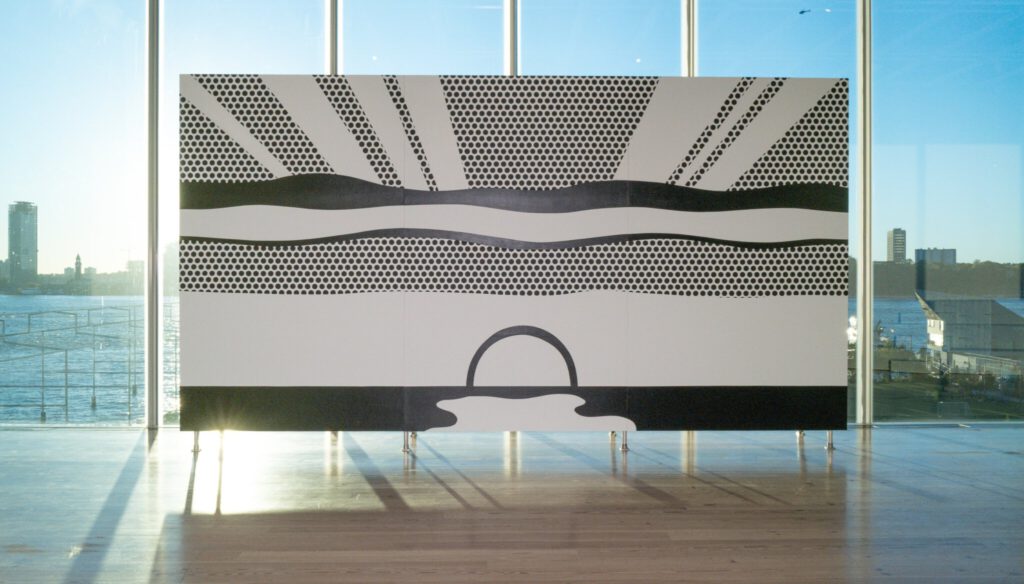
Roy Lichtenstein: Like New
Whitney Museum of American Art
Roy Lichtenstein: Like New
Whitney Museum of American Art
Oct 11, 2026 – May 10, 2027
99 Gansevoort Street, New York, NY 10014
https://whitney.org/exhibitions/lichtenstein
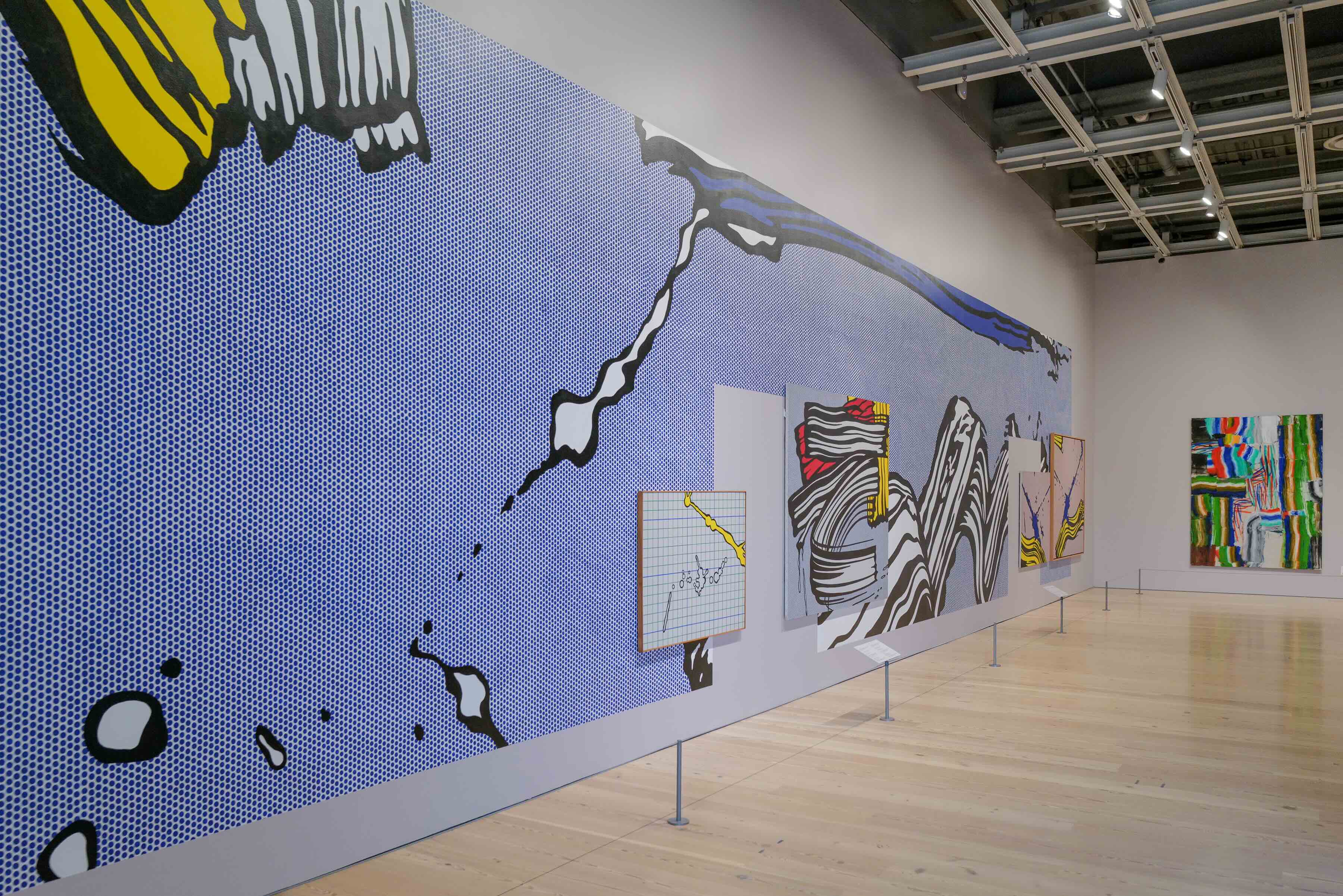
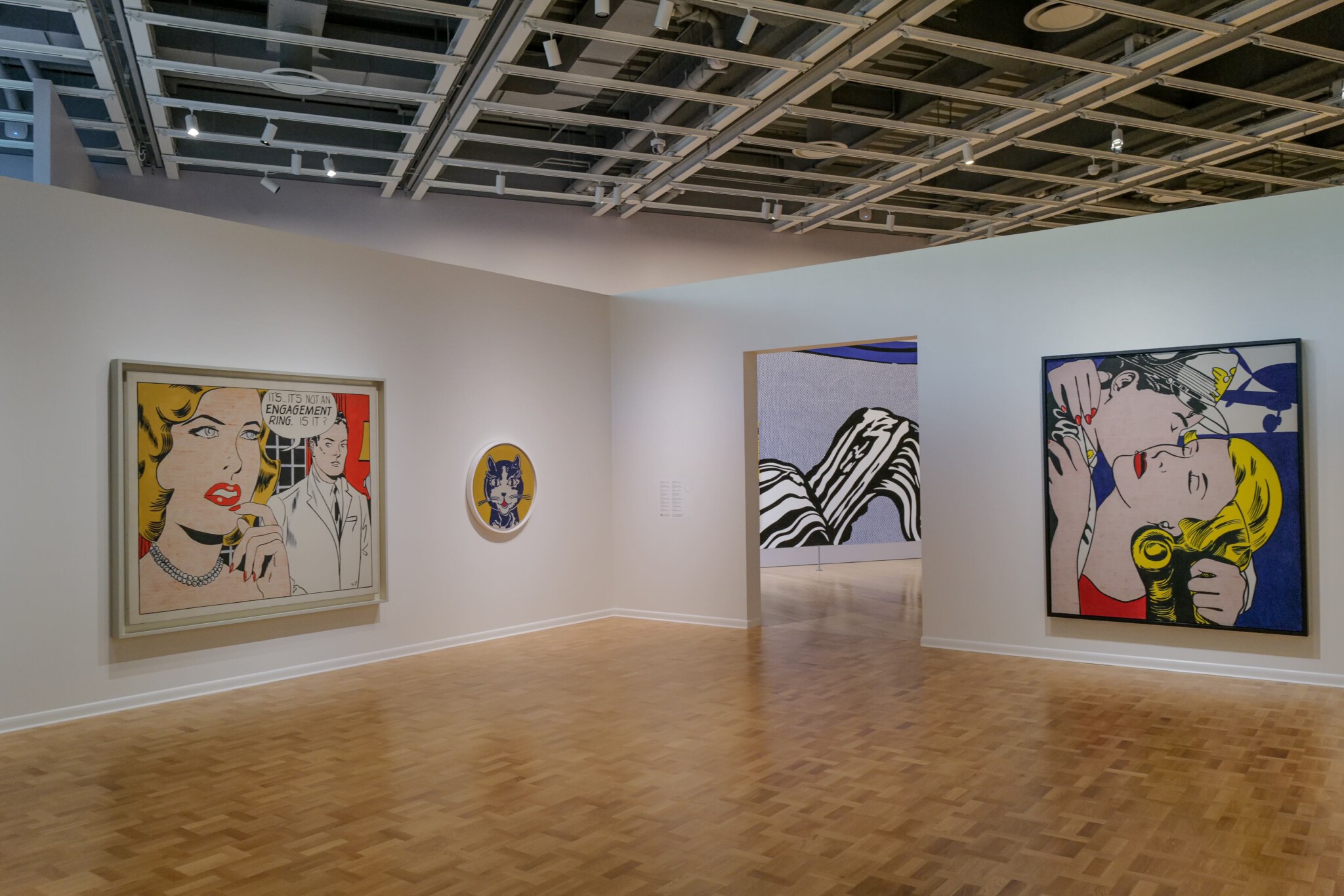
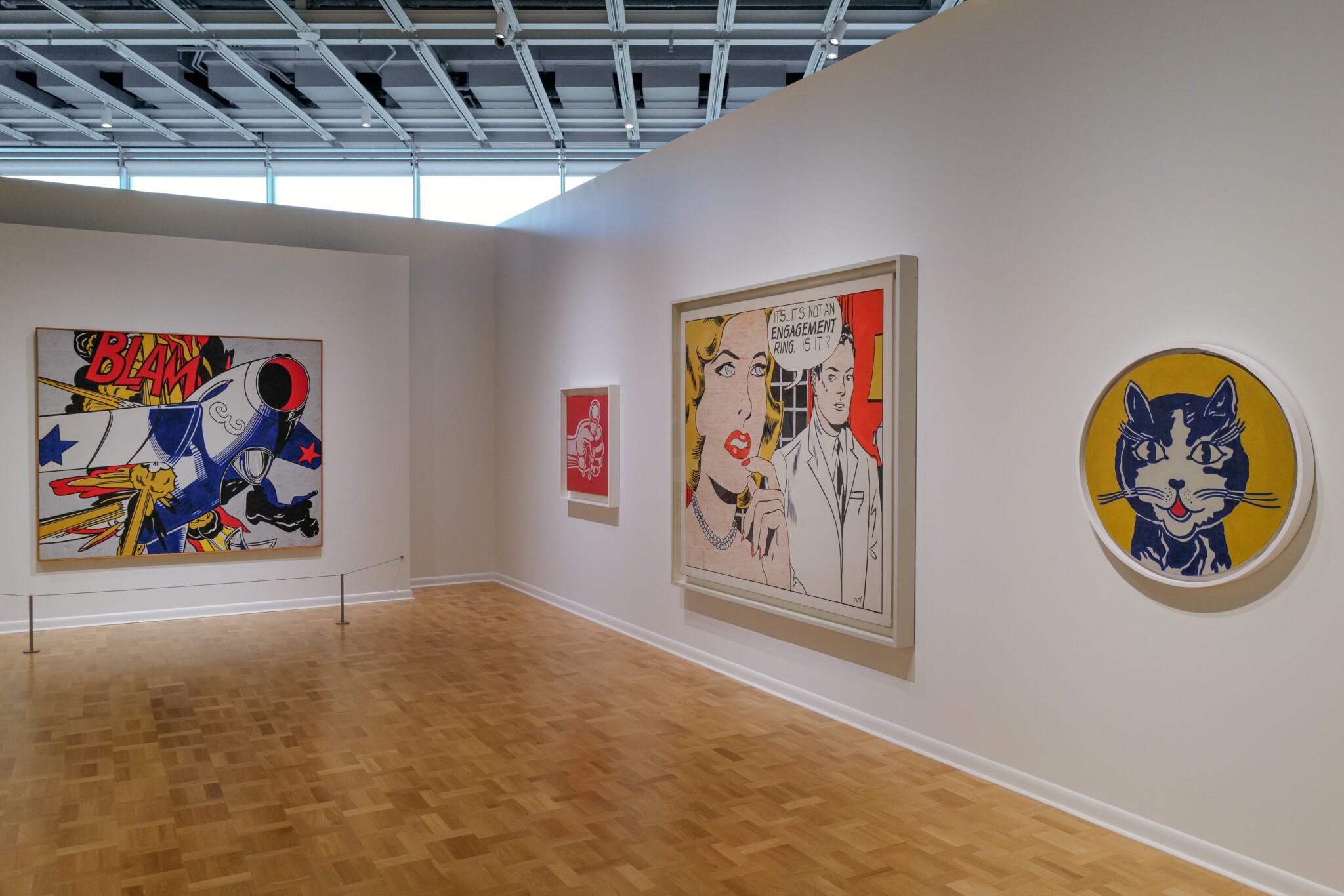
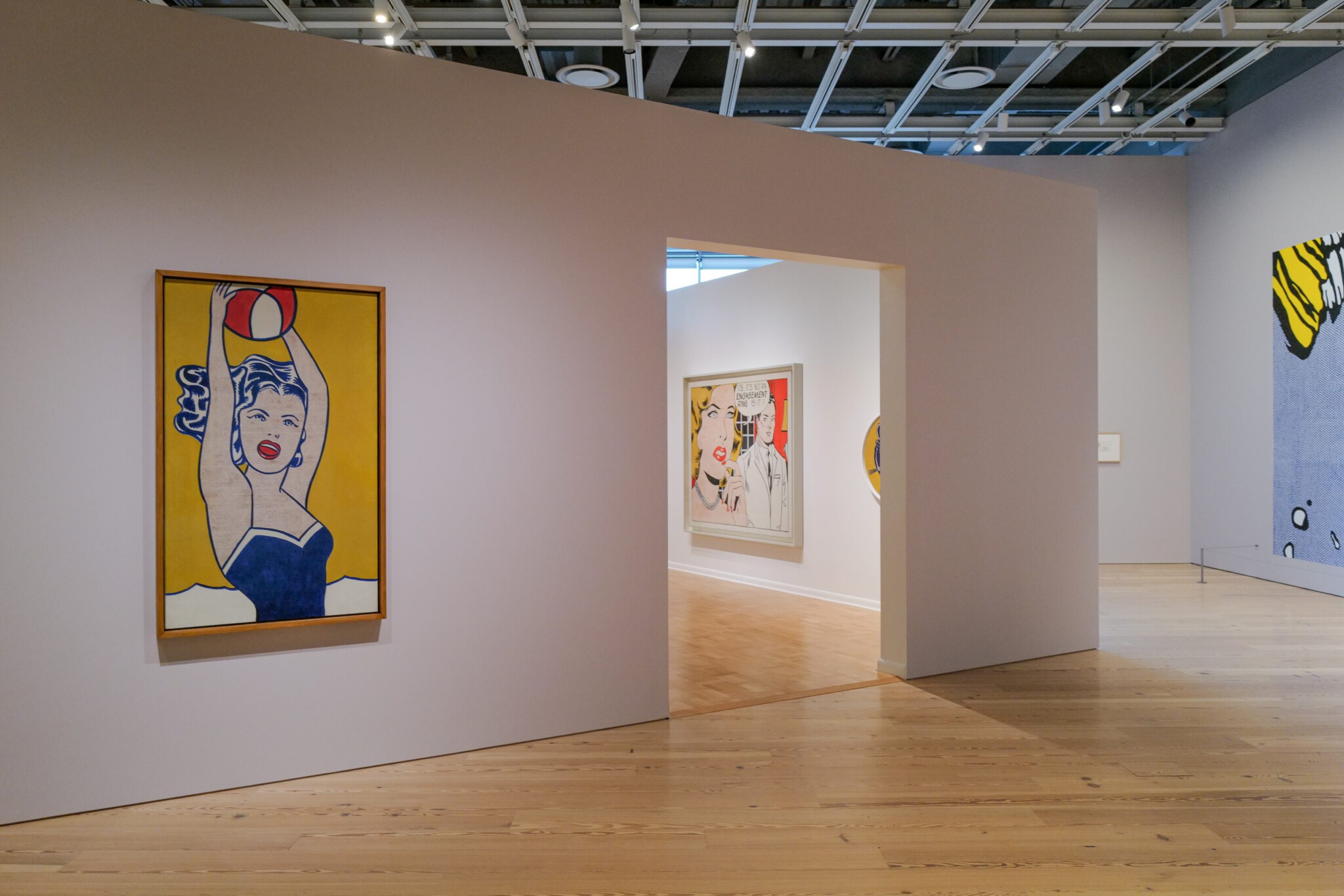
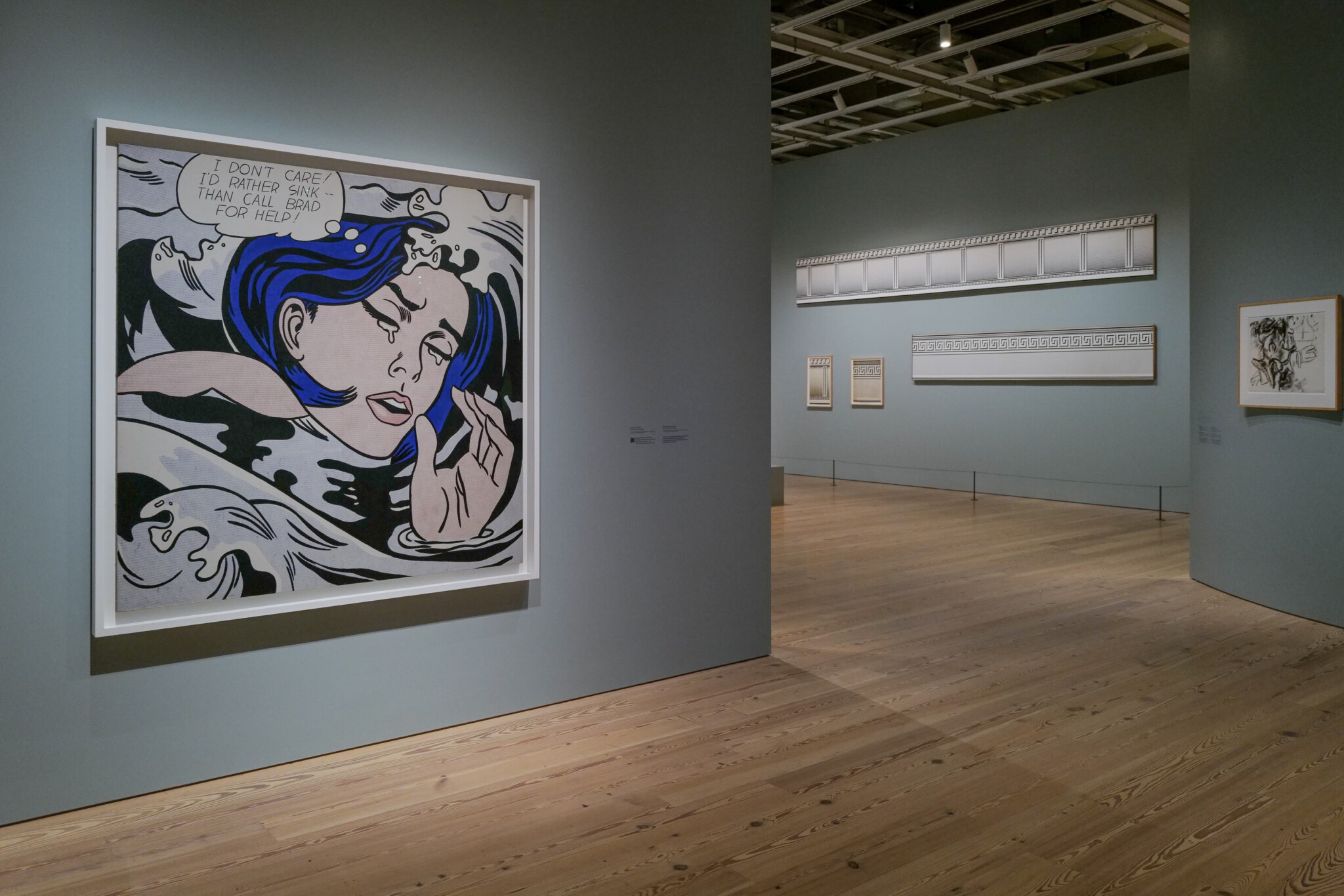
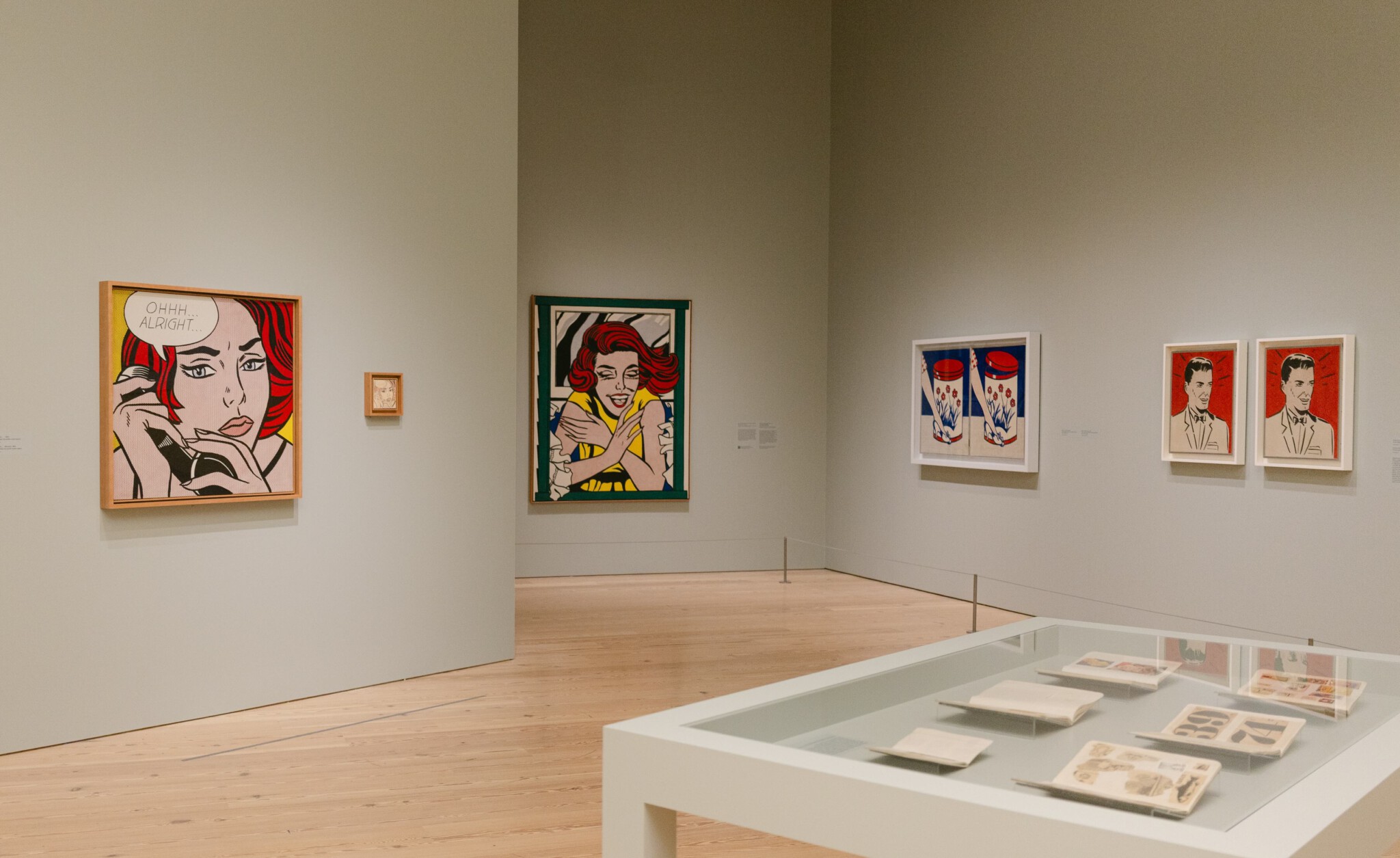
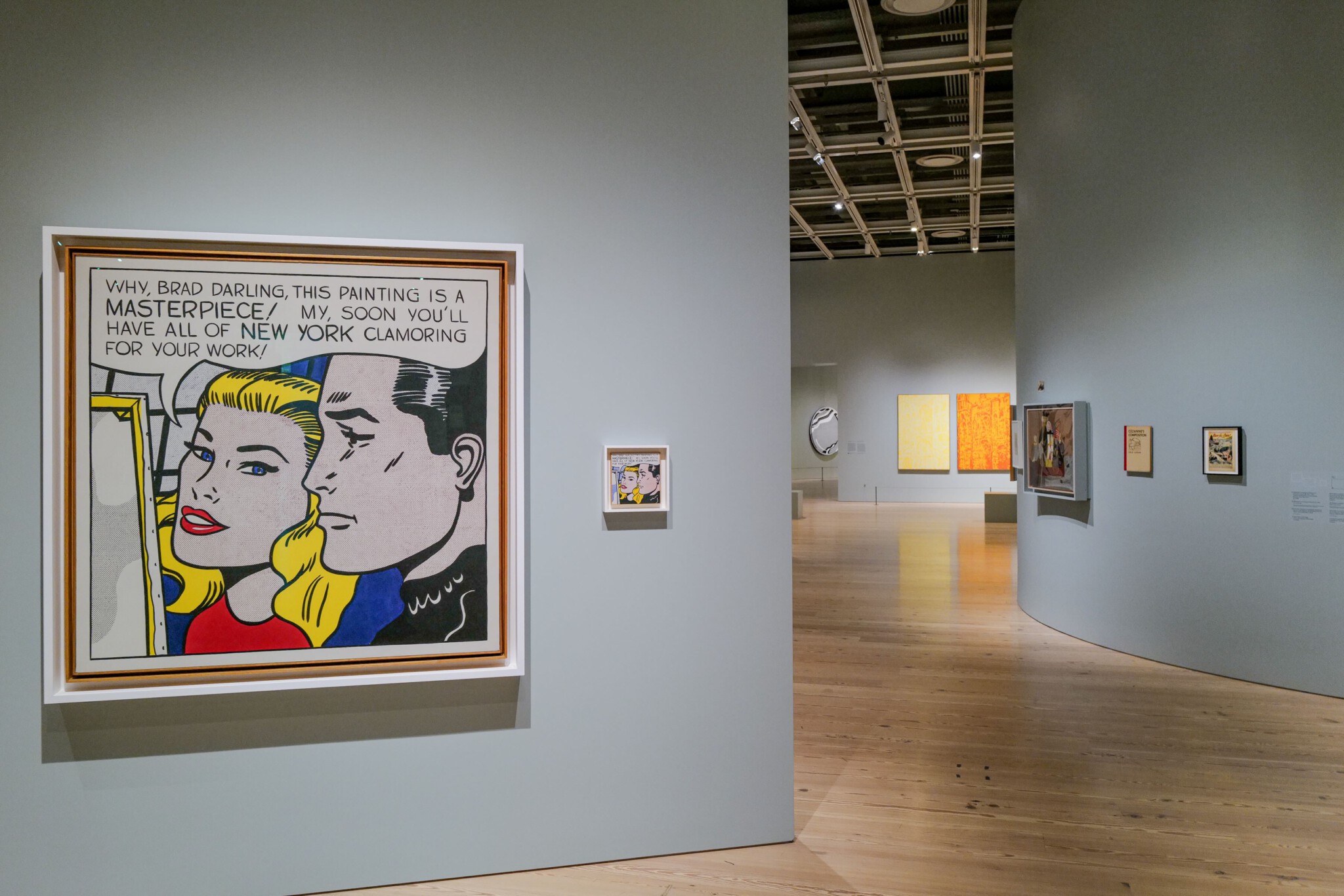
今回のホイットニー美術館のリキテンスタイン展はただの回顧展ではなく、特筆すべきところはそのキュレーション力だろう。
リキテンスタインの作品だけでなく、当時アプロプリエーションのアートを制作していたElaine Sturtevant (1924-2014)の、リキテンスタインの作品そのままコピーしたような作品が隣同士に展示されていて、普通に展覧会を観ている観客は両方リキテンスタインの作品と思ったことだろう。私もそう思った。
展示を観に行った翌日も、キャプションを読む為だけに展覧会を訪れた。そこで、私がリキテンスタインのいい作品と思っていた作品がSturtevantによるものだったと気づいた。
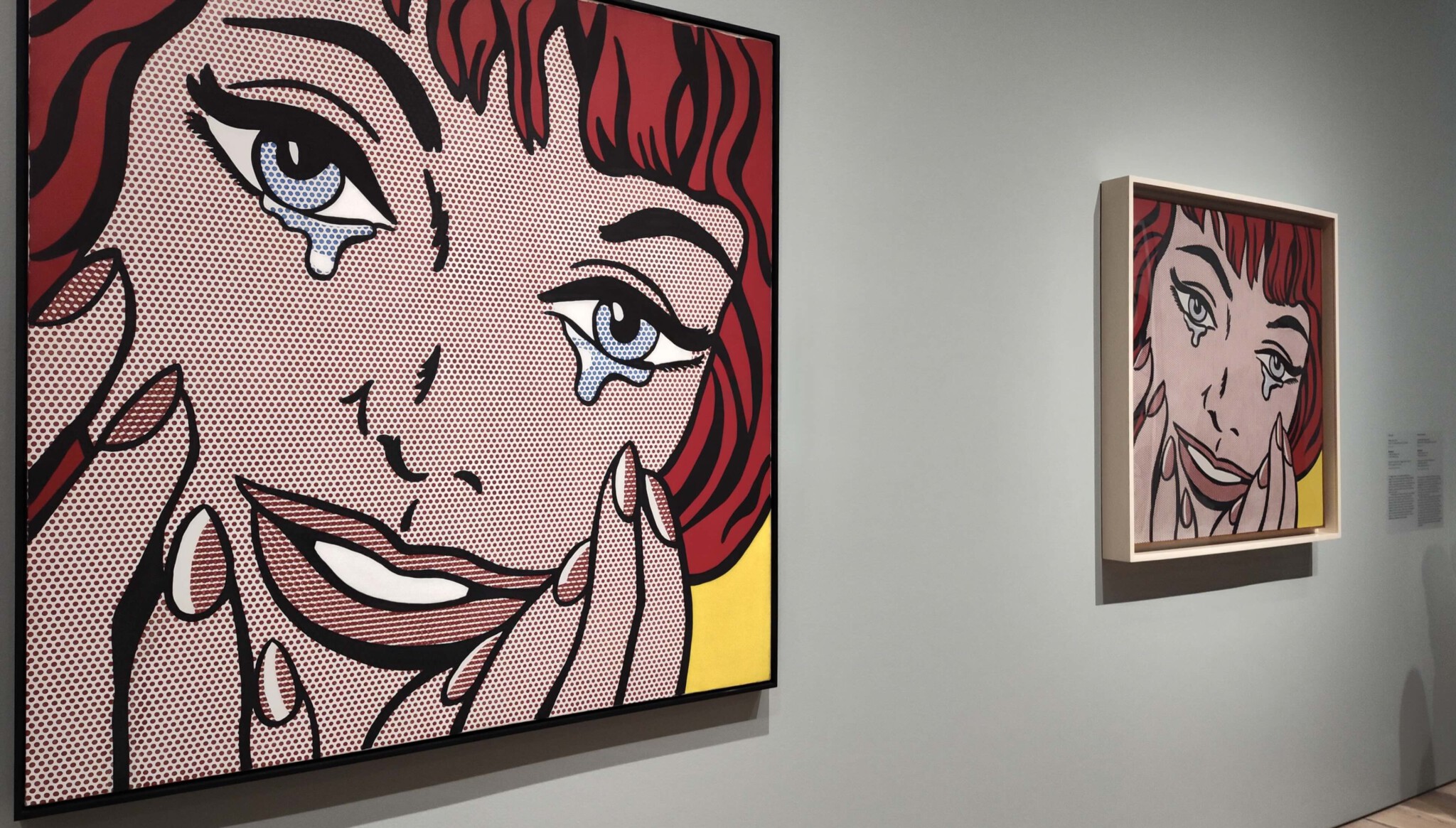 Left: Elaine Sturtevant “Study for Roy Lichtenstein’s Happy Tears” 1967–68; right: Roy Lichtenstein “Happy Tears” 1964
Sturtevant作品の方がリキテンスタイン作品よりひと回り大きく、私は左のSturtevant による作品の方が好みであった。リキテンスタインの完全なコピーでなく、アイラインが若干太かったり、唇が魅力的だったりする。
Sturtevant’s work is slightly larger than Lichtenstein’s, and I found myself preferring the one on the left. Rather than being an exact copy of Lichtenstein’s original, it has subtle differences: the eyeliner is slightly thicker, and the lips are more alluring.
そのリキテンスタインも、元々はアメリカンコミックの一コマを選び、拡大してキャンバスに描き作品にしている。リキテンスタインだって本当のアイデアのオリジナルとは言えないのだ。
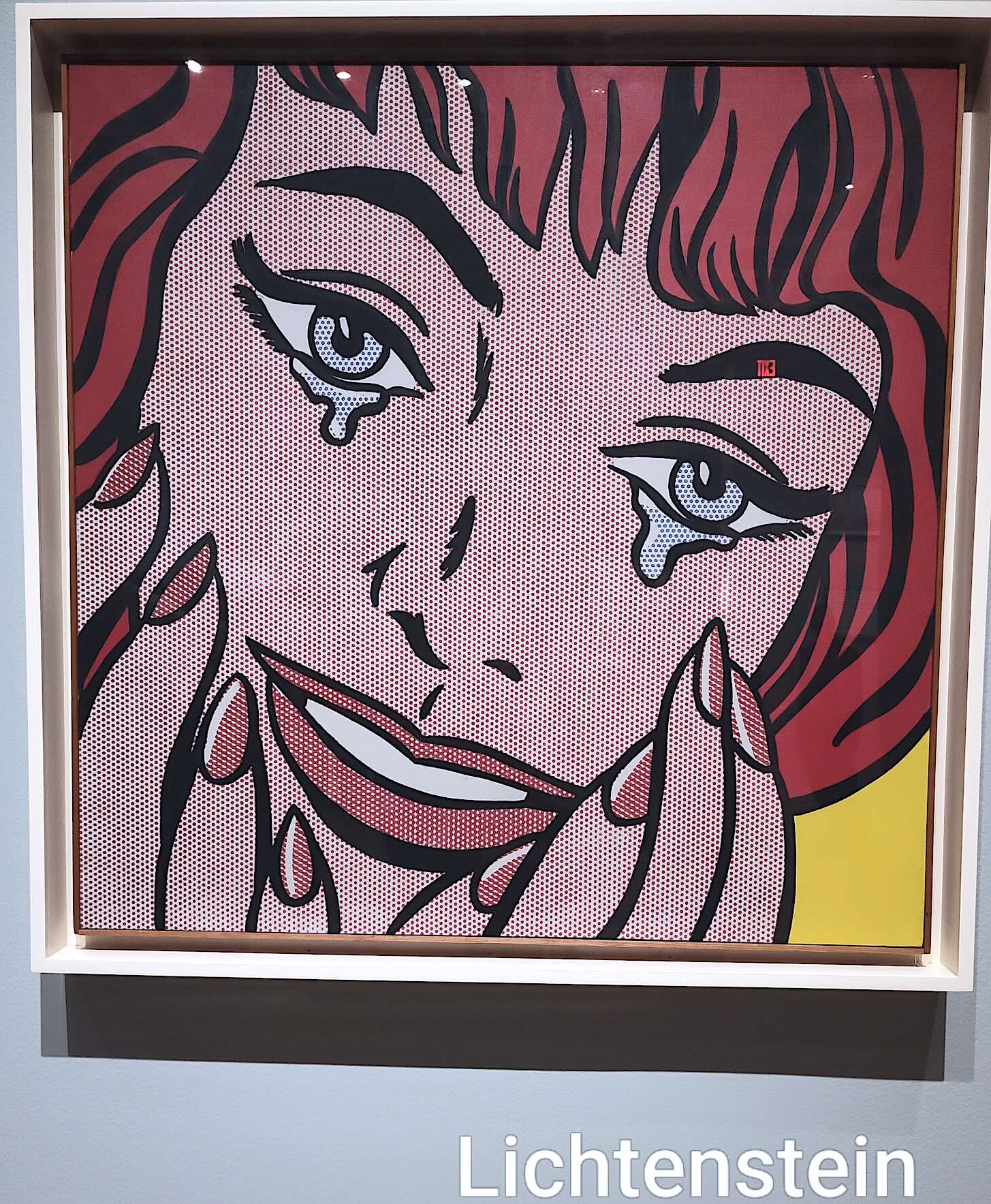 リキテンスタインのオリジナル作品
《Happy Tears》1964年。本作のイメージの源泉は、漫画家マイク・セコウスキーによるロマンス・コミックに登場するヒロインの顔である。リキテンスタインはその顔を大胆にクローズアップし、鑑賞者に直接視線を向ける構図へと再構成した。物語の痕跡がほぼ取り除かれた画面には、ひとつの謎が残される。この女性は誰なのか。そして、なぜ涙を流しているのだろうか。
For “Happy Tears”, Lichtenstein started with an image from a romance comic by artist Mike Sekowsky, closely cropping the heroine’s face and giving her a direct, outward gaze that stages a charged encounter with the viewer. With nearly all traces of narrative removed, a mystery remains: Who is this woman, and why is she crying?
時代を同時期にアンディ・ウォーホルも複製時代の芸術について宣言し、大量生産されるキャンベルスープ缶やマリリン・モンローをシルクスクリーンで表した。シルクスクリーンという技法も、同じものを何度でも作成出来る手法である。
印刷技術やマスメディアが発達し、ひとつのアイコンを多くの人が目にする産業社会。
アート界においては、マルセル・デュシャンがニューヨークのアーモリーショーで作品台座に男性用便器を展示して物議を醸したことも下敷きになっている。何故これがアートなのかと。大量生産日用品の中の美をデュシャンは選んで作品として展示したのである。
リキテンスタインがコミックをアートとして展示した時も、当時の人にとっては大きなギャップであったことだろう。
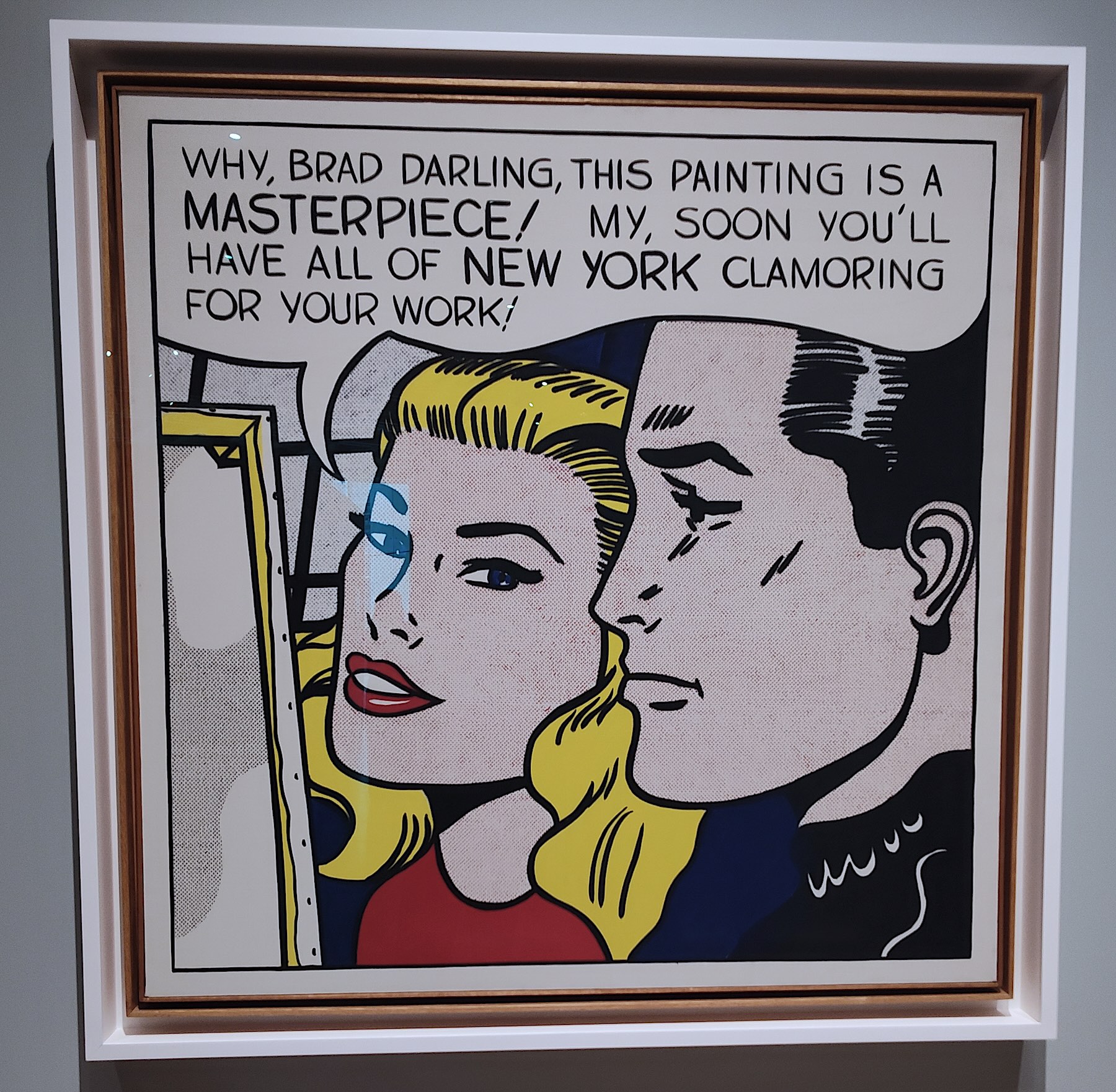 Roy Lichtenstein ロイ・リキテンスタイン《Masterpiece》1962年
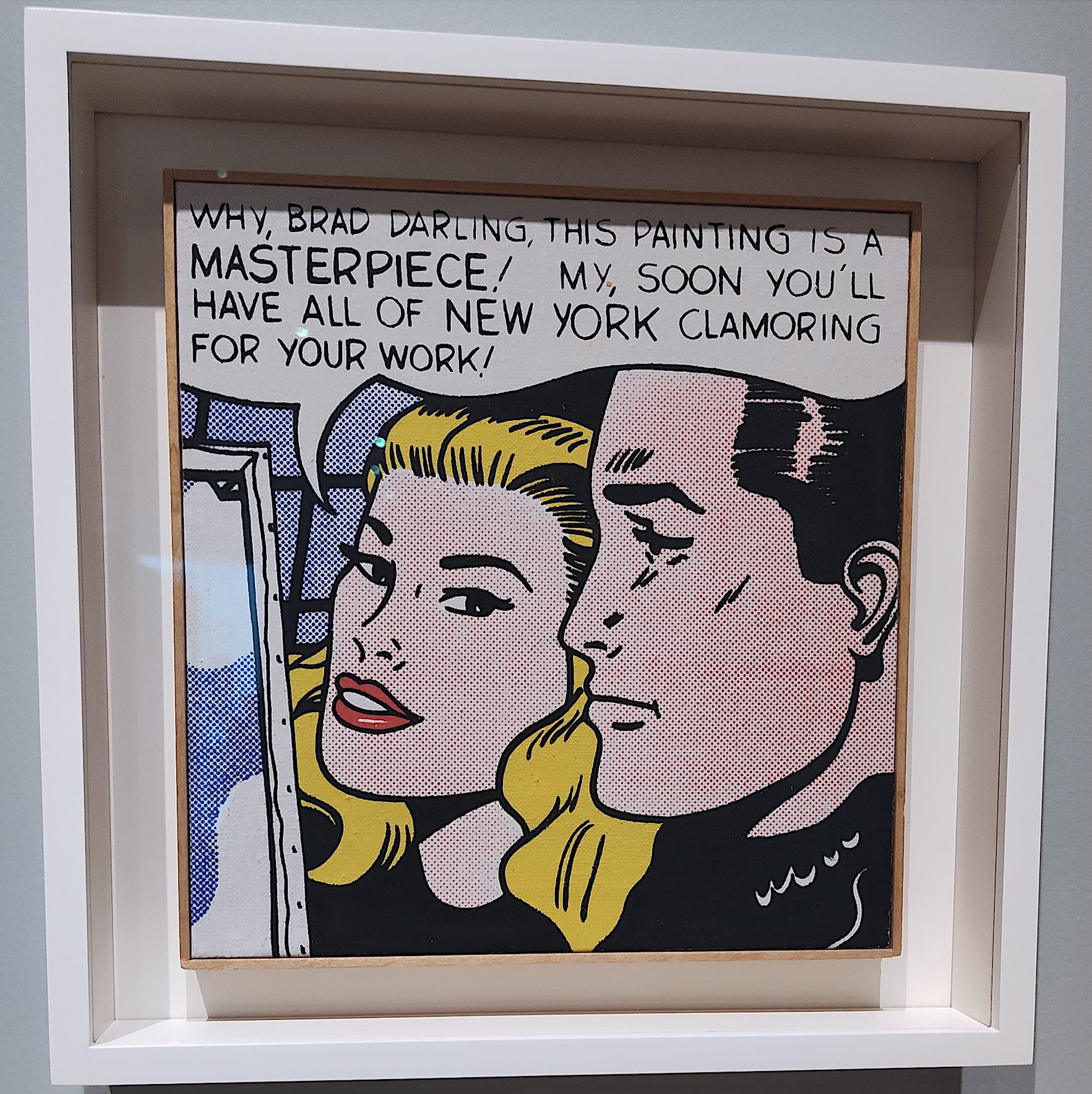 Richard Pettibone リチャード・ペティボーン(1938–2024)
《Roy Lichtenstein, “Masterpiece,” 1962》1975年
作品中のセリフ: 「まあ、ブラッド、あなた。この絵は傑作だわ! あら、もうすぐニューヨーク中があなたの作品を求めて殺到するようになるわね!」 WHY, BRAD DARLING, THIS PAINTING IS A MASTERPIECE ! MY, SOON YOU’LL HAVE ALL OF NEW YORK CLAMORING FOR YOUR WORK !
今では村上隆がアニメをアートにしているが、村上隆もこの現代の西洋美術の流れがあったからこそこの文脈を使って独自のアートを世界的に広めるのに成功した。
その他1962年にリキテンスタインがレオ・カステリ画廊で初個展した際のギャラリー空間と作品がそのまま展示されているのを観るのは必見です。その当時のギャラリー空間に合わせたサイズの壁の仕切り空間が設置されております。
展覧会タイトルの LIKE NEW とは、まるで新しい、のような意味で、特に今回の展覧会メインイメージに使われている縦位置の歓喜する女性のイメージが私には初見で、そして1990年代から30年経った我々の記憶や感覚ももう変化していて、新しいパーセプション(知覚)で観るリキテンスタインは本当にLIKE NEW (まるで新しい)でした。
ロイ・リキテンスタイン: LIKE NEW
ホイットニー美術館
2027年5月10日まで
テキスト・写真 中井里美
ROY LICHTENSTEIN: LIKE NEW
Whitney Museum of American Art
The Whitney Museum’s ROY LICHTENSTEIN: LIKE NEW is far more than a conventional retrospective. What makes this exhibition exceptional is its curatorial intelligence, which invites visitors to reconsider one of the central questions of modern art: What does originality really mean?
One of the exhibition’s most fascinating decisions is the inclusion of a work by Elaine Sturtevant (1924-2014), the pioneering appropriation artist known for recreating works by her contemporaries.
Her Lichtenstein-based pieces is displayed alongside Lichtenstein’s own painting, often making it nearly impossible to distinguish between the two at first glance.
Like many visitors, I initially assumed they were all by Lichtenstein.
In fact, I returned to the exhibition the following day, this time focusing carefully on the wall labels.
To my surprise, one of the work I had admired most was actually by Elaine Sturtevant. That realization transformed my experience of the exhibition.
Suddenly the question was no longer about identifying the artist, but about understanding why authorship matters in the first place.
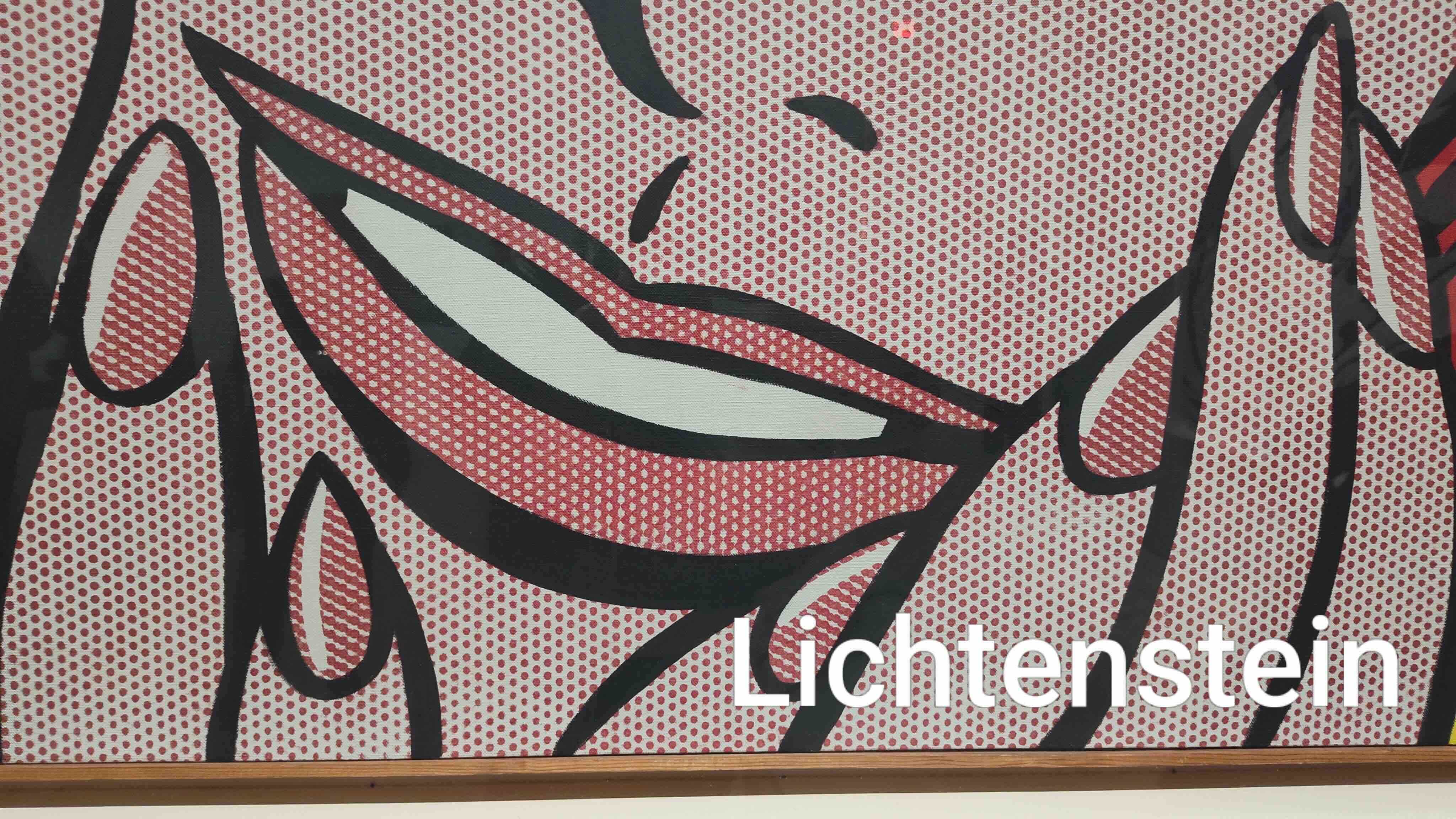 A closer look at the details of Lichtenstein’s and Elaine Sturtevant’s works reveals some interesting differences. Lichtenstein’s lips look flatter, and I find Sturtevant’s version more alluring. However, the red dots on Lichtenstein’s lips are beautifully uniform, while Sturtevant’s are less evenly spaced and seem more prone to creating a moiré effect. On this point, the original Lichtenstein wins hands down.
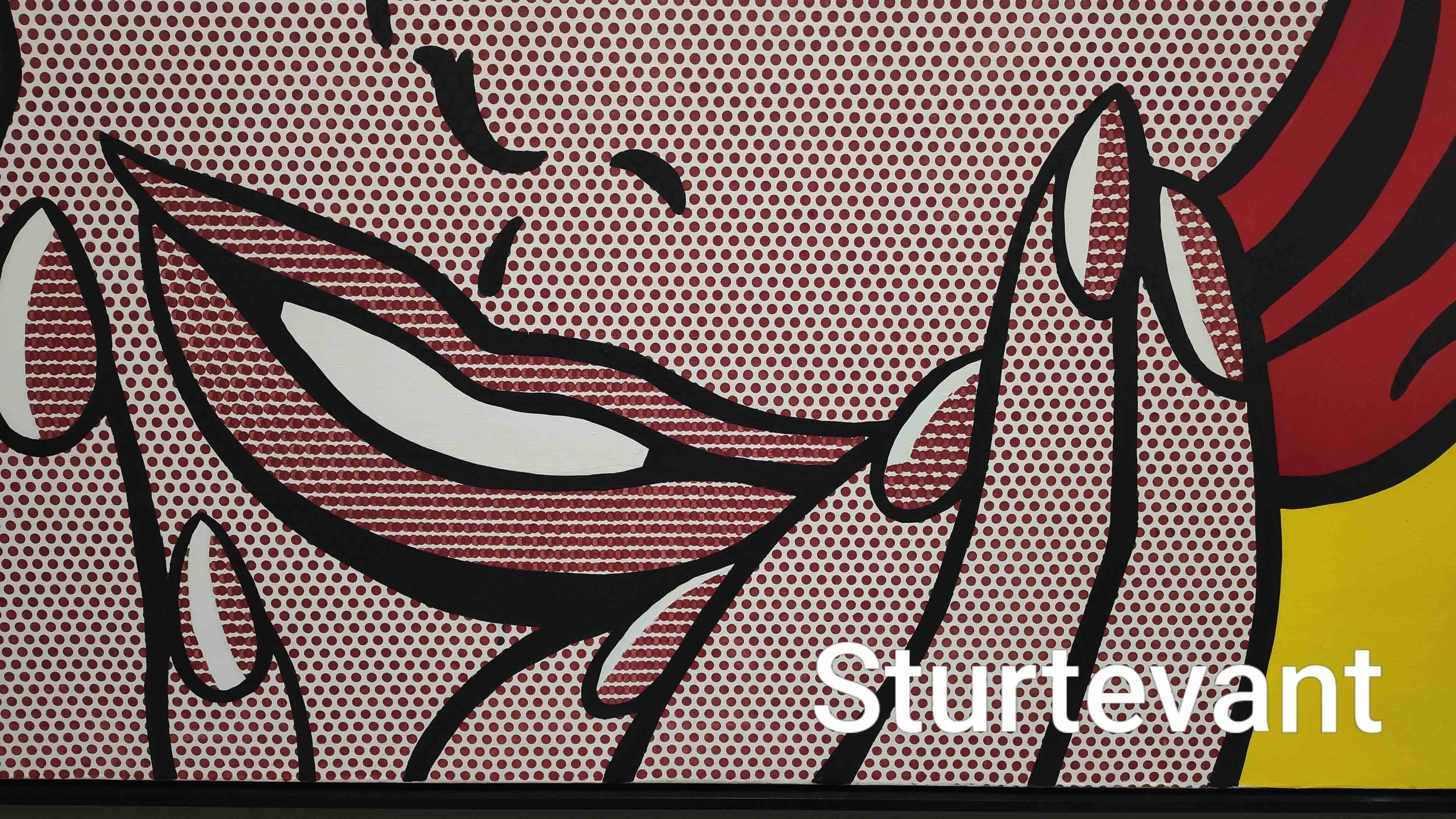 リキテンスタインとElaine Sturtevantの作品のディテールを比較してみる。リキテンスタインの唇の方が平べったくて、私にはSturtevant作品の唇の方が魅力的。しかしリキテンスタインの唇の赤いドットは均質で美しいがSturtevant 作品の赤いドットは等間隔に均質でなくモアレを起こしそうで、こちらはやはり本家リキテンスタインに軍杯が上がる。
The irony, of course, is that Lichtenstein himself built many of his most celebrated paintings from pre-existing comic book imagery. He selected individual frames from mass-produced American comics, enlarged them, and meticulously recreated them on canvas.
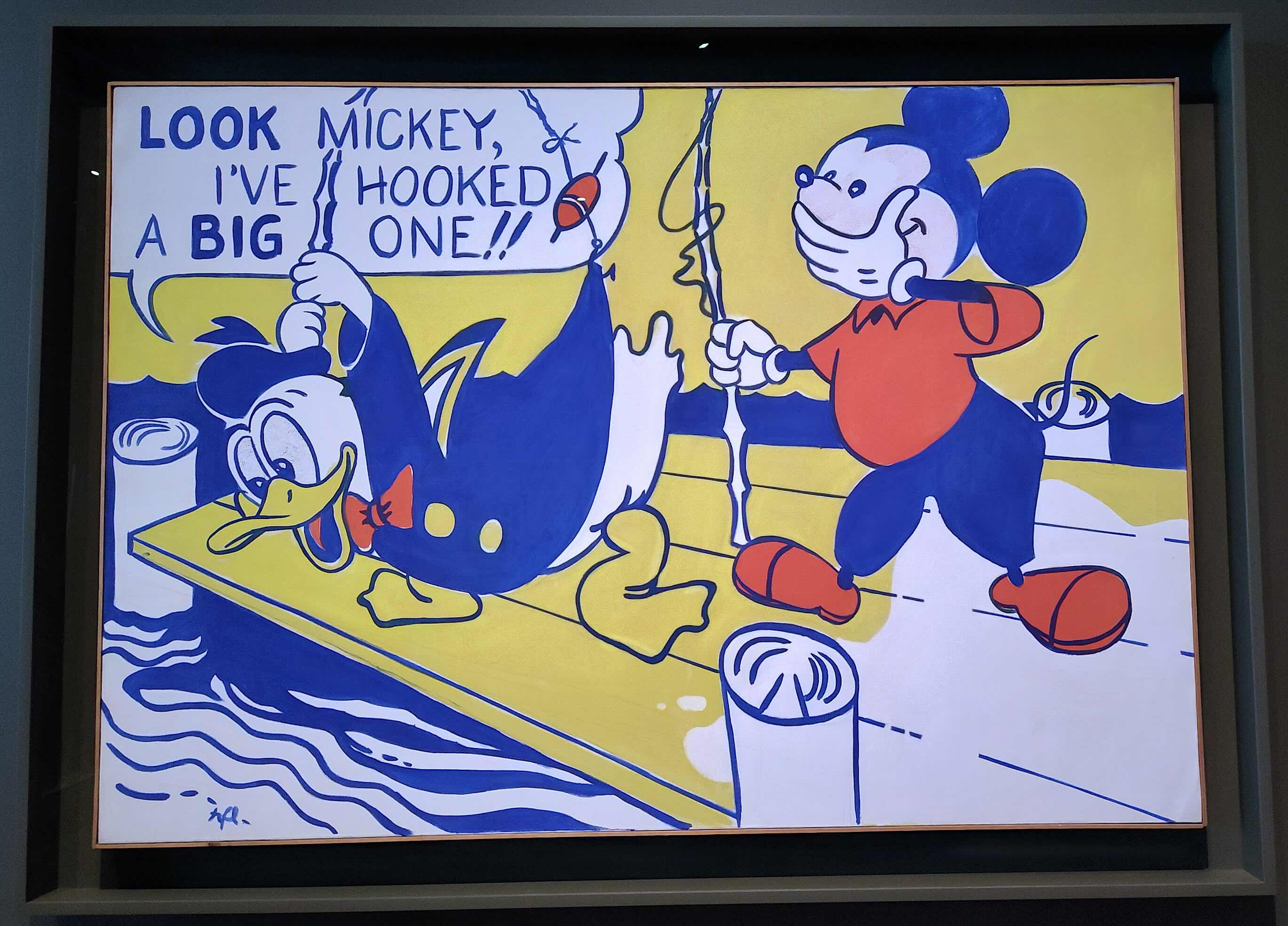 Roy Lichtenstein “Look Mickey”, 1961. Oil and graphite pencil on canvas. National Gallery of Art, Washington, DC; gift of Roy and Dorothy Lichtenstein in honor of the 50th anniversary of the National Gallery of Art
In the summer of 1961 Lichtenstein completed his first Pop painting, “Look Mickey”, whose composition he sourced from a children’s book. Boasting that he’s ‘hooked a big one’ while fishing, Donald Duck has in fact caught the tail end of his own shirt. This slapstick gag of misrecognition introduced a question that would occupy Lichtenstein for decades: what happens to an image when it is copied, simplified, and remade?
Lichtenstein swapped the soft tonality of the original with the hard contours and bold color of comic strips, and for the first time incorporated dots to mimic the look of commercial printing. After a decade of creative struggle, Lichtenstein realized, as he later recalled, that the best way to make something new was “by doing something completely unoriginal.”
ホイットニー美術館の展覧会キャプションより: ロイ・リキテンスタイン 《Look Mickey》1961年 キャンバスに油彩、グラファイト鉛筆
所蔵:ワシントンD.C.、ナショナル・ギャラリー・オブ・アート 寄贈:ロイ&ドロシー・リキテンスタイン夫妻 ナショナル・ギャラリー・オブ・アート開館50周年を記念して 1961年の夏、リキテンスタインは初のポップ・アート作品《Look Mickey》を完成させた。その構図は、子ども向けの絵本をもとにしている。
釣りをしながら「大物がかかったぞ!」と得意げなドナルドダック。しかし、実際に釣り上げたのは、自分自身のシャツの裾だった。 このような、思い違いを笑いに変えるドタバタ喜劇的な場面を通じて、リキテンスタインは、その後何十年にもわたって探究することになる問いを提示した。すなわち、イメージは複製され、単純化され、作り直されることで、どのように変化するのか、という問いである。 リキテンスタインは、原画の柔らかな色調を、コミック特有のくっきりとした輪郭線と大胆な色彩に置き換えた。また、商業印刷の見た目を模倣するため、初めてドット(網点)を取り入れた。 創作上の試行錯誤に苦しんだ10年を経て、リキテンスタインは、後年の回想によれば、新しいものを生み出す最良の方法は「まったく独創的でないことをする」ことだと気づいたのである。
His work challenged traditional ideas of artistic originality long before appropriation became a widely discussed concept.
This broader cultural shift was visible throughout the 1960s. At nearly the same moment, Andy Warhol was redefining art through repetition and mechanical reproduction.
His images of Campbell’s Soup cans and Marilyn Monroe embraced the visual language of mass production, while the silk-screen process itself allowed identical images to be reproduced again and again.
These artistic developments reflected an increasingly industrialized society shaped by advertising, printing technologies, and mass media. Icons could now be seen by millions, and artists began questioning whether originality still resided in creating new images or in giving existing ones new meanings.
The exhibition also recalls an earlier precedent established by Marcel Duchamp. When Duchamp presented an ordinary urinal as art, he challenged audiences to reconsider where artistic value originates. Beauty was no longer limited to handcrafted objects; it could also emerge through selection, context, and perception.
Lichtenstein’s comic-based paintings generated a similar shock. Images regarded as disposable popular entertainment suddenly appeared in the elevated space of the art gallery. What seems familiar today was radically disruptive at the time.
Seen from this historical perspective, the influence of Pop Art extends far beyond the United States.
Contemporary artists such as Takashi Murakami have successfully transformed anime and popular visual culture into internationally recognized fine art.
Murakami’s achievement is distinctly his own, yet it also emerged within a lineage established by Duchamp, Warhol, and Lichtenstein, who expanded the boundaries of what could be accepted as art.
Another highlight of Like New is the remarkable reconstruction of Lichtenstein’s first solo exhibition at Leo Castelli Gallery in 1962.
Visitors can experience the works within a gallery layout modeled after the original installation, including partition walls built to echo the dimensions of the historic exhibition space. It offers a rare opportunity to encounter the paintings in something close to their original context.
The exhibition’s title, Like New, ultimately feels especially appropriate.
The phrase suggests something familiar that somehow appears new again. For me, the exhibition’s promotional image, a vertically oriented painting of a jubilant woman, felt surprisingly fresh despite Lichtenstein’s long-established place in art history.
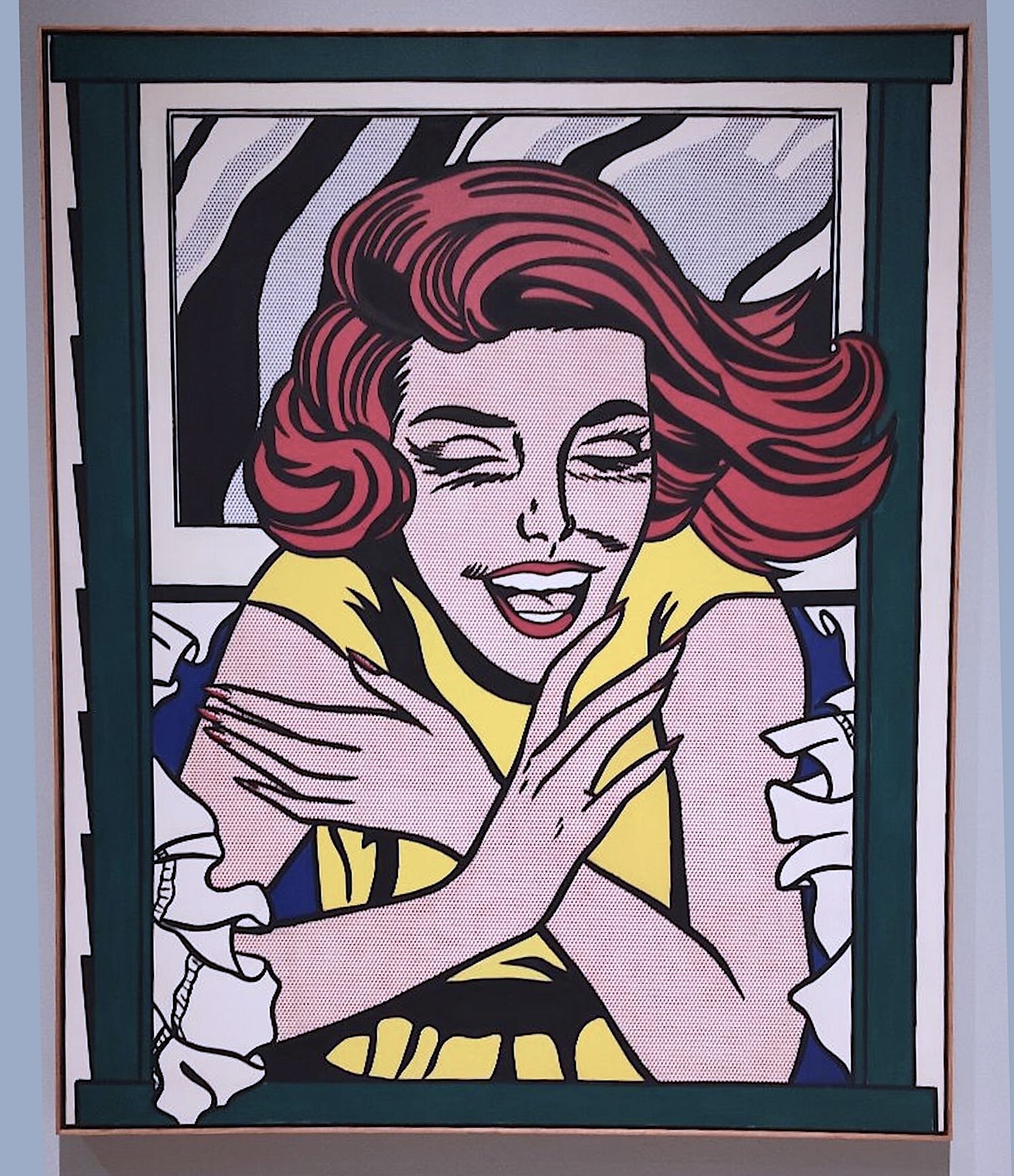
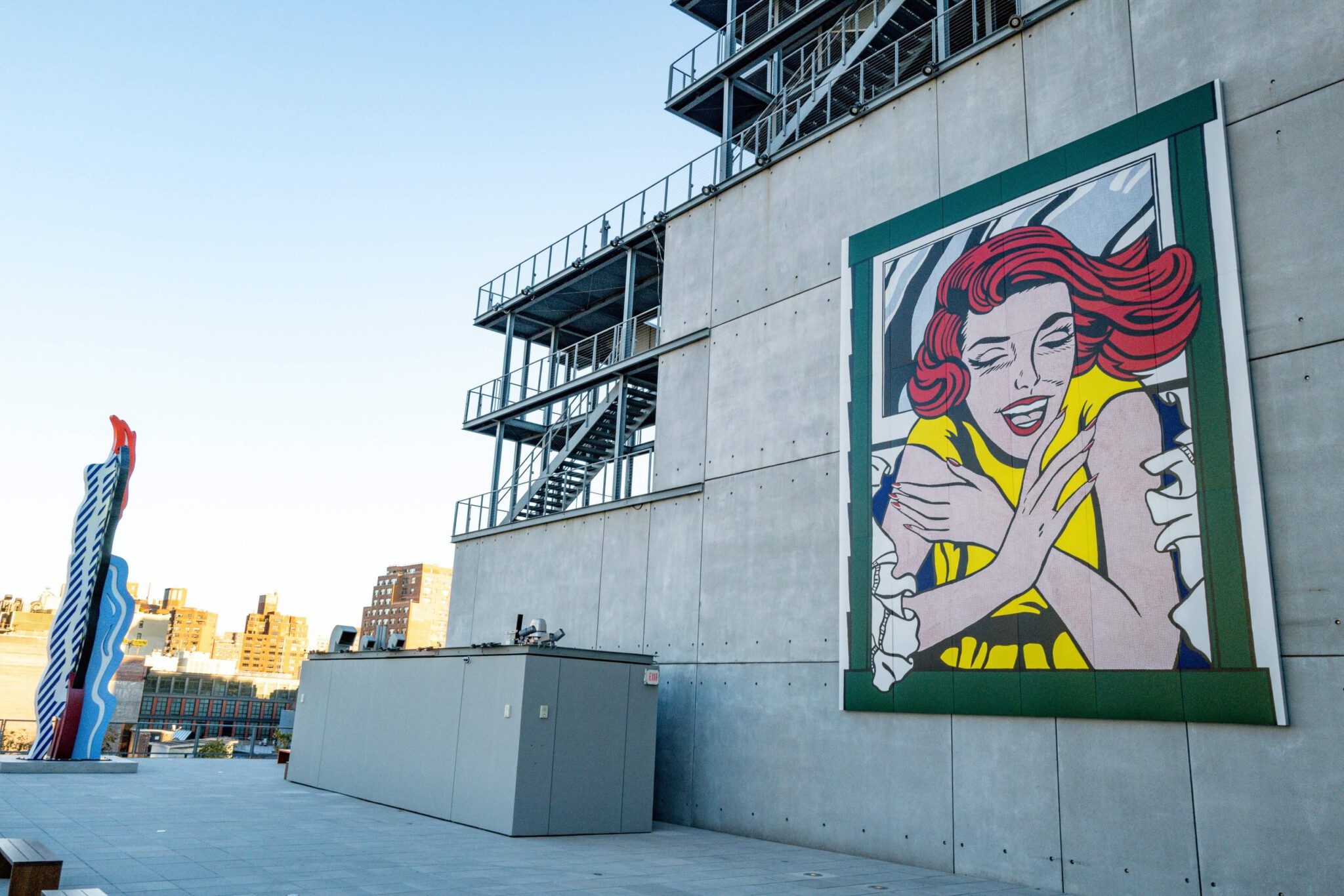
This work is a study for Lichtenstein’s monumental New York World’s Fair Mural (Girl in Window) (1963), a re-creation of which is installed outside on the fifth-floor terrace. Lichtenstein based the woman’s gesture and expression on a comic panel by Hy Eisman but otherwise invented the scene, positioning the figure as if leaning out of the canvas. Lichtenstein would later state that his “use of evenly repeated dots and diagonal lines and uninflected color areas suggest that my work is right where it is … definitely not a window into the world.”
ホイットニー美術館の展覧会キャプションより:
ロイ・リキテンスタイン 《Girl in Window(世界博覧会壁画のための習作)》1963年 キャンバスに油彩、アクリル
所蔵:ニューヨーク、ホイットニー美術館 寄贈:アメリカン・コンテンポラリー財団(会長:レナード・A・ローダー)2002年、作品番号2002.254 本作は、リキテンスタインが制作した巨大な壁画《New York World’s Fair Mural (Girl in Window)》(1963年)のための習作である。その壁画を再現した作品が、ホイットニー美術館5階の屋外テラスに設置されている。 リキテンスタインは、女性の身振りと表情を、ハイ・アイズマンによる漫画のコマをもとに描いた。一方、それ以外の場面設定は独自に創作し、女性がまるでキャンバスの外へ身を乗り出しているかのように配置した。 リキテンスタインは後年、自身の作品について次のように述べている。 「均等に繰り返されるドットや斜線、そして抑揚のない色面を用いることで、私の作品は、それが存在するまさにその場所にとどまっていることを示している……つまり、間違いなく、世界を覗くための窓ではないのだ。」
Perhaps the works have changed less than we have.
Three decades into the twenty-first century, our visual expectations and cultural memories are different from those of earlier generations. Returning to Lichtenstein today, through contemporary eyes and with a renewed awareness of appropriation, reproduction, and authorship, his work genuinely feels like new.
Roy Lichtenstein: Like New
Whitney Museum of American Art
Through May 10, 2027
Text & photo by Satomi Nakai
Written for ART + CULTURE
【展覧会評・ロイ・リキテンスタイン: LIKE NEW Whitney Museum of American Art
ホイットニー美術館】