とても好き、尊重している長島有里枝 @ 「I’m So Happy You Are Here」 (follow up) NAGASHIMA Yurie — someone I deeply admire and respect @ "I’m So Happy You Are Here" (follow up)
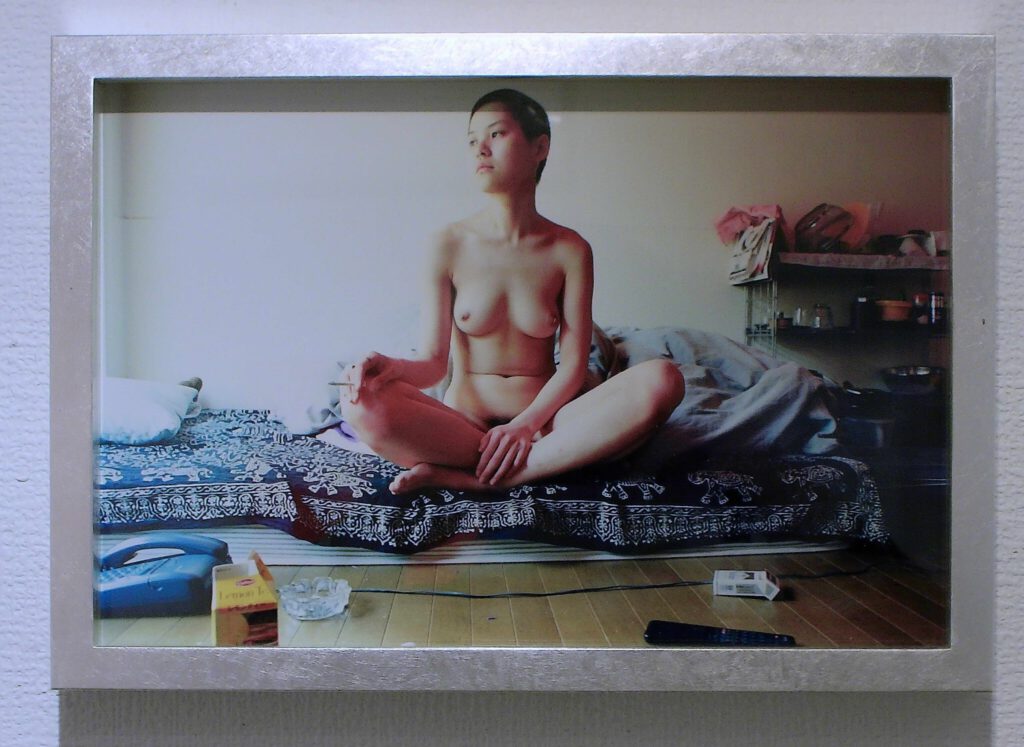
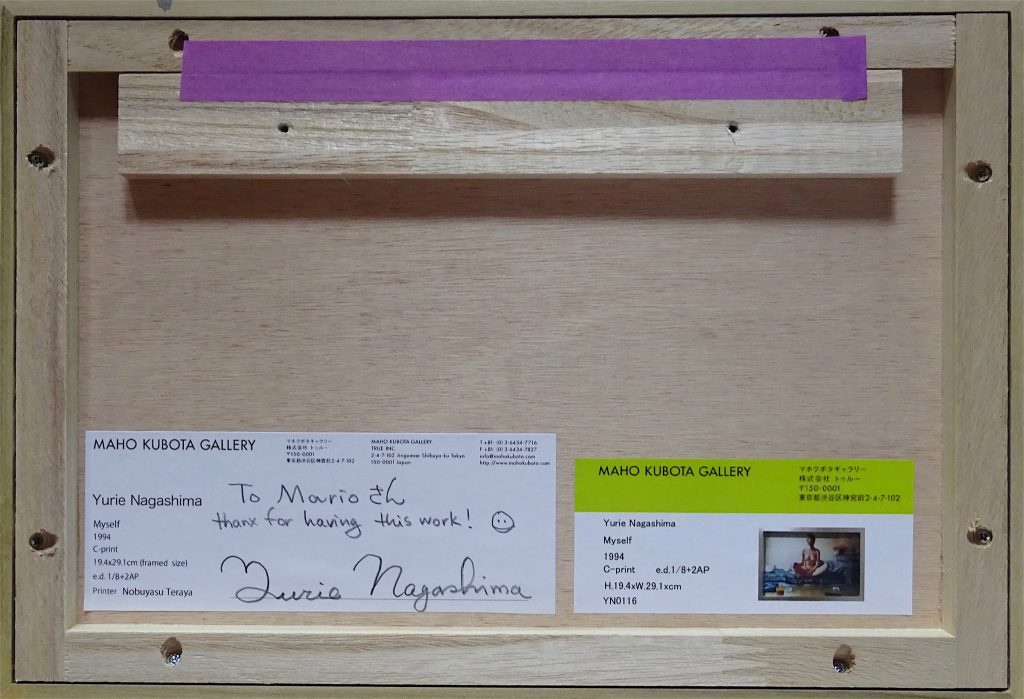
This is part 2, the continuation of “とても好き、尊重している長島有里枝 @ 「I’m So Happy You Are Here」”
https://art-culture.world/reviews/happy-you-are-here-nagashima-yurie/
To enter the reading flow, I hereby re-post the last chapter of my text:
I will now continue with my thoughts on the essay by curator TAKEUCHI Mariko titled “Dissident Women.”
In addition to photographers such as MORI Mariko (who will have a major retrospective next month at the Mori Art Museum in Tokyo), NINAGAWA Mika, and KATAYAMA Mari, Takeuchi focused primarily on the following four photographers: YANAGI Miwa (who recently focussed on famous novelist, from a ‘Buraku’ background, NAKAGAMI Kenji), NAGASHIMA Yurie (my favorite artist), TAWADA Yuki, and SHIGA Lieko.
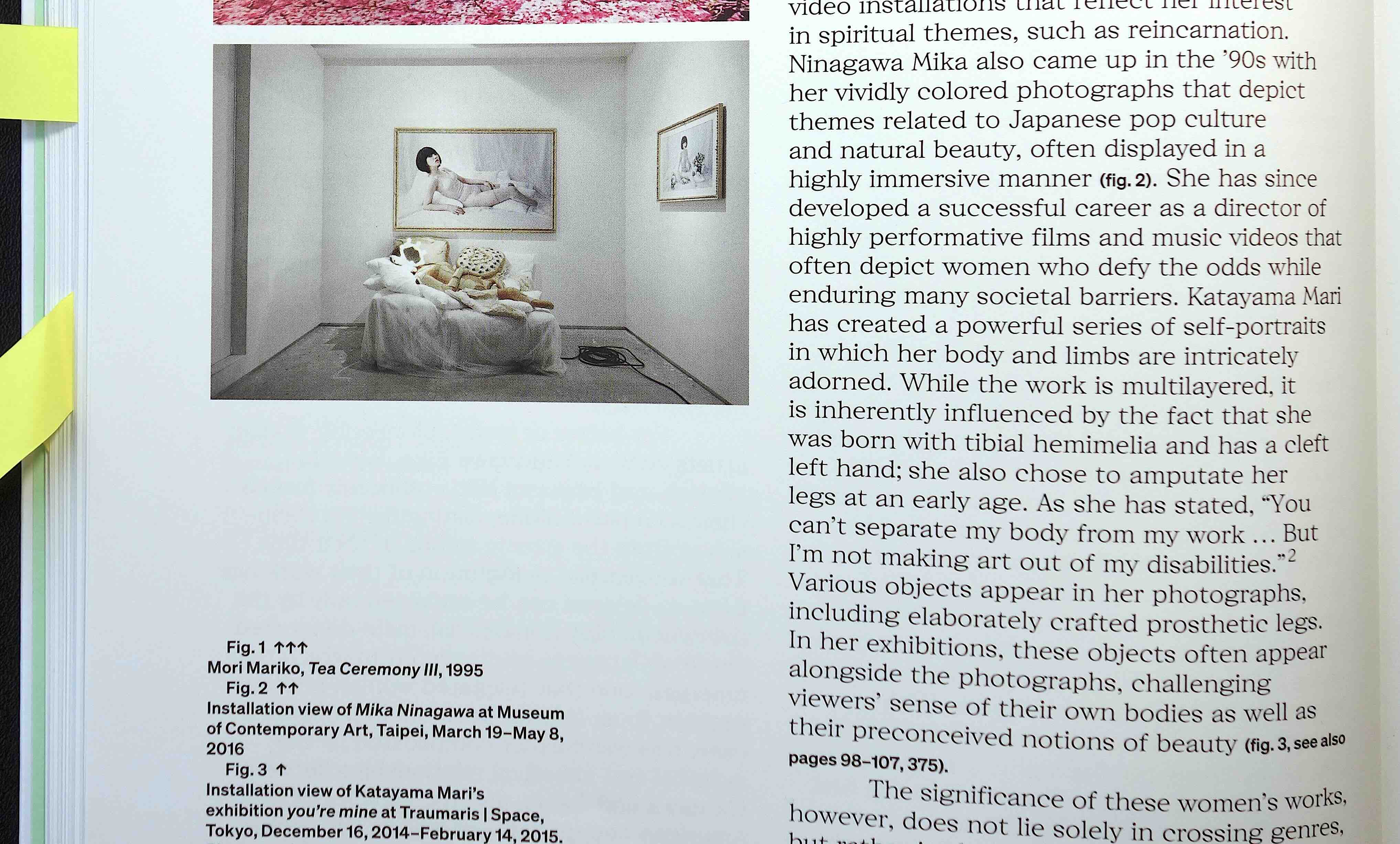
She noted that these women’s works understand, utilize, and have expanded the medium of photography as a method of expression and an evolutionary process, not only opening up new genres but also positively fostering an awareness of self-reflective analysis rooted in their own life experiences.
This form of artistic practice had not been presented to Japanese audiences in a way that they would have taken for granted. Which, of course, is a scandal.
Another representative quote from Takeuchi’s essay.
“However, hardly anyone in the male-dominated media and art worlds, long accustomed to the idea of women as mere photographic subjects, appreciated the novelty of their work. Critics, most of whom were men, dismissed their art under the rubric of onnanoko shashin 女の子写真 or “Girly Photo”, assuming that work produced by young women must inherently be immature – Nagashima’s included. In 2011, after this experience, Nagashima enrolled in graduate school at Musashi University in Tokyo, where she studied feminism. Her book “‘Bokura’ no ‘onnanoko shashin’ kara watashitachi no sari foto e” (From their ‘girl’s photography” to our Girly Photo, 2020), which was based on her master’s thesis, examines the dominant cultural discourse of that time and points out the fundamental flaw in entrenched ideas of gender that underpin much of her work.” (page 58)
Demonstrating exceptional curatorial insight — and fully aware of the risk that a critical analysis might appear too one-sided — Takeuchi has explored the central theme of the “condizione umana” through the work of Japanese female photographers. For this, she deserves all of our respect and admiration.
In closing, here is the final paragraph of her superb essay.
“Being a woman is not always foregrounded in these works. In some cases, such as Nagashima’s, it is deepened through an engagement with feminism. In others, such as Yanagi’s, womanhood overlaps with other societal and cultural contexts in complex ways. For Tawada and Shiga, womanhood seems to be internalised in the ritualistic nature of their production processes to commemorate other people. The second common thread among these artists is their preoccupation with themes concerning th roots of human life and community. Through a dialogue between photography and other art forms, they examine the conflicts and difficulties of being a woman and a human being, the importance of listening to memories of others, and repeated encounters with history. These two thematic and conceptual commonalities are always interrelated and present, forming a kind of loop. For these women, the practice of deviating from photography is precisely for the sake of this kind of complex, multivalent thinking.” (page 64)
Now comes the new part. Please wait. Thank you.