Keith Whittle from Tokyo: “Memento Mori: Is Realism Itself a Conceptual Strategy?” ロン・ミュエク @ 森美術館、東京
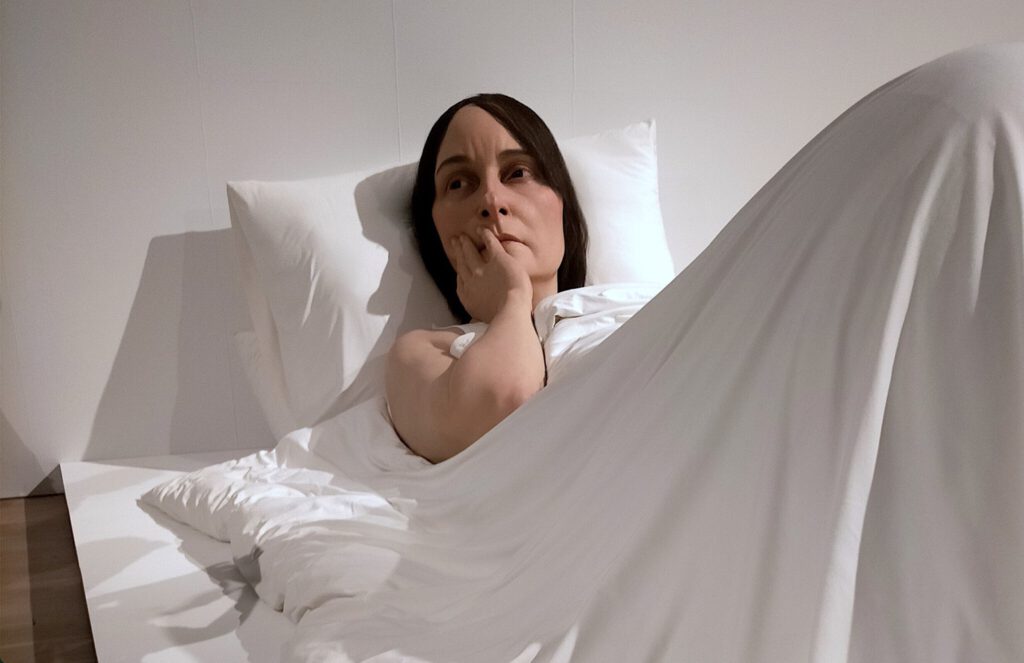
Ron Mueck
Mori Art Museum, Tokyo 2026/4/29 – 2026/9/23
Memento Mori: Is Realism Itself a Conceptual Strategy?
Memento mori—remember that you must die—has been one of art’s most persistent subjects. Its history, however, is not simply a history of the skull, but of changing ways of making mortality visible. From the Renaissance portrait to the seventeenth-century vanitas, and from representations of the ageing and damaged body to contemporary sculpture, artists have repeatedly returned to the problem of representing something that cannot itself be represented: our own disappearance.
The seventeenth-century Dutch vanitas developed mortality into an elaborate visual language. Skulls appeared among books, musical instruments, globes, candles, watches, flowers and other objects associated with knowledge, pleasure and wealth. Human achievement was placed alongside its inevitable impermanence. The book might signify knowledge, but also the futility of intellectual ambition; the candle, the passing of life; the flower, beauty already containing the certainty of decay. Even the painter’s technical virtuosity becomes part of the argument.[1]
Artists have also approached mortality without relying on conventional vanitas symbols. Artemisia Gentileschi confronted the vulnerability and violence of the body; Frida Kahlo transformed physical suffering into an investigation of identity and embodiment.[2] Ana Mendieta made disappearance itself central to her Silueta series, creating temporary traces of the body in earth, grass and other natural materials.[3] Louise Bourgeois explored ageing, memory, vulnerability and the body, while Cindy Sherman examined the instability of bodily identity and the conventions through which the body is represented.[4]
What connects these practices is that mortality is not simply represented as a subject. It becomes a problem within the act of representation itself.
Hans Holbein’s The Ambassadors is perhaps one of the most well known examples. The painting appears to celebrate wealth, knowledge and human accomplishment, yet its anamorphic skull disrupts that confidence. It cannot be properly recognised from the conventional viewing position. The viewer must move, and in doing so becomes conscious not only of mortality but of the limits of perception itself.[5]
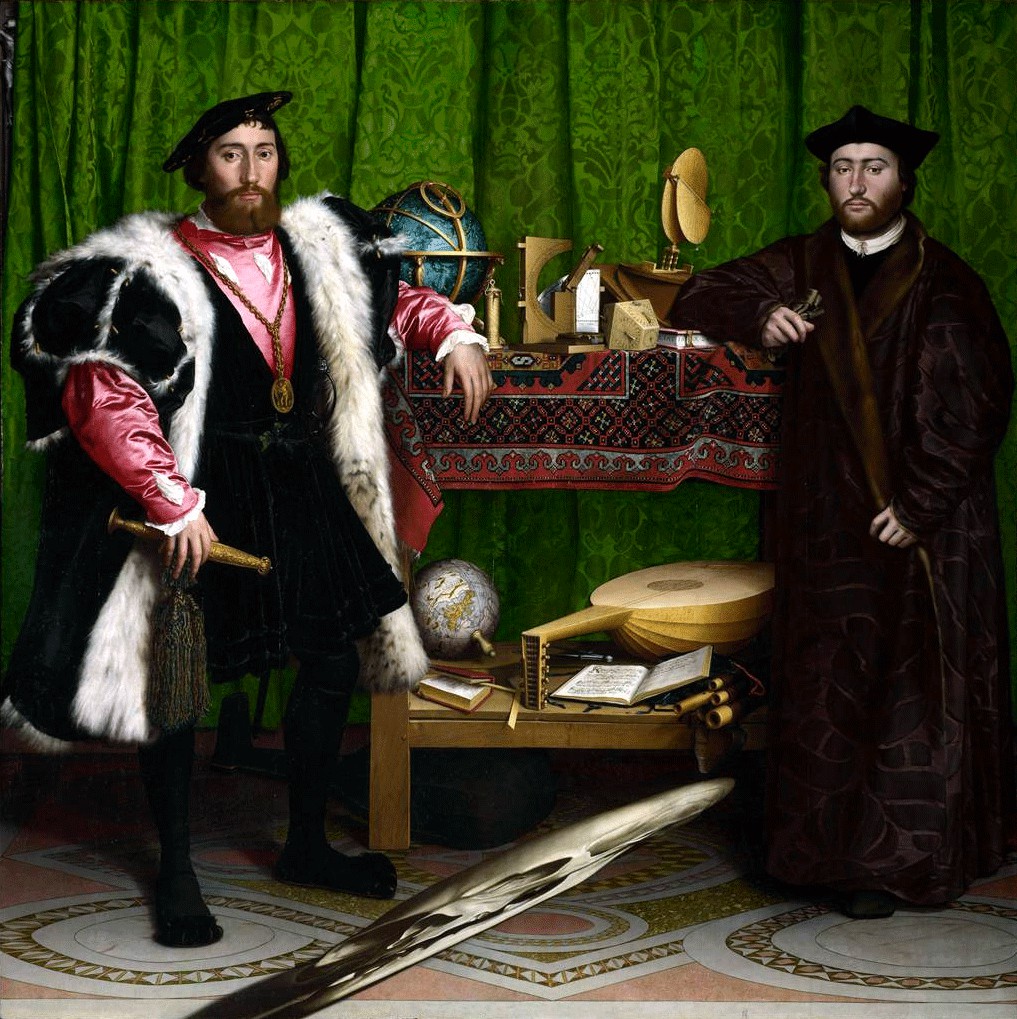
Holbein’s realism, therefore, is not merely a demonstration of skill. The realism does something. It establishes a convincing world only to undermine it. Mortality becomes a problem within representation rather than simply its subject. The body—and the act of looking at it—becomes the memento mori.
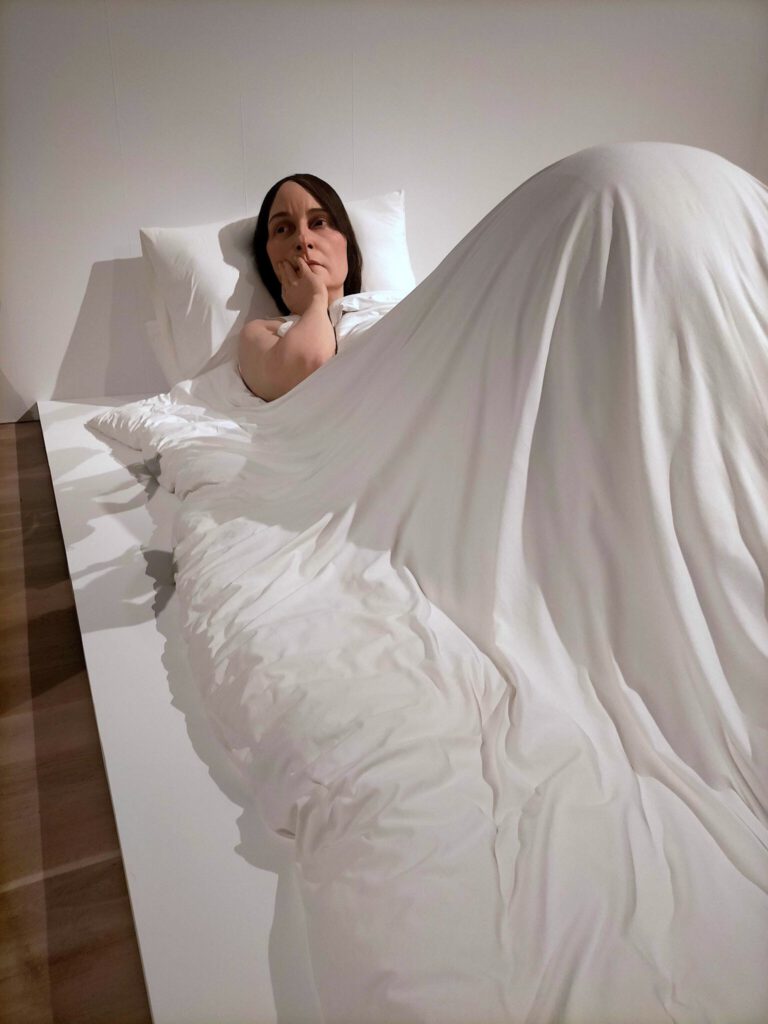
This raises a question about contemporary realism, particularly in the sculptures of Ron Mueck, currently the subject of a major solo exhibition at the Mori Art Museum in Tokyo. Mueck’s figures are extraordinary because their realism is so convincing. Skin appears to have pores, hair seems to grow from the body, veins sit beneath the surface, and expressions register with an almost uncomfortable specificity. Yet this produces a critical problem. The first response is often one of astonishment: How did he make that?[6]
If that is where the experience ends, craftsmanship has become the content rather than the means.
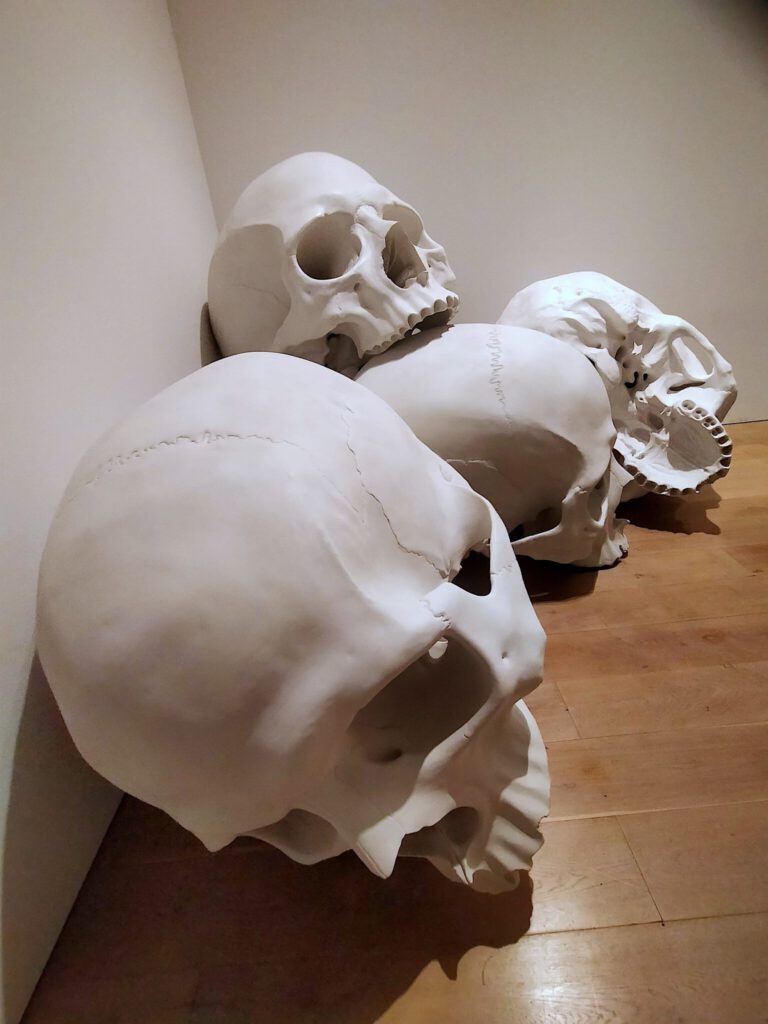
There is no doubt that Mueck’s work engages with birth, ageing, vulnerability, isolation and death. His manipulation of scale is central to this effect: his figures may be much larger or smaller than life-size, creating an unsettling tension between realism and artifice.[7] The more interesting question is whether his realism allows us to think beyond those subjects.
This is where we need to be wary of what might be called empty gesturing in contemporary art: the assumption that the presence of a formal device automatically constitutes an idea. The work is enormous, therefore it is about power. It is realistic, therefore it is about mortality. It is ambiguous, therefore it is conceptually complex.
But realism does not automatically produce conceptual depth.
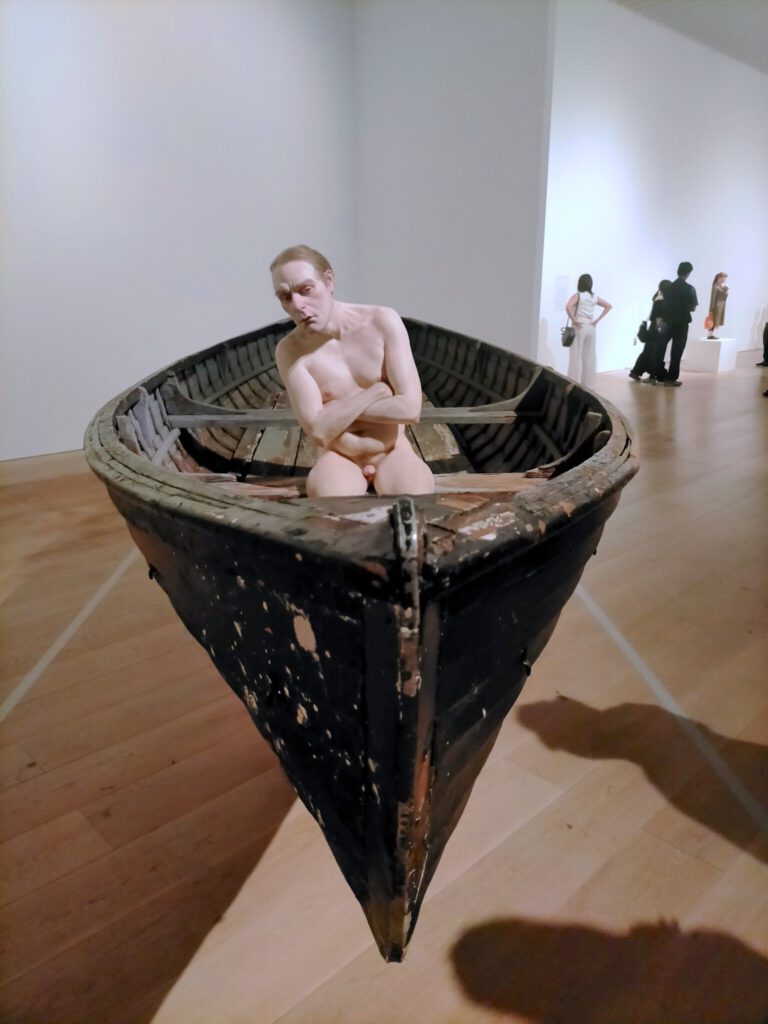
Mueck’s work is compelling because realism is complicated by scale. We recognise a human body, yet its distortion of scale reminds us that we are looking at an object. We move between empathy and artifice, person and sculpture, recognition and estrangement. The question is whether this movement produces a thought beyond the initial spectacle of resemblance.
Holbein makes mortality interrupt representation. Mueck makes the represented body carry mortality.
This distinction matters. A work can represent an idea without thinking through it. Realism can tell us that the body ages, suffers and dies; that does not necessarily make realism itself conceptually significant. The crucial question is whether the formal strategy changes what we understand about the idea being represented.
So, does Mueck’s realism produce a second-order thought, or does the experience end with recognition and astonishment? If the latter, realism has become the content rather than the means. If the former, realism becomes a conceptual strategy.
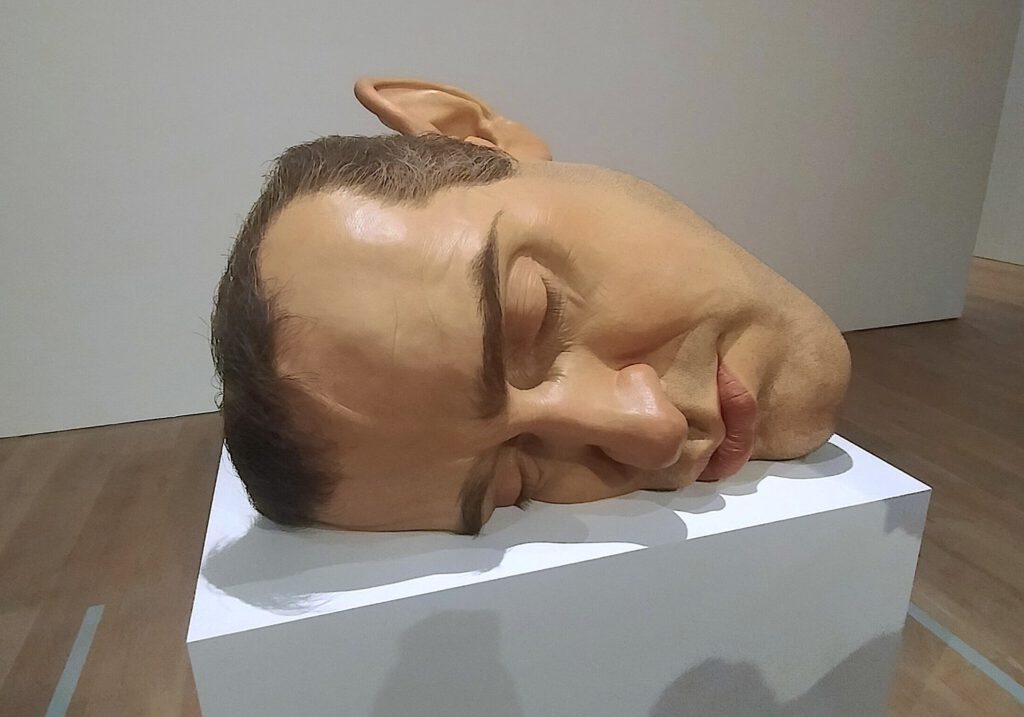
Perhaps this is the real distinction: between representing an idea and thinking through an idea. And that, ultimately, is the test for Mueck, an artist who uses realism to confront mortality: does his work leave us with more questions than the initial spectacle of its making?
I conclude, no.
References
1. Alexandra Libby, “Vanitas Still Life, c. 1650,” Dutch Paintings of the Seventeenth Century, National Gallery of Art, Washington, DC.
2. The Museum of Modern Art, collection and biographical material on Frida Kahlo and her self-portraiture.
3. The Museum of Modern Art, “Ana Mendieta,” including discussion of the Silueta series; see also Smithsonian American Art Museum, material on Mendieta’s Silueta works.
4. The Museum of Modern Art, “Cindy Sherman,” including discussion of identity, representation, the body and artificiality.
5. Susan Foister, The German Paintings before 1800, National Gallery, London, 2024, catalogue entry for Hans Holbein the Younger, The Ambassadors.
6. Hirshhorn Museum and Sculpture Garden, Smithsonian Institution, material on Ron Mueck and the realism of his sculptures.
7. National Galleries of Scotland, material on Ron Mueck, including discussion of his manipulation of scale and its relationship to perception and the body.
Keith Whittle
Keith Whittle is a curator and writer based between London and Tokyo, engaging with contemporary art and cultural projects across diverse contexts.