The Slow Death of the New York Art Scene (4) : Pretentious Idiot, Instagrammer Joke Jeffrey Magid vs. Dead Jerry Gogosian Psychopathological Gossip and Schadenfreude on IG aka BS
Jerry Gogosian is dead. This month, at the young age of 40, she took her own life in Brazil. With 150,000 Instagram followers, she thought she could have a lasting impact on the New York art scene. Which was, of course, foolish—and only a daydreaming sociopath could come up with such an idea. Jerry, however, had a biting charm and sense of humour, and was sociable enough not to take herself too seriously.
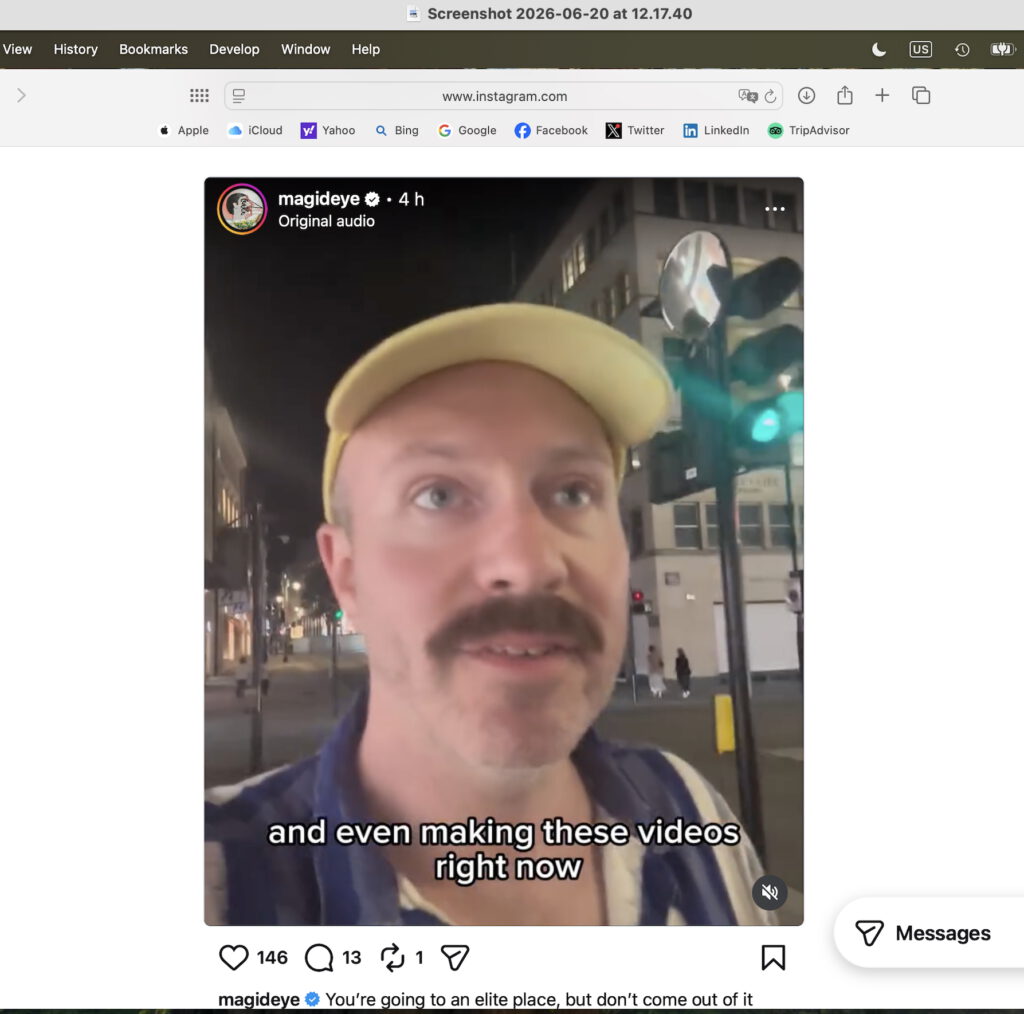
The problem with Jeffrey Magid, 49 years old, is that he pretends to know almost everything about the art world, art history, the art market, and artists. He spouts his multi-minute-long “arty ramblings” at a breakneck pace to his 100,000 followers.
He completely lacks irony, humour, sarcasm, or the charming lightness of an educated connoisseur. No flair, style, and finesse. Nor the visual, ‘arty’ beauty that served as the trademark of the sympathetic Jerry Gogosian. A fiasco of a pretentious Instagrammer from New York. I wouldn’t want to run into him at a New York gallery. A truly “arty-creepy” IG personality.
Magid Eye’s IG-clownish behaviour/attitude is documented by his appearance at Art Basel 2026 — an episode that exemplifies his numerous (though certainly not all) Instagram flops.
Let’s first have intelligentia artificialis explain who Jeffrey Magid is in the virtual world.
Jeffrey Magid is an American music producer, songwriter, and high-profile art collector who has fundamentally disrupted traditional paths to high-end art connoisseurship. Moving away from his early background in audio production and poker, Magid has rebranded himself into a prominent, outspoken critic and collector within the contemporary art market and Old Masters arena.
The following critical analysis explores Magid’s career trajectory, his disruption of the traditionally insular art market, his conceptual framing of art as a strategic game, and the polarized responses his public persona generates.
The Evolution of a Multi-Hyphenate Career
For years, Magid’s public footprint was defined primarily by his work as a music producer—heading RBI Productions and managing archival catalogs—as well as his high-profile romance with model and actress Emily Ratajkowski. However, his professional origins are firmly rooted in systems of calculation, probability, and subcultural communities.
The Music and Poker Foundation: Magid used online poker earnings to fund his early adulthood and clear student debt. This background in calculated risk directly informed his methodology when he transitioned into art acquisition.
The Transition to Art: His entry into the art world occurred around 2011 via a casual Brooklyn poker game hosted by contemporary artist Slater Bradley. This proximity to working artists exposed him to the inner financial mechanics of creative careers. It shifted his perspective from viewing art as an institutional mystery to analyzing it as an actionable market ecosystem.
“Playing the Game”: Disruption of the Art Market
Magid’s rise as a collector challenges the gatekeeping mechanisms of the elite art trade. Lacking an inherited fortune, an institutional art history background, or an established mentor, he intentionally positioned himself as a disruptive outsider.
Traditional Collecting Model Magid’s Disrupted Model
[Generational Wealth/Advisors] —> [Poker-Derived Risk Management]
[Consensus-Driven Contemporary] —> [Value Hunting in Old Masters]
[Insular/Opaque Transactions] —> [Democratized Social Media Commentary]
Pivot to Old Masters
While he initially built a collection featuring major contemporary names like Henry Taylor, Magid executed a fascinating pivot toward 14th- to 17th-century Old Masters, such as Guercino and Hendrick Avercamp. In interviews with Frieze Magazine, he frames this shift as a countercultural critique of the contemporary market. He argues that contemporary art has devolved into an uncritical, consensus-driven “checklist” managed by fairs and advisors. In contrast, the historical landscape requires rigorous independent scholarship, attribution hunting, and deep-value analysis.
Institutional and Physical Expansion
Magid’s influence is expanding beyond private acquisition into physical and institutional infrastructure. He is currently developing a non-commercial art space in Mexico City. This venue is designed to exhibit works from his collection and foster interdisciplinary collaborations across fashion, music, and contemporary visual arts. This shift signals an effort to translate digital influence into lasting cultural equity.
Digital Presence and the Critique of Institutional Fluff
A central pillar of Magid’s analysis is his use of digital platforms like Instagram and Substack to demystify the market. Through his content, he actively interrogates the systemic flaws of art capitalism:
Democratizing the Back-Room: Magid frequently critiques the deliberate opacity, elitism, and snobbery of commercial galleries. He advocates for younger collectors to embrace curiosity over social status.
The Socratic Approach to Taste: He has publicly argued against the art world’s reliance on “uncritical fluff,” pushing instead for a culture where individuals are permitted to openly dislike, debate, and intellectually audit both art and its market mechanisms.
The IP vs. Art Conflict: In essays for publications like ARTnews, Magid has analyzed how commercial luxury markets thrive on manufactured nostalgia and branded intellectual property (such as Rolex). He contrasts this with the art market, which relies heavily on localized artist biographies rather than pop-cultural world-building.
Critical Polarization: The “Art Influencer” Backlash
Magid’s outspoken, populist approach to high connoisseurship has made him a lightning rod for criticism within traditional art circles. His public persona occupies a tense space between legitimate institutional critic and a modern “art influencer”.
The Satirical Pushback
Magid’s rapid self-education and highly visible social media commentary have drawn intense parody from industry watchdogs. For instance, the popular art-world satire Substack The Art Daddy ran a multi-month campaign called “Magid Monday”. These critiques target Magid as being “under-informed [and] overconfident,” characterizing his walk-and-talk video essays as a stream of half-formed observations delivered with unearned authority.
The Validation Debate
This polarization highlights a structural tension in the art world. Traditionalists often view Magid’s analytical frameworks—which frequently apply terms like “scalability” and “market observation”—as a reduction of aesthetic transcendence into pure transactional strategy. Conversely, his supporters view his willingness to speak candidly about prices, gallery gatekeeping, and financial risk as a necessary corrective to an industry built on artificial scarcity and social exclusion.
Summary Assessment
Jeffrey Magid represents a modern archetype: the speculative outsider turned institutional investigator. By applying the risk-assessment strategies of a card player and the structural understanding of a media producer, he has bypassed traditional gallery hierarchies to carve out an influential niche. Whether his non-commercial initiatives in Mexico City and his focus on Old Masters will successfully reshape collecting behavior remains an open question. However, his ongoing public footprint has forced an elitist industry to confront a louder, more accessible, and highly critical dialogue.
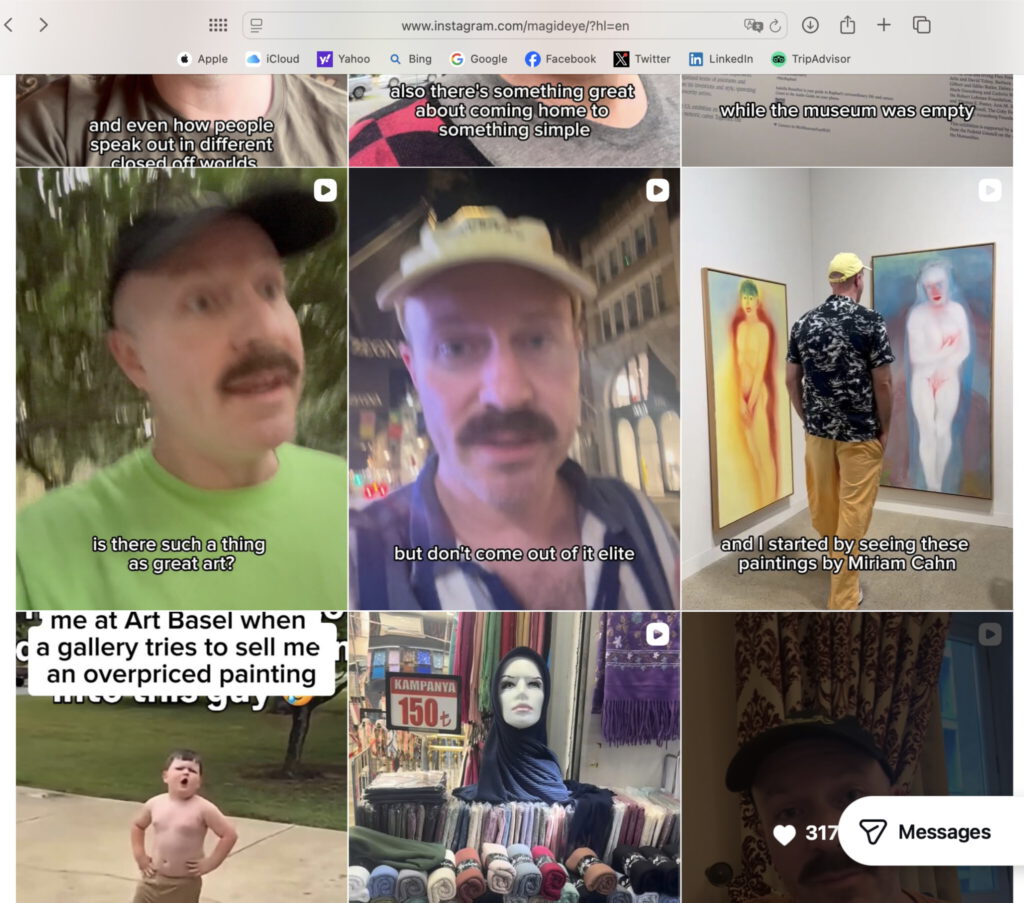
On 17 June 2026, Mr. Magid made just one Instagram post about ART BASEL. On 15 June, his post was about Turkey; on 20 June, it was about London.
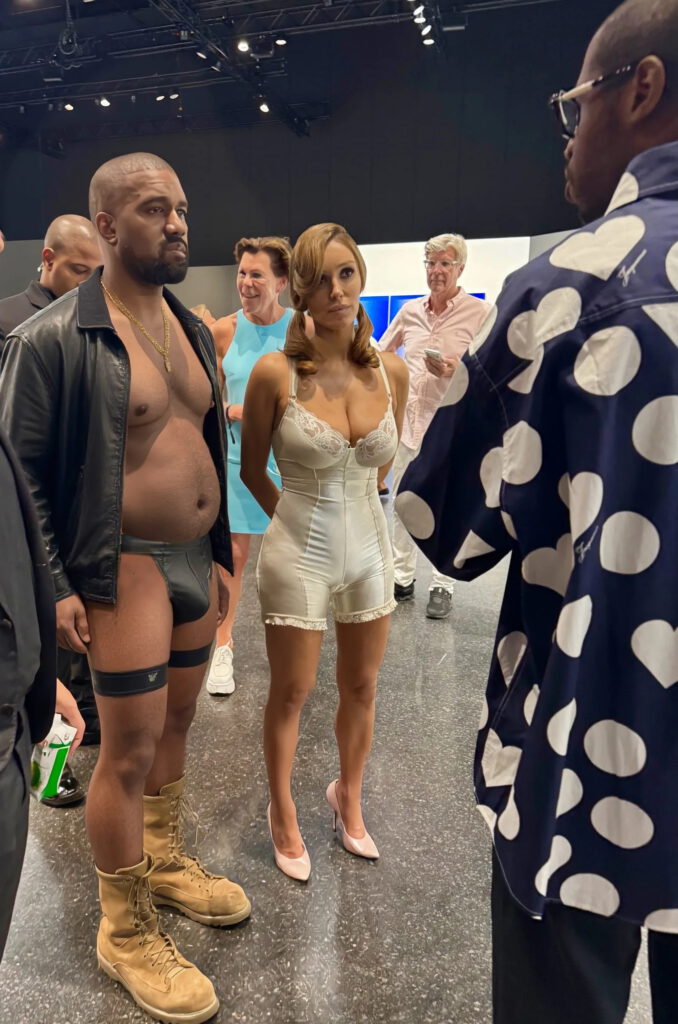
I can therefore conclude that he had no interest in the immensely wide range of art exhibitions in Basel, Zürich, St Gallen, Winterthur, Bern, or the nearby towns of Weil am Rhein or Strasbourg. There are also no photos of meals in local restaurants, highly sophisticated art events relevant to Art Basel, or important symposia. The Rhine, the Vosges, the Black Forest, social gatherings, and socio-cultural exchanges with curators, artists, art advisers and gallery owners at parties or in the hotel bar are also absent from his Instagram page. The Renée’s bar party with Ye (formerly known as Kanye West), his wife Bianca Censori and the artist Vanessa Beecroft was the talk of the town.
Contra-Check @
OMG!!! Kim Kardashian Makes The Whole World Cry: Files for Divorce from Kanye West
Visit to Takashi’s Studio Already Legendary History
https://art-culture.world/art-world/murakami-takashi-kim-kardashian-kanye-west/
If you want to remain famous, you have to cultivate your narrative (2) : the case of Bianca Censori
ビアンカ・センソリの場合:ナラティブ、イメージを高める (2)
https://art-culture.world/pop-culture/bianca-censori/
During Art Basel (mid-June), all of Switzerland transformed into a world-class art hub. Leading museums and institutions in Basel and the surrounding region presented spectacular special exhibitions.
Here are the key exhibition highlights that were on view alongside the art fair:
World famous Fondation Beyeler (6 min by taxi from the Art Basel venue)
Pierre Huyghe and the high grade permanent collection.
Kunstmuseum Basel
The largest retrospective to date of the American Abstract Expressionist Helen Frankenthaler was on view in the new building.
The cultural-historical exhibition “The First Homosexuals: The Birth of New Identities 1869–1939” was also presented in the new building.
In the Gegenwart-Bau (Contemporary Art), Chinese multimedia artist Cao Fei presented her visionary exhibition “Testimonies to the Near Future.”
Kunsthalle Basel
Known for contemporary avant-garde art, the Kunsthalle presented the solo exhibition “Alliance” by digital artist Shuang Li, as well as new works by Janiva Ellis.
Museum Tinguely (beautiful museum in Basel)
Under the title “Labouring Bodies,” the museum critically engaged with the themes of labor and the body, complemented by kinetic machine scenography by Nicolas Darrot (“Fuzzy Logic”) and sound installations by Angelica Mesiti.
Kunsthaus Baselland
At the new location on the Dreispitz site, the annual major project by Iraqi-Kuwaiti artist Monira Al Qadiri impressed.
Top-tier satellite fairs & special projects in Basel
– Basel Social Club: An absolute crowd favorite located away from the main exhibition halls. This year, the alternative art and culture event took place at Erdbeergraben, offering a relaxed mix of art collaborations, food and drink, and parties.
– Liste Art Fair & Volta: Those looking for young, emerging talent and new discoveries from the international gallery scene headed to the long-established Liste Art Fair—located right next to the main fairgrounds—or to Volta Basel.
– Art Basel Parcours: Not a traditional museum exhibition, but art in public spaces. Curated by Stefanie Hessler, over 20 site-specific sculptures and performances were staged in an area stretching from Clarastrasse down to the Rhine.
Design highlights at the border to Germany
Vitra Design Museum
Just a short tram ride across the border, the Vitra Campus beckoned with the exhibition “Hella Jongerius: Whispering Things” and a vibrant retrospective of Verner Panton’s work in the Schaudepot.
Zürich was in no way inferior to the art hub of Basel and served as the perfect complement. Held the very weekend before Art Basel (in mid-June), the renowned Zürich Art Weekend attracted collectors and art enthusiasts with over 75 exhibitions across the city.
The key exhibition highlights in Zurich were distributed between the major institutions and the vibrant gallery scene:
Kunsthaus Zürich
Switzerland’s largest art museum impressed with the first Swiss monographic exhibition dedicated to the pioneering Pop Art and Dada artist Marisol. Running concurrently was the monumental exhibition “The Histories” by African American painter Kerry James Marshall.
Museum Rietberg
Those seeking a global perspective found a profound exploration of colonial-era photography within contemporary art in the exhibition “A Kind of Paradise.”
Museum Haus Konstruktiv
In its new interim location at the Löwenbräukunst complex, the institution showcased precise, geometric-constructivist art of an international standard.
The epicenter: the Löwenbräukunst complex.
In the trendy District 5 (Zürich-West), the institutions based there joined forces—just in time for Art Week—to stage spectacular new openings.
Migros Museum für Gegenwartskunst (Famous Contemporary Art Museum)
The 30th anniversary was celebrated here with a major solo exhibition by the renowned Algerian-French artist Mohamed Bourouissa.
Luma Westbau
The institution presented two high-caliber projects: “Regift,” in collaboration with the Swiss Institute New York, and intimate insights into the Maria Lassnig holdings from the Hans Ulrich Obrist Archives.
Gallery heavyweights and top galleries in the complex, such as Hauser & Wirth, drew visitors with world-renowned names, while Galerie Urs Meile presented new, richly colored works by Chinese artist Ju Ting (“Summer”).
Close by the capital of Switzerland, Bern.
Opening Fireworks and Masterpieces.
Kunsthalle Bern: The Kunsthalle used the month of June for a triple-bill opening spectacle featuring a strong female and queer presence. On display were the multidisciplinary, feminist counter-mythologies of Tai Shani (M.I.A.S.M.A.), the multimedia works of Jota Mombaça, and sculptural wire and metal pieces by Vanessa Billy (Superconductors).
Kunstmuseum Bern: Here, masterpieces of the century converged. The popular exhibitions “Panorama Switzerland” (featuring masterpieces by Albert Anker and Ferdinand Hodler) and the first-ever comprehensive showcase of the Expressionism Foundation’s entire collection were entering their final stages. At the same time, the exhibition “The Full Life” shone with Old Masters ranging from Duccio to Liotard.
Zentrum Paul Klee in Bern
Housed within Renzo Piano’s world-famous, wave-like architectural sculpture, the Zentrum Paul Klee in Bern presented an exceptional program in June, running concurrently with Art Basel.
Marking its major 20th-anniversary celebrations, the center focused entirely on a spirit of innovation and surprising discoveries. Here are the exhibition highlights from the Klee Museum during Art Week:
Major Highlights in June
– *Schwitters: Crossing Avant-Garde Boundaries*:
This spectacular special exhibition was the first major Swiss retrospective of the seminal artist Kurt Schwitters in over 20 years. It showcased his world-renowned *Merz* pictures, collages, and unconventional sculptures, serving as the perfect avant-garde counterpoint to the contemporary art fair in Basel.
– *Cosmos Klee* & Focus: “Klee’s Versos”
Visitors experienced a fascinating premiere within the permanent exhibition. For the first time, the reverse sides of Paul Klee’s works were specifically highlighted. Drawings or watercolors are concealed on the backs of around 600 of his pieces—offering an intimate glimpse into Klee’s ongoing creative process.
– Focus: Hans Fischli (1909–1989): Complementing this, the museum displayed works by the Swiss architect and Bauhaus student of Klee, notably his compelling series of drawings titled *Zellengebilde* (Cell Structures).
Further cultural highlights could be experienced in close by cities with the Kunstmuseum St. Gallen, or Kunst Museum Winterthur.
The world-famous Oskar Reinhart Collection “Am Römerholz” in Winterthur is a must. It is considered one of the most significant private art collections of the 20th century and is housed in the magnificent former villa of the patron Oskar Reinhart. Although the collection later passed into the ownership of the Swiss Confederation, it has perfectly preserved its intimate, private character.
What makes the collection so unique:
– The Old Masters: The collection houses outstanding European masterpieces spanning the Late Gothic and Renaissance periods through to the Baroque. These include significant paintings by geniuses such as Pieter Bruegel the Elder (*The Adoration of the Kings in the Snow*), Lucas Cranach, and Hans Holbein, as well as masterpieces by Rubens and Goya.
– The Path to Modernism: The absolute centerpiece is the exquisite group of French works marking the transition to modernism. Here, you will find outstanding collections of French Impressionist and Post-Impressionist art. Icons such as Paul Cézanne, Vincent van Gogh (featuring his famous paintings from the hospital in Arles), Édouard Manet, Pierre-Auguste Renoir, and Gustave Courbet are all represented.
North of Basel, on the French side, the Musée Unterlinden in Colmar is a must, too.
The Isenheim Altarpiece is the undisputed masterpiece of Matthias Grünewald (paintings) and the Strasbourg woodcarver Niklaus von Hagenau (wood sculptures). It ranks among the most impressive and emotionally moving artworks of the European Middle Ages.
Strasbourg
– Strasbourg Cathedral (Cathédrale Notre-Dame) – Altars & Chapels: Inside the Gothic cathedral, you will find significant sacred art. Particularly noteworthy are the St. Pancras Altarpiece (*Retable de Saint-Pancrace*) from 1522 in the Erasmus Chapel and the St. Roch Altarpiece. Other highlights: the world-famous astronomical clock, the massive rose window, and the intricate pulpit.
– Musée de l’Œuvre Notre-Dame (Frauenhaus Museum) – This museum is located right next to the cathedral and is one of Europe’s most important museums for medieval and Renaissance art. The Altar Collection: This is where the original, highly delicate altarpiece panels, sculptures, and stained-glass works are housed—pieces that were removed from the cathedral and surrounding churches over the centuries for their protection. Masterpieces: Here you can view outstanding works of Upper Rhenish art by Konrad Witz and Hans Baldung Grien, as well as the original altar figures by Niklaus von Hagenau.
In this artificial engagement with the Instagram persona “magideye,” the argument regarding followers reveals itself to be a form of logical tautology based on a false premise, employing “revelatory practice” to expose the deep pseudo-political antagonism between eclectic art practices.
Last but not least, Jeffrey Magid completely ignored the Venice Art Biennale. What a disgrace!
The average direct flight time from Basel (EuroAirport Basel Mulhouse Freiburg – BSL) to Venice (Venice Marco Polo Airport – VCE) is ONLY 1 hour and 10 minutes!!
Furthermore, it must be reaffirmed that the following was missing from his Instagram post: ART BASEL UNLIMITED, which resolves the tension between standardized art structures and artistic idiosyncrasy by leveraging structural modularity, thereby effectively eliminating any aesthetic dissonance.
From my Art Basel perspective, and without wishing to sound melodramatic, I can say: Mr. Jeffrey Magid is a IG joke.
I really hope he blocks me. So far, that hasn’t happened.
Tokyo, 17th of July 2026
Mario A
more @
The Slow Death of the New York Art Scene ニューヨーク・アートシーンの緩慢な死 (1)
https://art-culture.world/art-world/slow-death-of-the-new-york-art-scene-1/
The Slow Death of the New York Art Scene ニューヨーク・アートシーンの緩慢な死 (2)
https://art-culture.world/art-world/slow-death-of-the-new-york-art-scene-2/
The Slow Death of the New York Art Scene ニューヨーク・アートシーンの緩慢な死 (3)
https://art-culture.world/art-world/slow-death-of-the-new-york-art-scene-3/
The stupidity of New York art critic Jerry Saltz (Roberta Smith)
https://art-culture.world/art-world/jerry-saltz/
My Thirty Sixth Girlfriend Jerry Gogosian マイ サーティ・シックスス ガールフレンド ジェリー・ゴゴシアン
https://art-culture.world/cultural-essays/my-thirty-sixth-girlfriend-2022/
「私は、マリア・カラス」映画を強くおススメ “MARIA BY CALLAS” documentary strongly recommending
https://art-culture.world/pop-culture/maria-callas-legendary-opera-diva/
Art world darling, cool Kenny Schachter @ Art Basel アート界の寵児、クール ケニー・シャクター @ アート・バーゼル
https://art-culture.world/art-world/kenny-schachter/
Me and Mr. Robinson, God bless you please, coo coo ca-choo, hey, hey, hey
https://art-culture.world/art-world/walter-robinson/
とても悪い人、アートアドバイザー リーザ・シッフ氏:「私はフェイク、毎日 詐欺師でした。」
A very bad person, art advisor Lisa Schiff: “I was a fake, a fraud every day.”
https://art-culture.world/articles/art-advisor-lisa-schiff/
五木田智央のニューヨークのアートディーラー、メアリー・ブーンは刑務所に30ヶ月間
GOKITA Tomoo’s New York Art Dealer Mary Boone sentenced to 30 Months in Prison
https://art-culture.world/articles/gokita-tomoos-new-york-art-dealer-mary-boone-sentenced-to-30-months-in-prison/
After American Art Dealer BLUM Tokyo, American Art Dealer PACE Tokyo should close, too.
アメリカン・アートディーラー「BLUM Tokyo」に続き、同じくアメリカン・アートディーラー「PACE Tokyo」も閉廊すべきだ。
https://art-culture.world/art-world/pace-tokyo/
Tokyo Perspective: Chronicle of a Death Foretold regarding a respected American Art Dealer
奈良美智や村上隆を巡って:「FUCK YOU」や「お前、授乳中なんだから、俺のビジネスパートナーにはなれない」
https://art-culture.world/reviews/blum/
The Year 2021. Still Symptomatic For New York’s Art Scene: Taking Drugs.
2021年。麻薬とニューヨークのアートシーン
https://art-culture.world/articles/new-yorks-art-scene/
Prominent Collector and Dealer Adam Lindemann Arrested
New York Art World
https://art-culture.world/articles/adam-lindemann-arrested/
Next One @ Sotheby’s: Hugely Popular Amy Cappellazzo Bites the Dust
What will happen @ Sotheby’s Japan?
https://art-culture.world/articles/amy-cappellazzo/